

Best Digital Marketing Tools in 2026: What Marketers Actually Need and What They Can Skip
Open LinkedIn for a few minutes and you will probably come across a colourful graphic…
 Harika October 6, 2026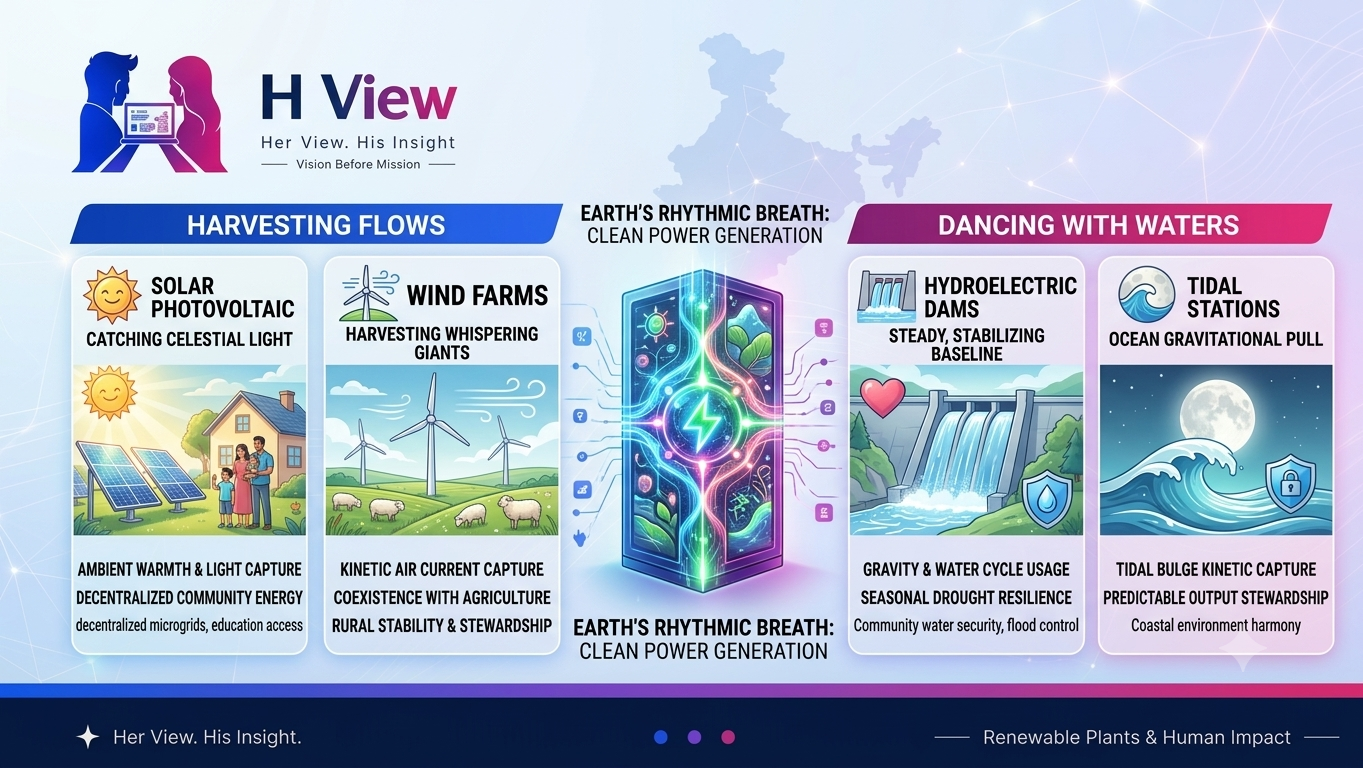
 By RajeshUpdated June 10, 20263 min read71 views
We often look at power plants as monuments of cold utility—monolithic structures of steel and concrete cut off from the natural world by chain-link fences. For over a century, traditional power generation has required us to take from the earth, burning fuel in a transactional relationship that leaves behind a heavy ecological footprint.
But a quiet, profound revolution is rewriting this narrative. Modern renewable energy power plants represent a shift in human philosophy. Instead of conquering nature, these systems listen to it. They are engineered to harmonize with the rhythmic breathing of our planet, transforming natural flows of light, wind, and water into clean power that sustains human life without compromising our collective future.
At H View, our “Vision Before Mission” approach challenges us to look beyond megawatt capacities and carbon metrics. The true vision of renewable energy is a deeply humane one: it is about reclaiming clean air for our children, providing energy security to remote communities, and building an infrastructure that leaves the earth better than we found it.
Solar power plants are perhaps our most poetic engineering achievement. They sit silently under the open sky, converting the ambient warmth and light of the sun directly into electricity via silicon cells.
Whether standing tall across open plains or anchored deep into the ocean floor, wind turbines are the modern windmills of our era. They capture the kinetic energy of moving air currents, spinning massive aerodynamic blades to turn internal generators.
Hydroelectric dams and tidal power installations utilize the oldest, most reliable muscle on Earth: gravity and the water cycle. By channeling the relentless downward rush of rivers or the predictable, lunar-driven tug of ocean tides through massive underwater turbines, these plants provide a steady, stabilizing baseline of clean energy.
Transitioning to a renewable infrastructure is a complex mission, filled with challenges surrounding grid storage and initial capital costs. However, having a clear vision means recognizing that energy production is not just a technical problem to be solved—it is a human relationship to be managed.
By investing in power plants that run on the earth’s natural, infinite cycles, we cease to be exploiters of our environment and become its partners. Renewable energy plants are ultimately a gift of stewardship to the next generation, proving that human progress does not have to come at the cost of the planet we call home.
Rajesh is an H View contributor covering science, energy, architecture, sustainability, and practical knowledge topics. His articles focus on explaining complex ideas in a simple way, connecting real-world examples with useful insights for readers who want to understand how systems, design, and innovation shape everyday life.
Share your real experience and help other readers decide better.
No community views yet. Be the first to share yours.

Open LinkedIn for a few minutes and you will probably come across a colourful graphic…
Harika October 6, 2026 
When an employee resigns, many organisations move quickly into replacement mode. The manager informs HR,…
Harika October 6, 2026 
For many corporate employees, the workday begins long before they actually start working. They wake…
Harika October 5, 2026 
Many projects begin with an assumption that sounds reasonable on paper: the client will explain…
Harika October 1, 2026