

Best Digital Marketing Tools in 2026: What Marketers Actually Need and What They Can Skip
Open LinkedIn for a few minutes and you will probably come across a colourful graphic…
 Harika October 6, 2026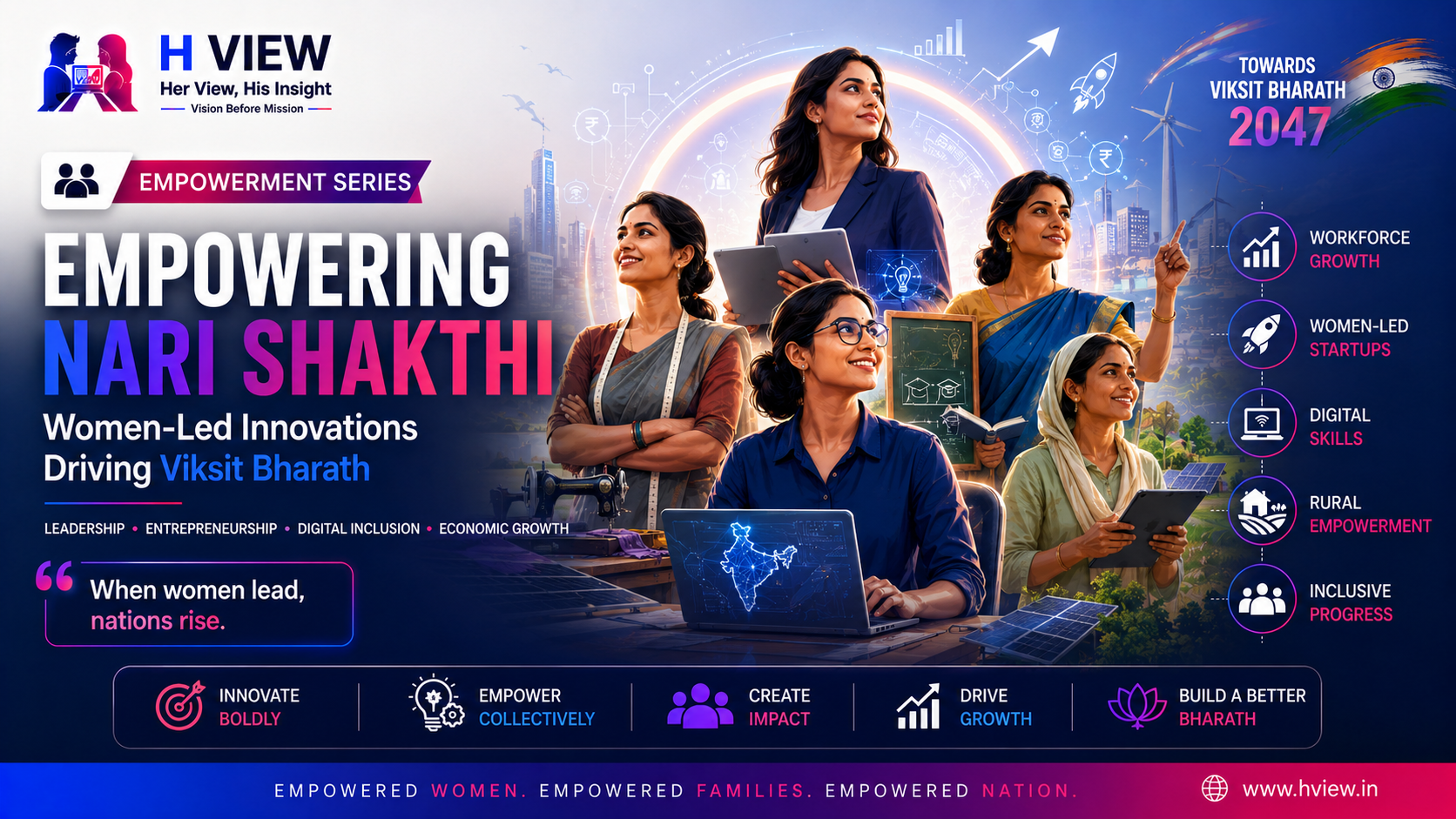
 By AnnapurnaUpdated July 16, 20266 min read99 views9.2 ★
Delve into how India's future, envisioned as Viksit Bharath, is anchored by Nari Shakthi, leveraging women's initiatives across pivotal industries.
As India progresses toward its ambitious 2047 vision of a Viksit Bharath, Nari Shakthi, or women’s empowerment, stands as a vital component. Women emerge as central agents of change, assuming key roles in economic, social, and technological fields. Their empowerment is crucial to driving an inclusive leap forward, positioning them as key stakeholders in India’s development. Women are breaking barriers in education, entrepreneurship, technological innovation, and political participation, leading transformative change nationwide. Numerous initiatives support this shift, ensuring women are not just participants but leaders. This article highlights insights from extensive research, utilizing sources such as the PIB, NITI Aayog, and NFHS surveys. The study projects significant growth in female labor force participation, forecasting a rise to 41% by 2026.
Empowering women in the workforce is essential. With rising female labor participation, initiatives aim for a substantial increase from 23% to 41% by 2026. This transformation is driven by government policies on education and skill development. Reports from the McKinsey Global Institute back these data-driven projections. Policies like Beti Bachao Beti Padhao have catalyzed education opportunities, enhancing employment prospects. Conversations with stakeholders reveal efforts to create conducive environments for women’s economic participation. There’s an increasing focus on closing the gender pay gap, ensuring equitable opportunities, and providing platforms for women to showcase their skills across diverse sectors.
Furthermore, training programs and skill workshops have become mainstream, allowing women to adapt to new roles in a technologically driven economy. Information technology, traditionally male-dominated, sees increasing female representation. By integrating modern tech skills, women enhance their employability, and companies benefit from their diverse perspectives. Beyond traditional employment, women are entering venture markets and startups, reinventing local business environments.
The entrepreneurial spirit showcases Nari Shakthi’s strength. Women now lead about 44% of startups recognized by the Department for Promotion of Industry and Internal Trade (DPIIT). This increase in entrepreneurs fosters economic diversification and innovation. Highlighting unique solutions, women entrepreneurs significantly contribute to economic growth and job creation. Programs offering financial incentives and mentorship further bolster these effects. Success stories elucidate how women overcome challenges to establish thriving businesses, providing role models and inspiring future leaders. Women in leadership positions within corporations also highlight the shift towards gender-equal workspaces, where decision-making includes diverse perspectives fostering innovation.
Beyond corporate corridors, there’s a noticeable surge in grassroots innovations led by women in rural areas. Such initiatives span various sectors, from agriculture to sustainable energy. Women are not just steering new-age startups but are pioneers in creating ecosystems that redefine community economics. Their entrepreneurial endeavors are often socially driven, aiming at larger community welfare, which in return, strengthens the socio-economic framework of the nation.
Advancing gender equality results in substantial economic advantages. A 62% improvement in gender equality indices illustrates the potential of the gender dividend. McKinsey Global Institute forecasts a $770 billion annual GDP boost through gender parity. This empowerment facilitates socially beneficial outcomes like enhanced community well-being. The effects of empowered women translate into improved health and educational outcomes, significantly contributing to societal progress. Moreover, diversity in workplaces has been shown to drive better performance and broader innovation, essential for a competitive economy. This integration supports the nationwide momentum towards sustainable socioeconomic prosperity.
Initiatives like Lakhpati Didi Self-Help Groups reinforce financial security among rural women and enhance community resilience. Documented economic ripple effects enhance societal welfare, bridging traditional and modern sectors. Government support ensures essential resources reach every woman in need. Transparency and data sourcing from longitudinal studies and NFHS datasets underpin these findings. These groups also promote leadership skills among women, empowering them to take initiative in their communities, driving local development directly tied to national progress.
Education and technology are at the empowerment core. Programs like Beti Bachao Beti Padhao focus on literacy and digital skills for women, increasing economic opportunities. Official reports establish credibility, detailing long-term impacts. These programs strategically target areas with traditional education and technology access deficits, promoting inclusion and strengthening society’s social fabric. Bridging the digital divide remains an ongoing effort, driving both urban and rural women into the digital age, which opens doors to new facets of employment opportunities and redefining their roles in society.
India presents an evolving innovation landscape where women, supported by targeted educational programs, thrive and innovate. States such as Andhra Pradesh, with expansive self-help networks, showcase the fruition of consistent investments in education. These establishments fortify local economies by introducing alternative livelihood avenues that align with modern India’s economic ambitions.
Studies reveal significant economic gains from women-focused programs. Econometric models and policy document reviews indicate substantial returns on investment. Long-term tracking through rigorous analysis reaffirms India’s commitment to gender parity as a strategic priority. Continual reform and improved policies are backed by verified data. Experts advocate for adaptive strategies to overcome emerging challenges, ensuring sustained progress. These inclusions augment the national agenda by pivoting on more robust systems that ensure continuous feedback and improvement of policies geared towards Nari Shakthi empowerment.
Driving inclusive policy reforms requires further integration of digital tools, AI-contextualized solutions, and enhanced cross-sector collaborations. By focusing on gender-disaggregated data, policymakers can pinpoint effectiveness across different sectors, ensuring that initiatives catalyze widespread socio-economic benefits.
Nari Shakthi is central to realizing Viksit Bharath, promoting social advancement and economic growth. Government policies and studies support turning Viksit Bharath into a reality with ongoing dedication to empowered governance. By fostering environments where women lead and innovate, India moves toward global prominence, supported by leading research. The vision of 2047 integrates women’s profound impact across multiple sectors, suggesting a methodical journey towards transformative national aspiration. This forward journey incorporates case studies and longitudinal data refining the 2047 vision, laying a blueprint that other nations may well emulate, featuring empowered women as the cornerstone of any thriving society.
Nari Shakthi involves empowering women to drive substantial transformation across economic, social, and technological sectors as part of India's Viksit Bharath initiative.
With focused initiatives, female labor force participation is projected to leap from 23% to 41% by 2026, integrating women into all critical sectors like technology and services.
Women-led enterprises now comprise about 44% of DPIIT-recognized startups, fostering market innovation and economic diversification by offering new and unique business solutions.
Economic models suggest a return of u20b94.10 in output for every rupee invested, driven by improved employment opportunities, enhanced household consumption, and educational benefits linked to empowered women.
India's harnessed Nari Shakthi has laid a transformative groundwork for its Viksit Bharath vision. By empowering women, India is not only aiming for gender equality but also leveraging women-led initiatives as powerful economic drivers. This strategy promises a notable GDP growth, a progressive step towards universal prosperity and leadership on the global stage. While challenges in policy consistency remain, the promising outcomes indicate a bright future driven by women's empowerment.
Annapurna is an H View contributor covering relationships, family, lifestyle, entrepreneurship, and everyday decision-making. Her articles focus on emotional clarity, practical understanding, and human-centered perspectives that help readers think better about personal and professional situations.
Share your real experience and help other readers decide better.
No community views yet. Be the first to share yours.

Open LinkedIn for a few minutes and you will probably come across a colourful graphic…
Harika October 6, 2026 
When an employee resigns, many organisations move quickly into replacement mode. The manager informs HR,…
Harika October 6, 2026 
For many corporate employees, the workday begins long before they actually start working. They wake…
Harika October 5, 2026 
Many projects begin with an assumption that sounds reasonable on paper: the client will explain…
Harika October 1, 2026