

Best Digital Marketing Tools in 2026: What Marketers Actually Need and What They Can Skip
Open LinkedIn for a few minutes and you will probably come across a colourful graphic…
 Harika October 6, 2026
 By AnnapurnaUpdated September 20, 20264 min read49 views
Marriage is often described as the union of two people.
In reality, it is the coming together of two different personalities, two families, two sets of habits, and two ways of thinking.
No husband and wife are exactly alike.
One may speak openly while the other remains quiet.
One may make decisions quickly while the other prefers to think carefully.
One may enjoy social gatherings while the other values a peaceful home.
These differences are not weaknesses. They are natural.
Problems begin when marriage becomes a competition instead of a partnership.
Many couples unknowingly start keeping score.
“I always adjust.”
“You never understand me.”
“I earn more.”
“I do more work.”
“My family sacrificed more.”
“My opinion matters more.”
When marriage turns into a contest of proving who is right, both people slowly stop working as one team.
A successful marriage is not built by defeating each other.
It is built by supporting each other.
A partnership means both people work toward the same goal.
In marriage, that goal is not winning arguments.
It is building a happy, secure, and respectful life together.
Partners may disagree, but they do not become enemies.
Instead of asking,
“Who won?”
Healthy couples ask,
“What solution is best for our family?”
Every husband and wife have different abilities.
One may be better at financial planning.
The other may manage emotions more effectively.
One may enjoy cooking.
The other may enjoy driving or managing household repairs.
There is no fixed rule that every responsibility belongs only to one gender.
Strong marriages value contribution rather than competition.
The question should never be:
“Whose work is more important?”
Instead ask:
“How can we make each other’s life easier?”
No couple agrees on everything.
Healthy marriages are built through conversations, not assumptions.
Instead of expecting a partner to understand every feeling without explanation, speak honestly.
Simple questions can prevent many misunderstandings.
“What happened?”
“How can I help?”
“What are you feeling?”
“What do you need from me today?”
Listening without immediately defending yourself is one of the greatest gifts in marriage.
Disrespect should never become normal.
Avoid:
Disagreements should solve problems, not damage dignity.
Marriage should not stop personal growth.
Whether it is education, career, business, hobbies, or personal goals, partners should encourage one another.
Success becomes more meaningful when celebrated together.
Supporting a partner’s dream is an investment in the future of the family.
Financial contribution should never determine respect.
Whether one spouse earns more, earns less, or temporarily stays home for family responsibilities, both deserve equal dignity.
Money supports the family.
It should never control the relationship.
A wife should never feel that her value depends only on cooking, cleaning, or adjusting.
She deserves appreciation, emotional support, partnership, and respect for her dreams.
Marriage should add confidence to her life—not fear.
A husband should not carry every burden alone.
He also needs encouragement, appreciation, emotional support, and understanding.
Strength does not mean remaining silent about stress.
Real strength includes honest communication.
Small daily habits create stronger marriages.
Say thank you.
Appreciate small efforts.
Share responsibilities.
Listen before reacting.
Protect each other’s dignity.
Support each other’s families with fairness.
Celebrate achievements together.
Solve problems privately.
Choose kindness during disagreements.
Remember that both of you are on the same side.
Marriage is not a battle between husband and wife.
It is a partnership against life’s challenges.
When couples stop competing and start cooperating, love grows naturally.
A successful marriage is not measured by who has more power.
It is measured by how safely both people can grow together.
The strongest couples are not those who never disagree—they are the ones who never stop choosing each other.
No. Healthy marriages allow different opinions while maintaining mutual respect.
Important decisions should ideally be discussed and made together, considering what is best for the family.
Yes. Sharing responsibilities strengthens partnership and reduces unnecessary stress.
Absolutely. Honest communication, respect, accountability, and forgiveness help couples grow stronger after disagreements.
Annapurna is an H View contributor covering relationships, family, lifestyle, entrepreneurship, and everyday decision-making. Her articles focus on emotional clarity, practical understanding, and human-centered perspectives that help readers think better about personal and professional situations.
Share your real experience and help other readers decide better.
No community views yet. Be the first to share yours.

Open LinkedIn for a few minutes and you will probably come across a colourful graphic…
Harika October 6, 2026 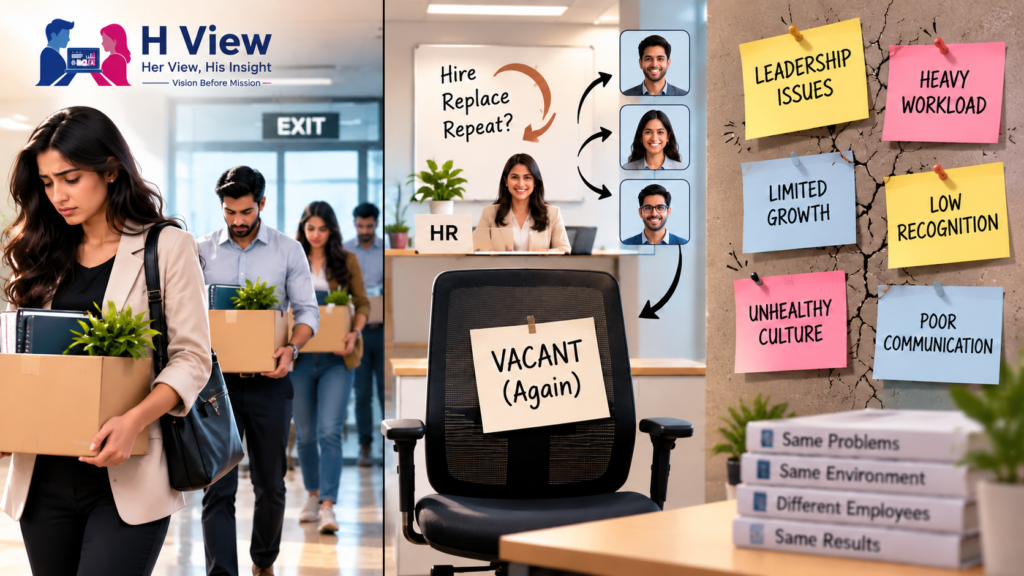
When an employee resigns, many organisations move quickly into replacement mode. The manager informs HR,…
Harika October 6, 2026 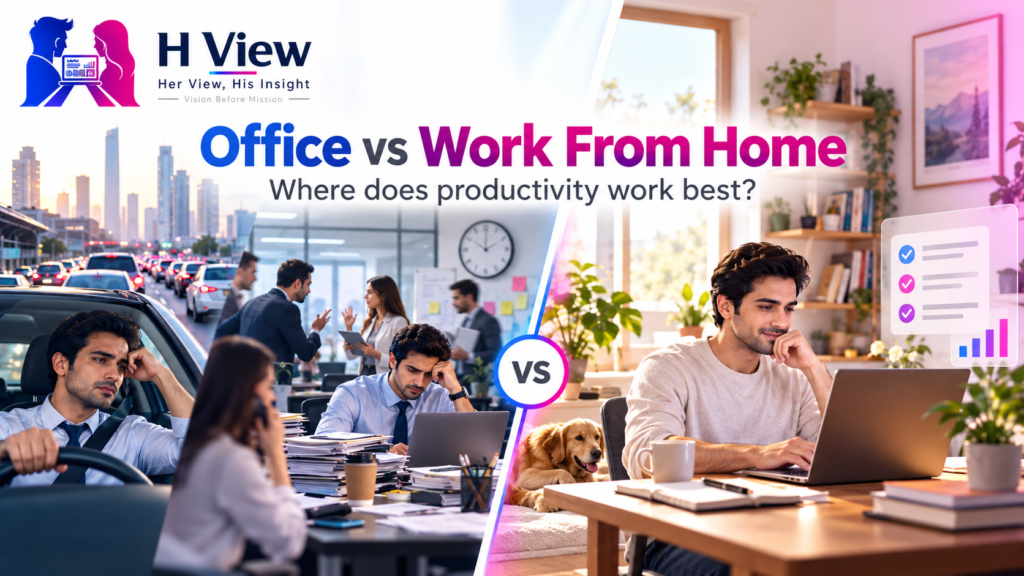
For many corporate employees, the workday begins long before they actually start working. They wake…
Harika October 5, 2026 
Many projects begin with an assumption that sounds reasonable on paper: the client will explain…
Harika October 1, 2026