Best Digital Marketing Tools in 2026: What Marketers Actually Need and What They Can Skip
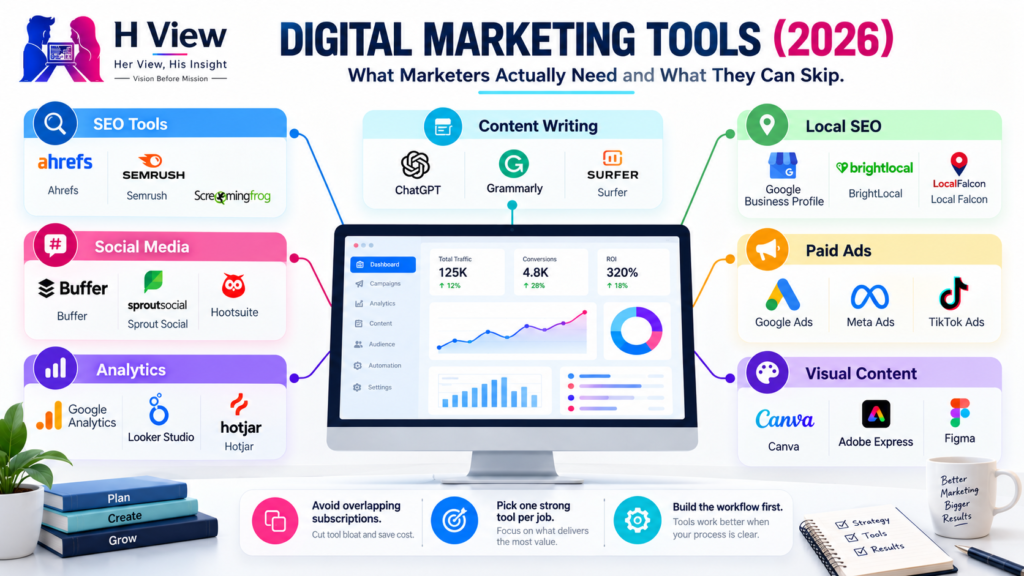
Open LinkedIn for a few minutes and you will probably come across a colourful graphic…
 Harika October 6, 2026
  By HarikaUpdated May 31, 20267 min read41 views
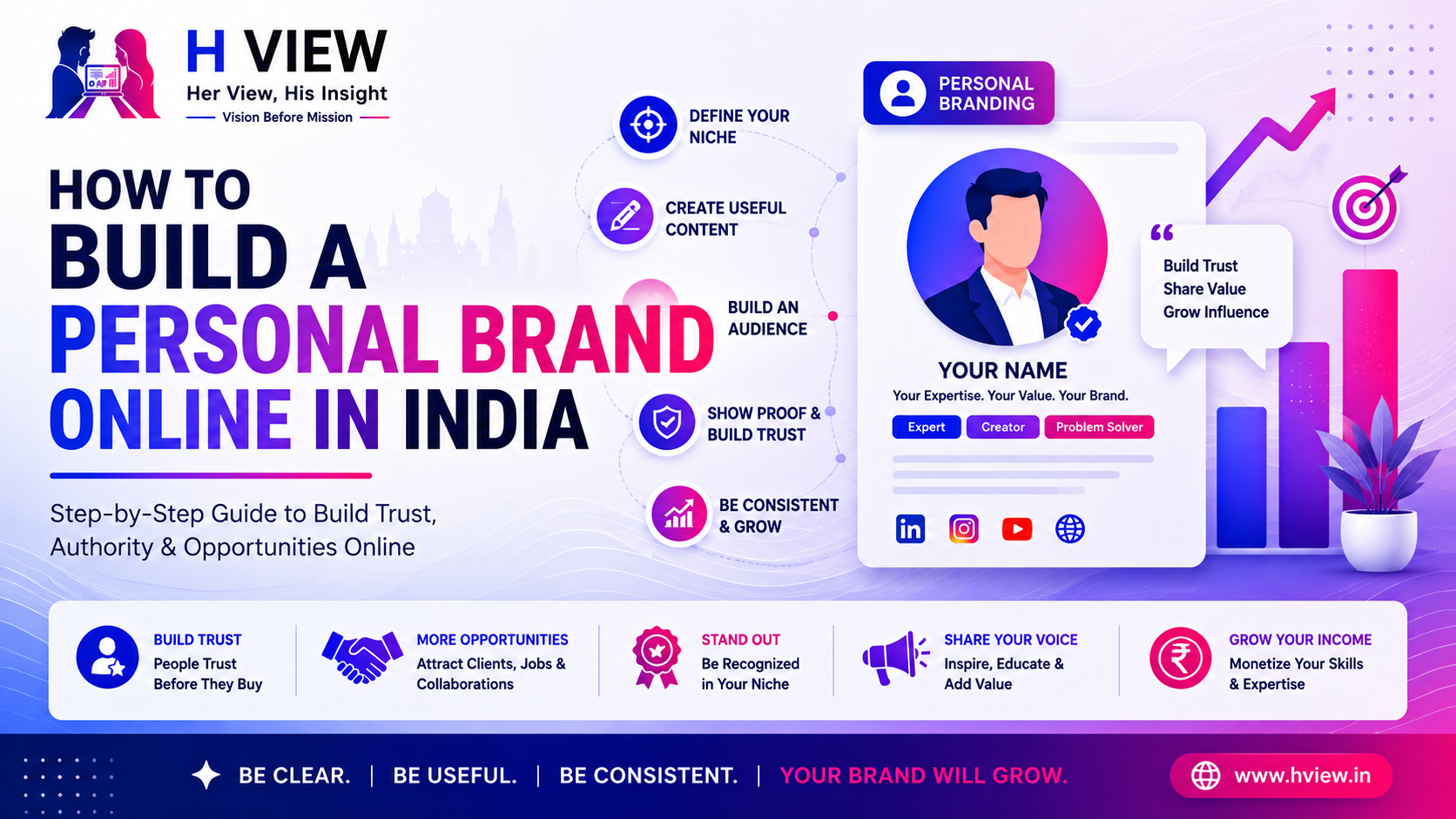
A personal brand is not only for celebrities, influencers, or big business owners.
Today, students, freelancers, creators, consultants, bloggers, doctors, designers, developers, trainers, coaches, and startup founders can all benefit from building a personal brand online.
In simple words, your personal brand is what people remember about you.
It is how people understand your skills, values, experience, knowledge, and trustworthiness before they work with you, follow you, hire you, or buy from you.
At H View, our practical view is simple:
A personal brand is not about showing off. It is about showing your value clearly and consistently.
If you want better opportunities, more trust, better clients, business growth, or long-term visibility, building a personal brand online can help.
A personal brand is your professional identity in public.
It answers questions like:
For example, someone may be known as:
A good personal brand makes your work easier to understand.
India has a growing digital audience. People search online before choosing a service, expert, course, business, or consultant.
Before they contact you, they may check:
If they find clear, useful, and trustworthy content, they feel more confident.
A personal brand can help you:
The best part is that you do not need to become famous. You need to become clear and trusted in your area.
Do not start by posting random content.
Start with clarity.
Ask yourself:
For example, instead of saying “I create content,” say:
“I help small businesses create simple websites and improve their online presence.”
Instead of saying “I am a digital marketer,” say:
“I help local businesses get more enquiries through Google, social media, and simple websites.”
Clear positioning makes people remember you faster.
Your personal brand should not speak to everyone.
A student, startup founder, small business owner, job seeker, and freelancer all have different needs.
Choose your main audience.
Your audience can be:
When you know your audience, your content becomes easier to create.
You can write posts, videos, and guides that answer their real questions.
You do not need to be active everywhere from day one.
Start with 2 or 3 strong platforms.
If you are a freelancer, consultant, or founder, a simple website is useful because it becomes your online home.
Your website can include:
Social media helps people discover you. A website helps people trust you.
Personal branding grows through content.
But content does not mean posting motivational quotes every day. It means sharing useful, honest, and practical ideas around your area of expertise.
You can share:
For example, if you are a web designer, you can post:
This kind of content builds trust because it helps people before they even pay you.
Many people say they are experts. Fewer people show proof.
Proof can include:
If you are just starting, you may not have big results yet. That is okay.
Start by showing your process, learning, small projects, experiments, and improvements. People trust honest progress more than fake perfection.
Your personal brand should look recognizable.
You do not need a costly branding package in the beginning. But you should keep basic consistency.
Use:
For H View, we use a clear identity around:
Your personal brand should also have a simple identity people can remember.
Do not make every post a sales post.
People follow you when your content helps them. They buy from you when they trust you.
A good content balance is:
This keeps your brand helpful, not pushy.
If you sell too much too early, people may ignore you. If you give value consistently, people naturally become curious about your work.
Personal branding is not only posting. It is also connecting.
Engage with people in your niche.
You can:
Networking should feel natural. Do not message everyone with a sales pitch. Start conversations first.
Many people start personal branding but stop because they expect quick results.
Avoid these mistakes:
A personal brand grows slowly. But the value builds over time.
If you are starting your personal brand online, keep it simple.
Start with:
Do not chase every trend. Build clarity first.
Your brand becomes stronger when people understand what you do and why they should trust you.
Yes. Students can build a personal brand by sharing learning, projects, internships, skills, notes, content, and career interests. This can help with internships, jobs, freelance work, and networking.
LinkedIn is strong for professional branding. Instagram works well for creators and visual content. YouTube is useful for long-term authority. A website is best for ownership and trust.
A website is not compulsory on day one, but it is very useful. It gives you a professional home where people can see your work, services, blog, testimonials, and contact details.
Start with a realistic schedule. Posting 2–3 useful posts per week is better than posting daily for one week and then disappearing.
Yes. A strong personal brand can help you get clients, freelance projects, speaking opportunities, consulting work, affiliate income, brand collaborations, courses, and job opportunities.
Building a personal brand online in India is not about becoming famous overnight.
It is about becoming clear, useful, and trustworthy in your chosen space.
Start with one topic. Help one audience. Share useful content. Show proof. Build slowly.
At H View, our final view is simple:
Your personal brand grows when people understand your value before they need your service.
Harika is the co-founder of H View and covers AI, technology, gadgets, digital tools, online platforms, and modern internet trends. Her articles focus on simplifying complex topics with practical explanations, balanced opinions, and reader-first insights.
Share your real experience and help other readers decide better.
No community views yet. Be the first to share yours.
Open LinkedIn for a few minutes and you will probably come across a colourful graphic…
Harika October 6, 2026 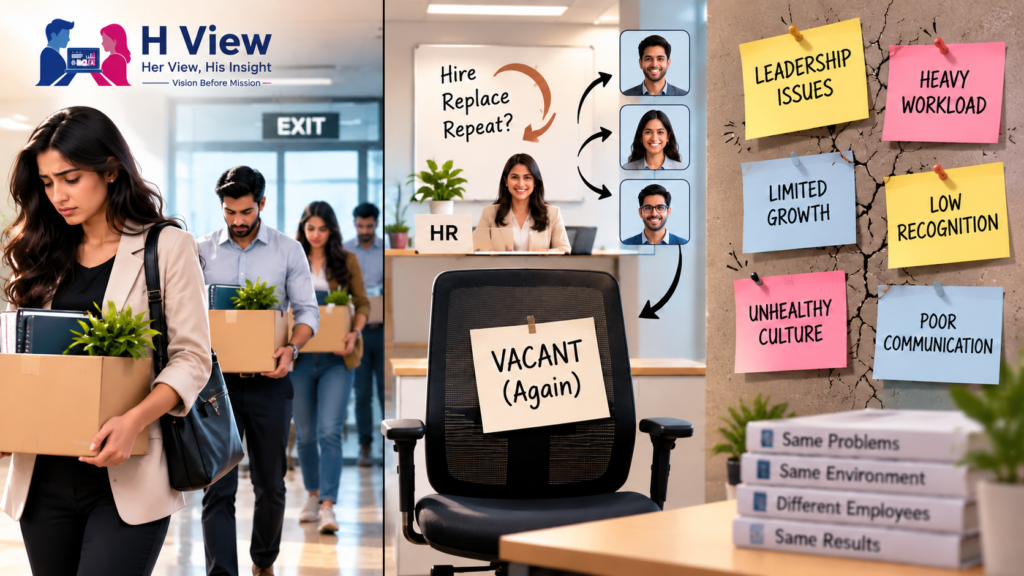
When an employee resigns, many organisations move quickly into replacement mode. The manager informs HR,…
Harika October 6, 2026 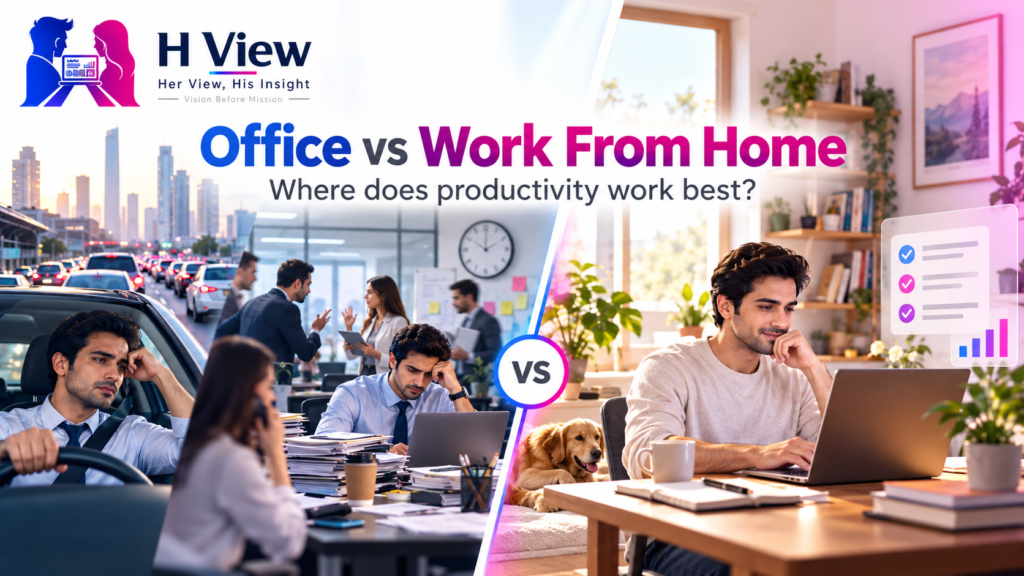
For many corporate employees, the workday begins long before they actually start working. They wake…
Harika October 5, 2026 
Many projects begin with an assumption that sounds reasonable on paper: the client will explain…
Harika October 1, 2026