

Best Digital Marketing Tools in 2026: What Marketers Actually Need and What They Can Skip
Open LinkedIn for a few minutes and you will probably come across a colourful graphic…
 Harika October 6, 2026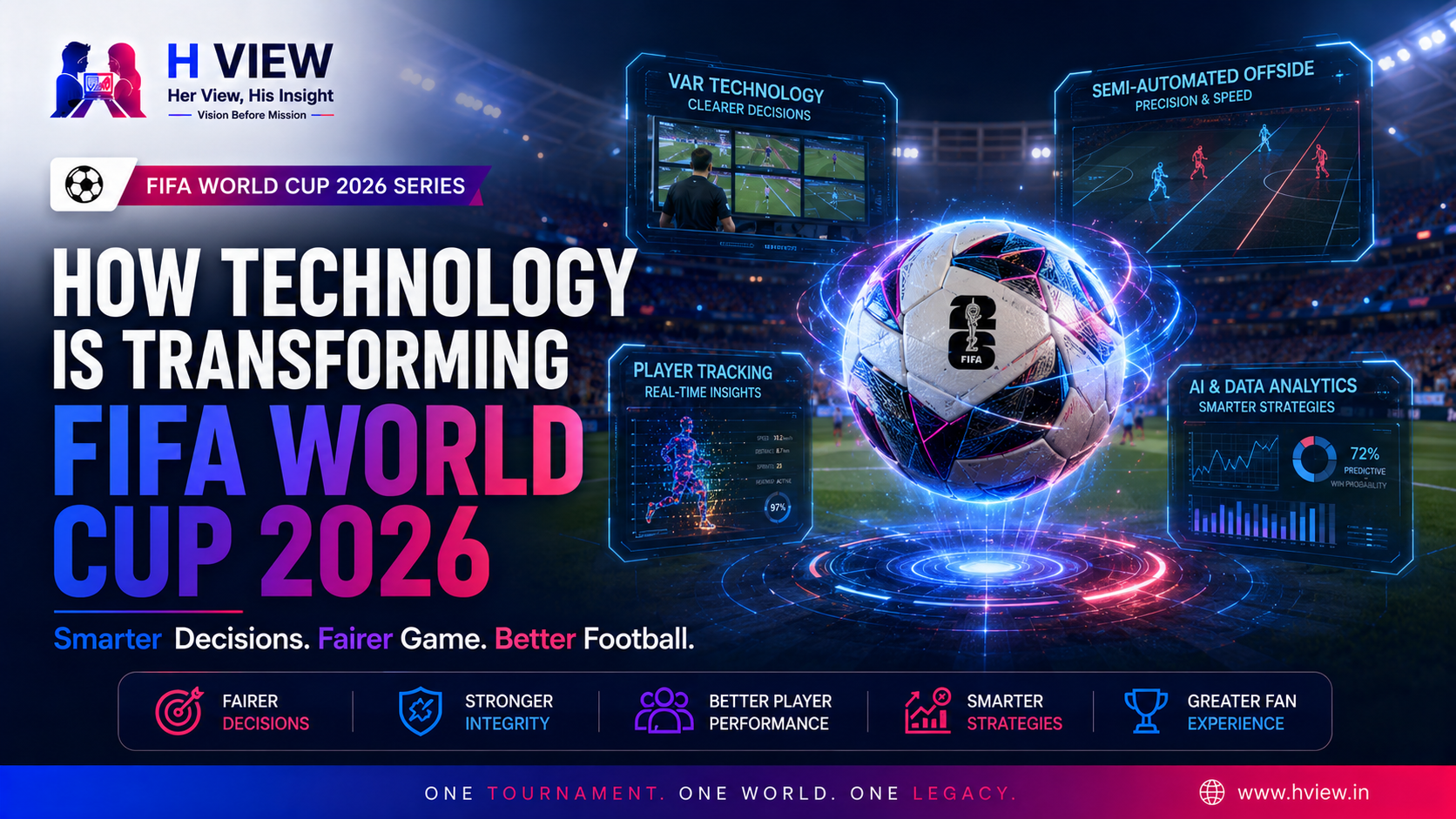
 By Satya HemanthUpdated July 11, 20263 min read42 views
Football has always been emotional, unpredictable, and human.
But technology is now becoming a major part of the game.
FIFA World Cup 2026 will likely show how modern tools can improve fairness, performance, fan experience, and tactical preparation.
Video Assistant Referee, commonly known as VAR, has changed how important decisions are reviewed.
Goals, penalties, red cards, and mistaken identity can be checked with video support.
Although VAR still creates debate among fans, its purpose is to reduce major errors and improve fairness.
In a tournament as important as the World Cup, every decision matters.
Offside decisions can change matches.
Semi-automated offside technology helps officials make faster and more accurate calls using tracking data and advanced systems.
This reduces long delays and improves decision clarity.
For fans, faster decisions can improve the viewing experience.
Goal-line technology helps confirm whether the ball has fully crossed the line.
This removes doubt from one of football’s most important decisions.
In high-pressure World Cup matches, such accuracy can prevent major controversy.
Modern teams use data to understand player movement, speed, workload, passing patterns, pressing behavior, and tactical positioning.
This helps coaches prepare better game plans.
Fitness staff can also use data to manage fatigue and reduce injury risk.
At FIFA World Cup 2026, teams that use data wisely may gain an advantage.
Artificial intelligence is becoming more useful in football analysis.
AI can help study opponent patterns, identify weaknesses, analyze set pieces, and support tactical planning.
However, football is not only data. Emotion, creativity, pressure, and instinct still matter.
Technology supports the game. It does not replace the game.
Fans now follow football through mobile apps, live statistics, social media, fantasy games, highlights, and interactive content.
FIFA World Cup 2026 will likely be one of the most digitally followed tournaments ever.
Fans will not only watch matches. They will experience the tournament across multiple screens.
Technology is changing football, but the heart of the game remains human.
A perfect offside call may come from technology, but a perfect goal still comes from skill, courage, and creativity.
The best future for football is not technology replacing emotion. It is technology protecting fairness while emotion continues to drive the game.
VAR, offside technology, goal-line systems, player tracking, and analytics will be important.
It can improve fairness and accuracy, but it must be used carefully to maintain the flow of the game.
Teams use data for tactics, fitness, opponent analysis, and player performance.
No. AI can support analysis, but leadership, judgment, and motivation remain human responsibilities.
FIFA World Cup 2026 will show the modern side of football.
Technology will help make the game smarter and fairer, but the magic of football will still come from the players, fans, and unforgettable moments.
Satya Hemanth is the founder of H View and writes on careers, sports, leadership, digital trends, and practical decision-making. His articles focus on clear explanations, real-world examples, and useful insights for students, young professionals, and everyday readers.
Share your real experience and help other readers decide better.
No community views yet. Be the first to share yours.
Open LinkedIn for a few minutes and you will probably come across a colourful graphic…
Harika October 6, 2026 
When an employee resigns, many organisations move quickly into replacement mode. The manager informs HR,…
Harika October 6, 2026 
For many corporate employees, the workday begins long before they actually start working. They wake…
Harika October 5, 2026 
Many projects begin with an assumption that sounds reasonable on paper: the client will explain…
Harika October 1, 2026