

Best Digital Marketing Tools in 2026: What Marketers Actually Need and What They Can Skip
Open LinkedIn for a few minutes and you will probably come across a colourful graphic…
 Harika October 6, 2026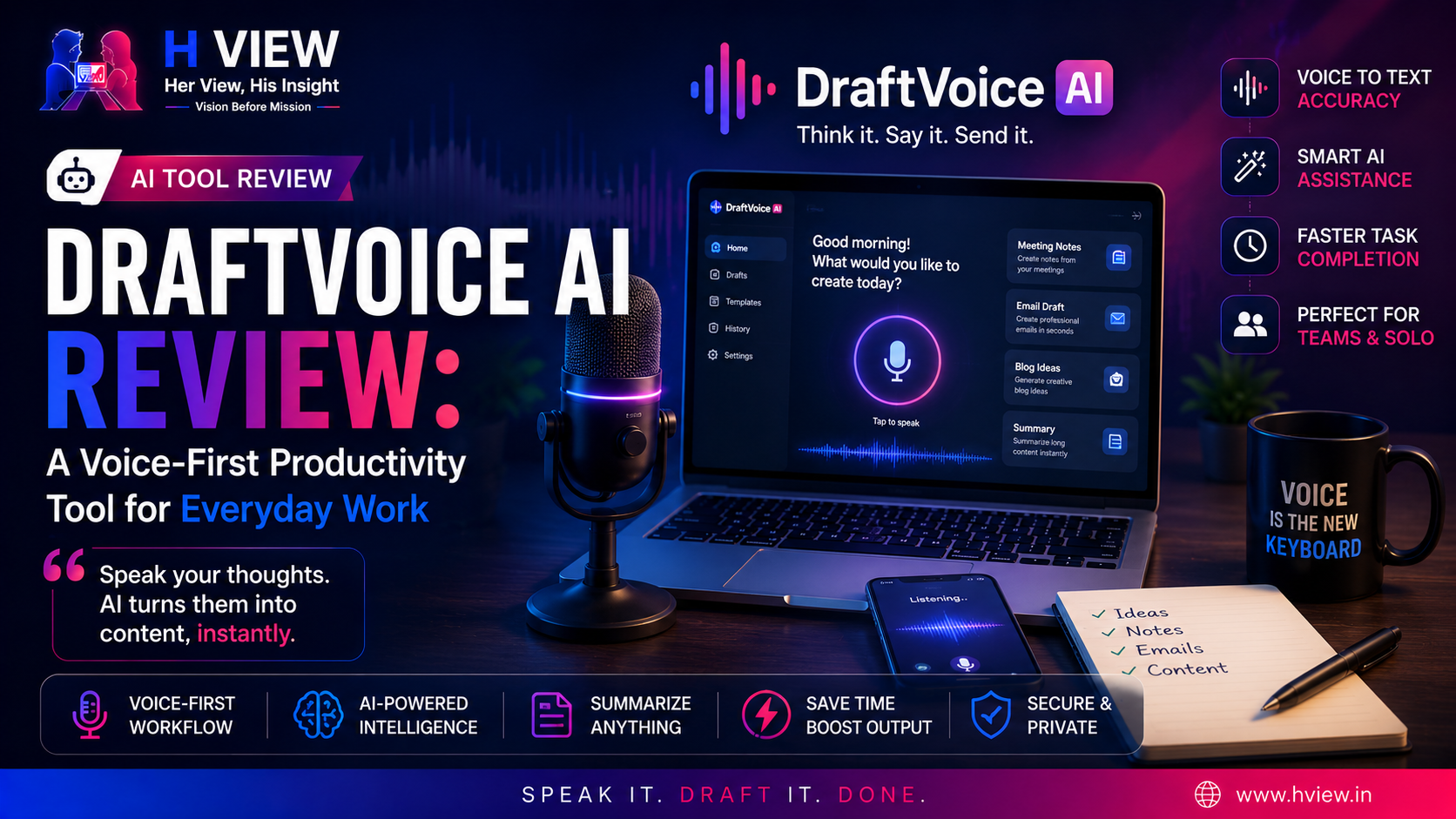
 By H ViewUpdated July 27, 20264 min read36 views
DraftVoice AI is one of those tools that feels especially relevant in a world where people are constantly moving between calls, chats, notes, drafts, and quick decisions. Instead of making users type everything manually, it turns natural speech into clean written output that is ready for work. That simple idea is the foundation of the product, and it is also the reason it stands out.
At its best, DraftVoice AI is not just a transcription app. It is a voice-first productivity platform built to help people speak naturally and convert those spoken thoughts into polished emails, business notes, client messages, prompts, and summaries. For users who think faster than they type, that can save time and reduce friction in a very practical way.
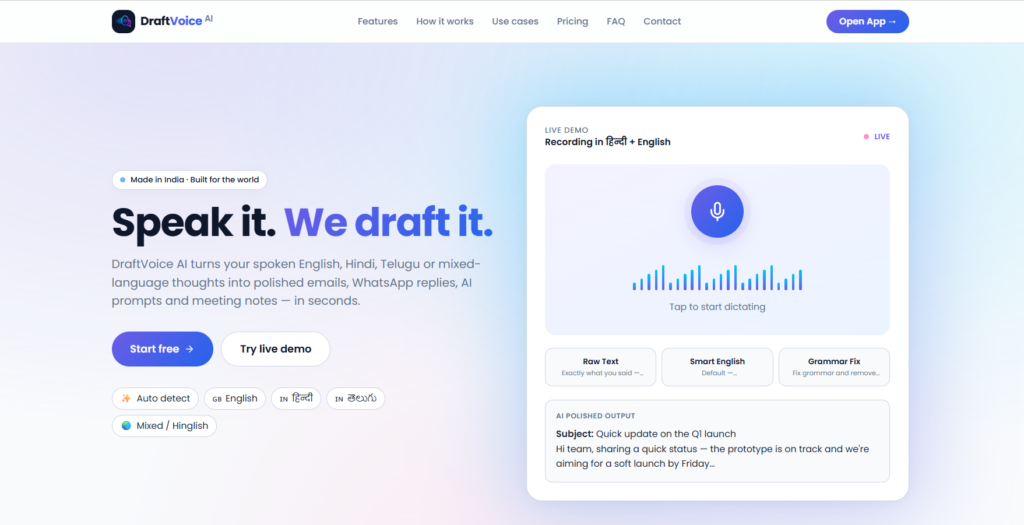
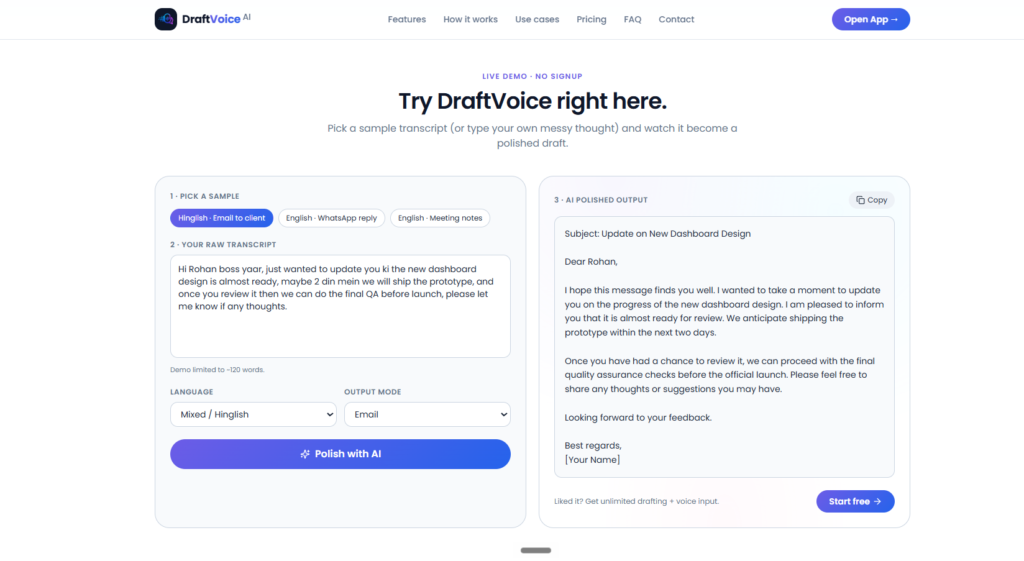
The platform is designed around a simple but useful flow. Users speak, DraftVoice AI listens, and the tool transforms the speech into structured written content. The product supports business communication, meeting notes, short replies, AI prompts, and multilingual speech use cases, which makes it more versatile than a basic voice recorder.
That matters because people do not always need raw transcription. Often they need something that is already cleaned up, formatted, and ready to use. DraftVoice AI seems built for that exact gap between spoken thought and finished text.
Why it feels practical
Many productivity tools try to do too much at once. DraftVoice AI feels more focused. It is centered on one clear problem: helping people turn voice into usable writing faster. That clarity gives the product a strong identity.
It is especially useful for professionals, creators, agencies, founders, support teams, and students who repeatedly need to draft notes or replies throughout the day. If a user can speak naturally and get a decent draft back in seconds, that is a real workflow advantage.
One thing that makes the product more interesting is its attention to Indian-language and mixed-language speech. The report specifically mentions Hindi, Telugu, and mixed speech support as an important direction. That is a big deal because many users naturally switch between languages while speaking, especially in business settings.
This gives DraftVoice AI a practical edge in the Indian market. A tool that understands how people actually speak is usually more valuable than one that only works well in ideal English-only conditions.
The desktop app direction is one of the strongest parts of DraftVoice AI. The idea is simple: install once, log in once, and dictate into any text field on the computer. That kind of system-wide input can make the product feel like a true daily utility instead of just another web app.
If the floating mic bubble, tray behavior, and shortcut workflow are polished well, this could become the feature people remember most. A desktop companion that works across apps is often the kind of tool users keep around because it saves tiny amounts of time all day long.
DraftVoice AI also looks more mature than a hobby project because it includes billing, plans, admin controls, usage tracking, and subscription handling. That gives it a real SaaS foundation. It is clearly being built with both individual users and teams in mind. The platform includes a free plan, pro plan, and team plan, which suggests it can grow beyond single-user productivity into a broader business tool. That kind of structure matters if the product wants to become sustainable over time.
The report shows a solid stack: React on the frontend, FastAPI on the backend, MongoDB for storage, and Electron for the desktop app. That is a practical setup for a modern productivity platform. It may not be flashy, but it supports the kind of modular growth the product needs.
There is also already a clear deployment structure with frontend and backend services, reverse proxy routing, and admin-level control. For a product in this category, that is a good sign because it shows the team is thinking about operations, not just features.
A few lighter concerns
Like any early product, DraftVoice AI still has some rough edges. Telugu transcription needs improvement, the desktop app still needs more polish, and the installer trust experience could be smoother. These are not major red flags, just the kind of things that usually get refined as a product matures.
In a lighter sense, these are the “good problems” of a tool that is already useful enough to deserve polishing. The foundation is there; the finishing touches are what will make it feel truly premium.
DraftVoice AI is a useful and thoughtfully positioned voice productivity tool. It solves a real problem, has a clear use case, and already includes many of the building blocks needed for a serious product. The strongest parts are its voice-to-draft workflow, multilingual direction, and desktop productivity vision.
It still has improvements to make, but the overall direction is strong. If the team sharpens the transcription quality and desktop experience, DraftVoice AI could become a valuable tool for anyone who wants to speak naturally and write faster.
Review Summary: DraftVoice AI is a practical voice-first productivity tool that turns speech into clean writing, with strong desktop potential and multilingual value, though a few polish issues remain.
H View writer sharing practical, balanced, and reader-first insights.
Share your real experience and help other readers decide better.
No community views yet. Be the first to share yours.
Open LinkedIn for a few minutes and you will probably come across a colourful graphic…
Harika October 6, 2026 
When an employee resigns, many organisations move quickly into replacement mode. The manager informs HR,…
Harika October 6, 2026 
For many corporate employees, the workday begins long before they actually start working. They wake…
Harika October 5, 2026 
Many projects begin with an assumption that sounds reasonable on paper: the client will explain…
Harika October 1, 2026