

Best Digital Marketing Tools in 2026: What Marketers Actually Need and What They Can Skip
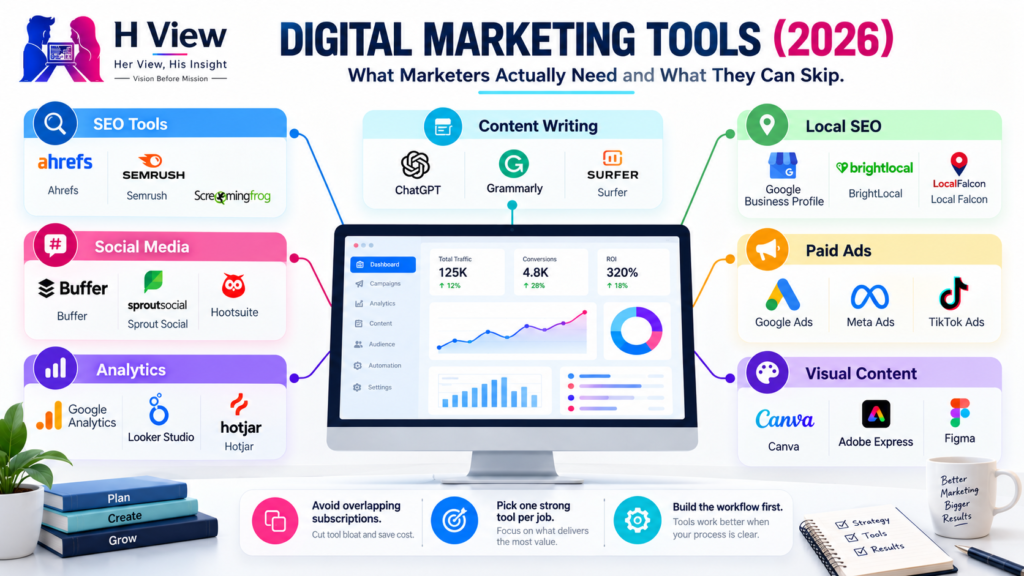
Open LinkedIn for a few minutes and you will probably come across a colourful graphic…
 Harika October 6, 2026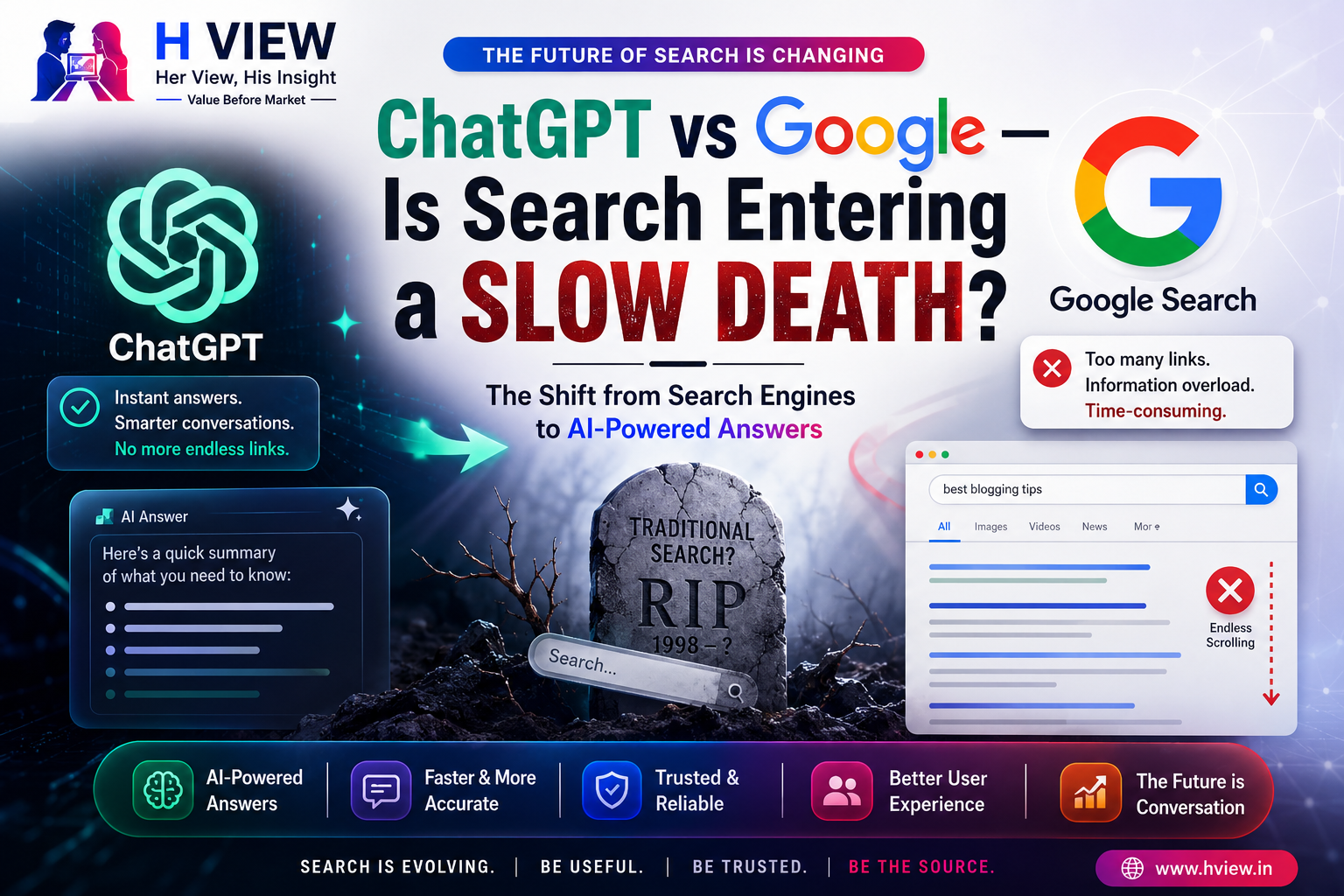
 By PraveenUpdated June 5, 20264 min read62 views
For decades, Google was the gateway to the internet. Today, millions are skipping search entirely and asking AI directly. Is this the beginning of the end for traditional search? Lets understand this shift in a more nuanced and detailed manner.
For over two decades, Google dominated the internet so completely that its name itself became a verb.
Need information? Google it.
Need to learn something? Google it.
Need directions, reviews, opinions, or answers? Google it.
Search engines fundamentally changed how humans interacted with knowledge. People learned how to search, compare sources, refine queries, and navigate information. Searching itself became a skill.
At the same time, an entirely new ecosystem emerged around search. SEO became a major industry. Businesses competed not just on products, but on discoverability. Websites were designed for rankings. Content was optimized for visibility.
Then came ChatGPT.
When AI tools like ChatGPT became mainstream, they changed something much deeper than technology. They changed the way humans interact with information itself.
Traditional search engines help users find information.
AI, however, directly synthesizes and delivers answers conversationally.
That single shift changes everything.
Earlier, users searched, opened multiple links, read different perspectives, and eventually formed their own understanding. AI removes most of that process and presents conclusions instantly.
Instead of navigating the internet, users now simply ask questions.
This is why many people are beginning to wonder:
Is AI slowly replacing search itself?
In many ways, the answer is yes.
For informational queries, millions of users are already skipping traditional search engines and asking AI directly. Whether it is coding, summarizing, explaining concepts, writing content, or brainstorming ideas, AI dramatically reduces the need to visit multiple websites.
AI saves time.
And convenience almost always changes human behavior.
But does that mean Google Search is dying completely?
Probably not.
Search and AI fundamentally solve different problems.
Search is retrieval.
AI is synthesis.
Search helps humans discover information.
AI helps humans interpret and use information.
Even today, search engines still remain important for:
What is changing is not the existence of search — but its role.
AI is becoming the first layer of understanding, while search may increasingly become the layer for validation and exploration.
This shift also creates major implications for the internet ecosystem itself.
If users stop visiting websites and rely only on AI-generated summaries:
The internet was built on discovery through links. AI changes that model by compressing knowledge into direct conversations.
And perhaps that is the biggest transformation happening right now.
Google organized the internet.
AI is beginning to interpret it.
The future therefore may not belong entirely to search engines or AI assistants alone. Instead, it may belong to a hybrid model where AI accelerates understanding while search continues to provide evidence, sources, and deeper exploration.
Because knowledge is not just about receiving answers quickly.
It is also about understanding where those answers came from.
AI feels magical because it removes friction. It makes learning easier, faster, and less intimidating for ordinary users.
But sometimes, easy answers can slowly reduce curiosity itself.
The danger is not convenience. The danger is dependency.
Search trained humans to explore information.
AI trains humans to consume synthesized conclusions.
That changes not only technology and business models, but potentially human behavior itself.
Search is humanity’s library.
AI is humanity’s interpreter.
One helps us find knowledge.
The other helps us use it.
The real question is not whether AI replaces search.
The real question is whether humans will continue exploring deeply in a world increasingly optimized for instant answers.
Praveen is an H View contributor covering general reviews, leadership, sports, and practical opinion-based topics. His writing focuses on balanced analysis, clear explanations, and reader-friendly insights that help people understand products, ideas, trends, and real-world decisions with more clarity.
Share your real experience and help other readers decide better.
No community views yet. Be the first to share yours.
Open LinkedIn for a few minutes and you will probably come across a colourful graphic…
Harika October 6, 2026 
When an employee resigns, many organisations move quickly into replacement mode. The manager informs HR,…
Harika October 6, 2026 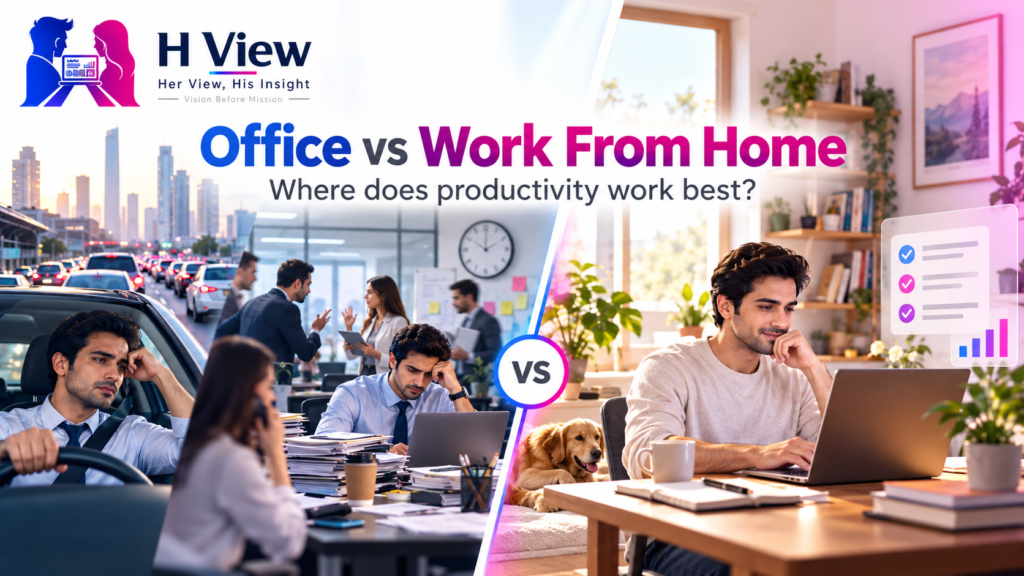
For many corporate employees, the workday begins long before they actually start working. They wake…
Harika October 5, 2026 
Many projects begin with an assumption that sounds reasonable on paper: the client will explain…
Harika October 1, 2026