Best Digital Marketing Tools in 2026: What Marketers Actually Need and What They Can Skip
Open LinkedIn for a few minutes and you will probably come across a colourful graphic…
 Harika October 6, 2026
  By HarikaUpdated July 17, 202611 min read33 views
Artificial intelligence is becoming part of the modern workplace faster than many employees expected.
It can write emails, summarise meetings, analyse data, generate presentations, answer customer questions, create reports, review documents, suggest code, and automate repetitive tasks. In many offices, AI is already being used even when there is no formal company-wide AI strategy.
For some employees, this feels exciting. AI can reduce routine work, improve speed, and make difficult tasks easier.
For others, it creates an uncomfortable question:
Is AI helping me perform my job, or is it quietly learning how to replace parts of it?
The answer is not simple.
AI can be both a helpful assistant and a serious competitor. Much depends on the kind of work being performed, how organisations introduce automation, and whether employees are given opportunities to adapt.
The real workplace challenge may not be humans versus AI. It may be how humans learn to work with AI without losing confidence, skills, judgment, or job security.
AI adoption does not always begin with large machines or dramatic job cuts.
It often starts with small conveniences.
An employee uses AI to improve an email. A manager asks it to summarise a report. A marketing team generates campaign ideas. A recruiter prepares job descriptions. A developer asks for help debugging code.
Soon, AI becomes part of several daily processes.
Common workplace uses include:
These uses can improve efficiency. But they also change how much human effort is required for certain responsibilities.
When a tool begins handling more of a role, employees naturally wonder what remains uniquely theirs.
From one perspective, AI is a valuable workplace assistant.
Many jobs contain repetitive tasks that consume time without requiring much creativity or judgment. Employees may spend hours formatting reports, copying information, taking meeting notes, preparing routine emails, or organising data.
AI can reduce this burden.
A customer-support employee can use AI to draft replies and spend more time handling complex complaints. A project manager can automate meeting summaries and focus on decision-making. A designer can generate early concepts before refining the strongest one.
A developer can use AI to understand errors, create basic code structures, and speed up documentation. An HR professional can organise candidate information while spending more time on interviews and employee concerns.
In these cases, AI does not remove the human role. It helps the person spend more time on meaningful work.
It can also support employees who struggle with language, writing, technical confidence, or time pressure.
When introduced thoughtfully, AI can reduce stress and help people perform at a higher level.
The other side is more complicated.
When AI helps an employee finish a task twice as fast, the organisation may not always respond by reducing workload.
Instead, it may expect twice as much output.
A writer who once completed three articles may now be expected to produce six. A support employee may be assigned more customers. A developer may be asked to deliver features in less time.
This means AI efficiency can create a new form of workplace pressure.
Employees may feel that using AI is no longer optional. They may be expected to work faster without receiving additional pay, recognition, or training.
There is also a risk that companies begin asking whether fewer employees can handle the same workload.
The tool that first appeared as an assistant can then influence hiring, restructuring, and job reduction decisions.
AI is more likely to affect tasks than eliminate complete professions immediately.
Roles involving predictable, repetitive, text-heavy, or data-processing work may experience faster change.
Examples include:
However, most jobs include several different responsibilities.
A customer-support professional also handles emotions, unusual cases, and relationship-building. A marketer needs audience understanding, strategy, brand judgment, and creative direction.
A developer must understand systems, security, user requirements, and long-term maintenance. A recruiter must evaluate communication, motivation, and cultural fit.
AI may automate some parts while making the remaining human responsibilities more valuable.
People often imagine job competition as human versus machine.
A more realistic situation may be human versus human—with one person using AI more effectively.
Two employees may have similar experience, but one knows how to:
That person may appear more productive and adaptable.
This does not mean every employee must become an AI expert. It means basic AI literacy may gradually become similar to knowing how to use email, spreadsheets, or presentation software.
The workplace advantage may go to people who combine professional knowledge with responsible AI use.
AI can generate polished answers, but it does not automatically understand the full reality of a workplace.
It may not know the history behind a client relationship, the unspoken tension within a team, the practical limitations of a project, or the consequences of a poorly timed decision.
Experienced employees bring context.
They know which problems have been tried before. They recognise when a customer is likely to leave. They understand how a manager prefers information to be presented. They can notice when a technically correct answer is practically unrealistic.
This type of judgment is difficult to capture in a prompt.
AI can process information quickly, but experience helps people understand what the information means.
The strongest employees may be those who use AI for speed while relying on experience for direction.
AI can improve performance, but complete dependence creates new risks.
An employee who uses AI for every email may lose confidence in professional communication. Someone who accepts every AI summary may stop reading important documents carefully.
A developer who repeatedly copies generated code without understanding it may struggle when the system breaks. A manager who depends on automated recommendations may gradually weaken decision-making skills.
This creates a hidden vulnerability.
The employee appears productive while the tool is available. But if the AI makes a mistake, becomes unavailable, or faces a task outside its strengths, the employee may struggle.
AI should strengthen professional ability, not conceal the absence of it.
The impact of AI depends greatly on how organisations introduce it.
A responsible company should not simply announce that employees must use AI and then measure only speed.
It should provide:
Employees should know when AI is being used to support work and when it is being considered as a replacement for certain tasks.
Without transparency, even useful AI initiatives can create fear and mistrust.
One of the biggest workplace risks is employees entering sensitive information into public AI tools.
This may include:
Employees may use AI with good intentions, such as summarising a document or improving a report. But uploading confidential information can create privacy, legal, or security concerns.
Before using AI at work, employees should understand company policies and whether the tool is approved for sensitive data.
Convenience should never override confidentiality.
AI makes it easier to produce acceptable first drafts.
That can be helpful, but it can also lead to sameness.
If every team uses similar tools and accepts similar outputs, reports, emails, advertisements, websites, and presentations may begin to sound alike.
The work becomes polished but predictable.
Human insight is what creates distinction.
A strong employee does not merely ask AI to create an answer. They challenge it, add context, remove generic language, and improve the result using professional experience.
AI can help produce average work quickly. Creating exceptional work still requires judgment, originality, and care.
Employees do not need to learn every AI platform.
A focused approach is more useful.
Start with tasks that consume time but do not require complex judgment.
Use AI for one real task, such as meeting summaries, research organisation, email drafting, or spreadsheet analysis.
Check facts, tone, calculations, security, and relevance before using AI-generated work.
The more you understand your profession, the better you can judge AI output.
Communication, leadership, empathy, negotiation, creativity, and problem-solving remain valuable.
Do not allow AI to make your work invisible. Show how you improved quality, solved problems, supported clients, or reduced risk.
Understand which parts of your profession are becoming automated and which skills are gaining importance.
Managers also need to adapt.
AI should not be used only as a reason to demand more output.
Poor implementation can create burnout, fear, and lower-quality work.
Managers should avoid:
A workplace becomes stronger when AI supports employees rather than making them feel disposable.
AI is probably supporting your career when:
There may be a problem when:
Recognising these signs early gives employees time to adapt.
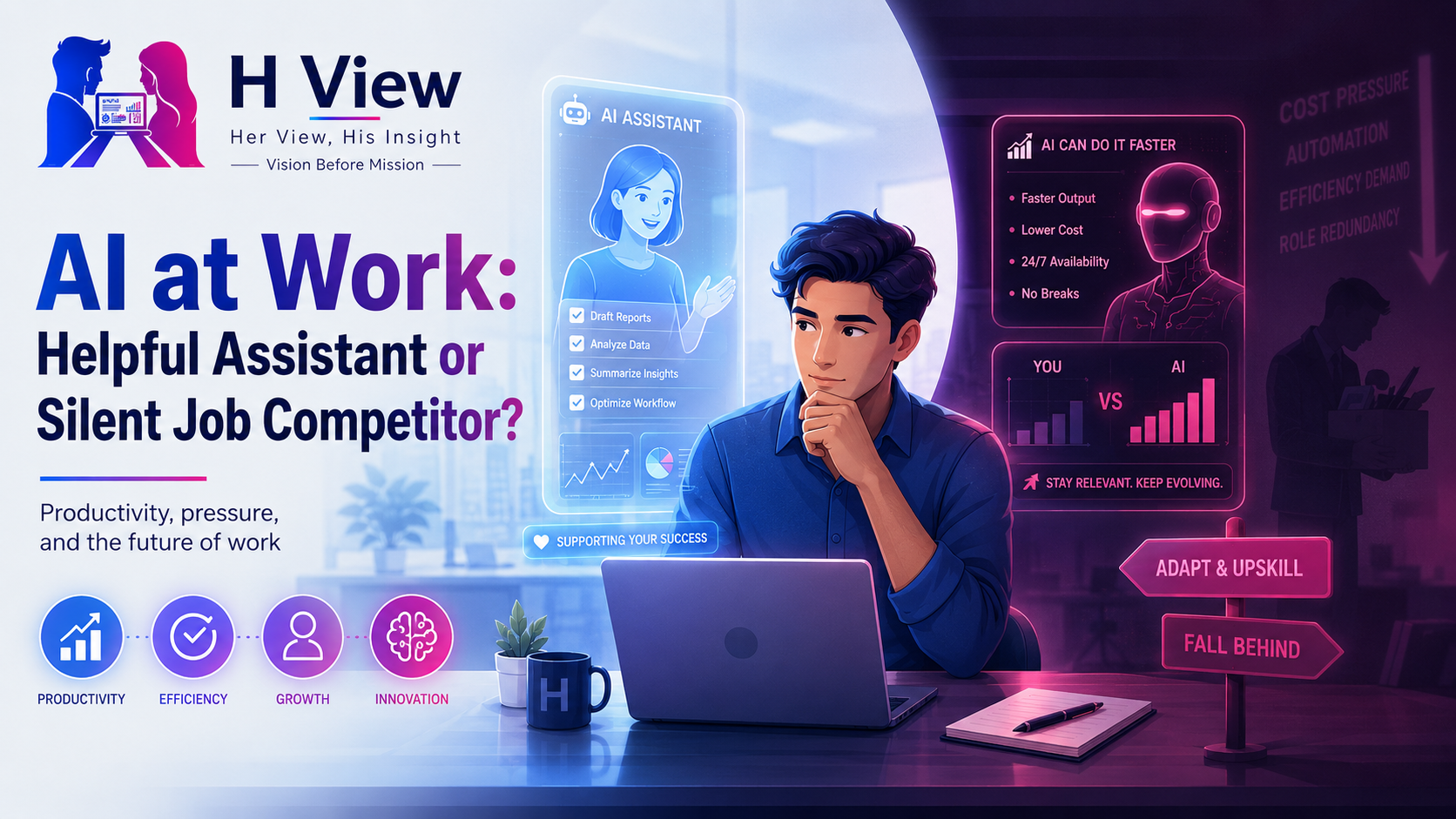
Her View: AI can reduce repetitive work, improve access to knowledge, increase confidence, and help employees focus on creativity, customers, strategy, and problem-solving.
His Insight: The same efficiency can increase expectations, reduce staffing, weaken skills, and make employees feel replaceable. Without transparency and training, AI can become a silent competitor.
Both views are valid.
AI at work is not automatically good or bad. Its impact depends on how organisations use it and how employees respond.
AI will likely change many jobs, but change does not always mean disappearance.
Some tasks will become automated. Some roles will be redesigned. New responsibilities will emerge. Employees may need to learn different ways of working.
The safest response is neither panic nor denial.
Employees should understand AI, use it where it adds value, protect confidential information, and continue building the human skills that technology cannot easily reproduce.
Companies also have a responsibility to introduce AI honestly and fairly. Productivity improvements should not come at the cost of employee trust, quality, or wellbeing.
AI can be a helpful assistant.
It becomes a silent competitor when organisations value automation more than experience, or when employees stop developing the knowledge that makes their work meaningful.
The future of work may not belong to AI alone.
It may belong to people who know how to work with AI while still bringing judgment, responsibility, creativity, and humanity to the job.
AI may automate parts of many office jobs, especially repetitive and predictable tasks. Complete roles are less likely to disappear immediately because most jobs also require judgment, communication, context, and accountability.
Critical thinking, communication, leadership, creativity, negotiation, empathy, domain expertise, and decision-making remain highly valuable because they help employees judge and improve AI-generated work.
Employees should follow company policies. Using unapproved AI tools may create privacy or security risks, especially when confidential business or customer information is involved.
Yes. AI can reduce time spent on routine writing, summarising, analysis, documentation, and administrative work. Productivity improves most when employees review and refine the output.
Freshers may be more vulnerable when AI automates entry-level tasks that traditionally helped them build experience. However, they can also benefit by using AI to learn faster while continuing to develop strong fundamentals.
Employees should understand the tasks they delegate, verify outputs, practise important skills independently, and retain responsibility for final decisions.
Companies should establish clear policies, provide role-specific training, protect confidential data, define human-review requirements, and communicate honestly about how automation may affect jobs.
Not automatically. Value comes from combining AI efficiency with professional knowledge, accuracy, judgment, creativity, and reliable results.
Harika is the co-founder of H View and covers AI, technology, gadgets, digital tools, online platforms, and modern internet trends. Her articles focus on simplifying complex topics with practical explanations, balanced opinions, and reader-first insights.
Share your real experience and help other readers decide better.
No community views yet. Be the first to share yours.
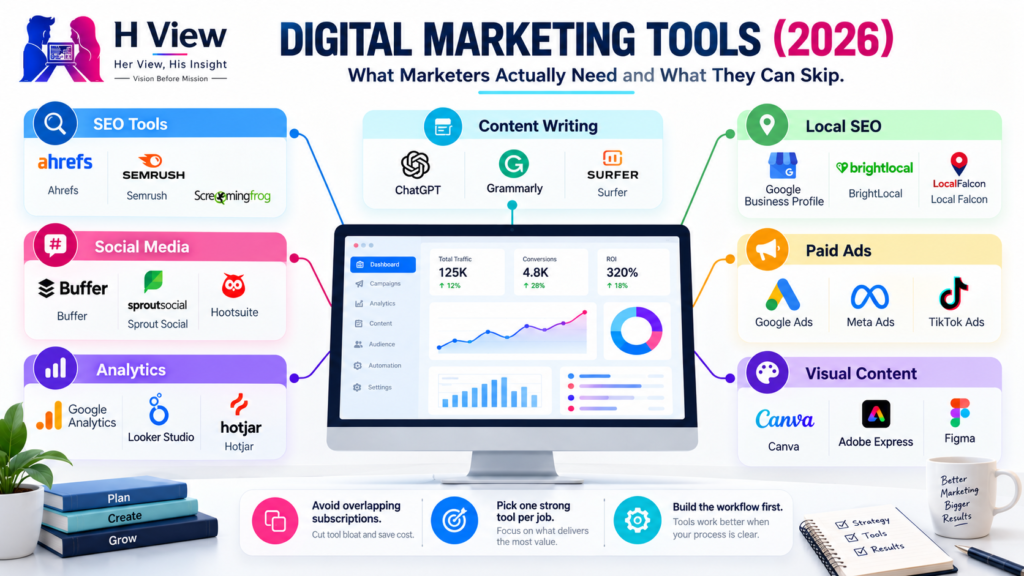
Open LinkedIn for a few minutes and you will probably come across a colourful graphic…
Harika October 6, 2026 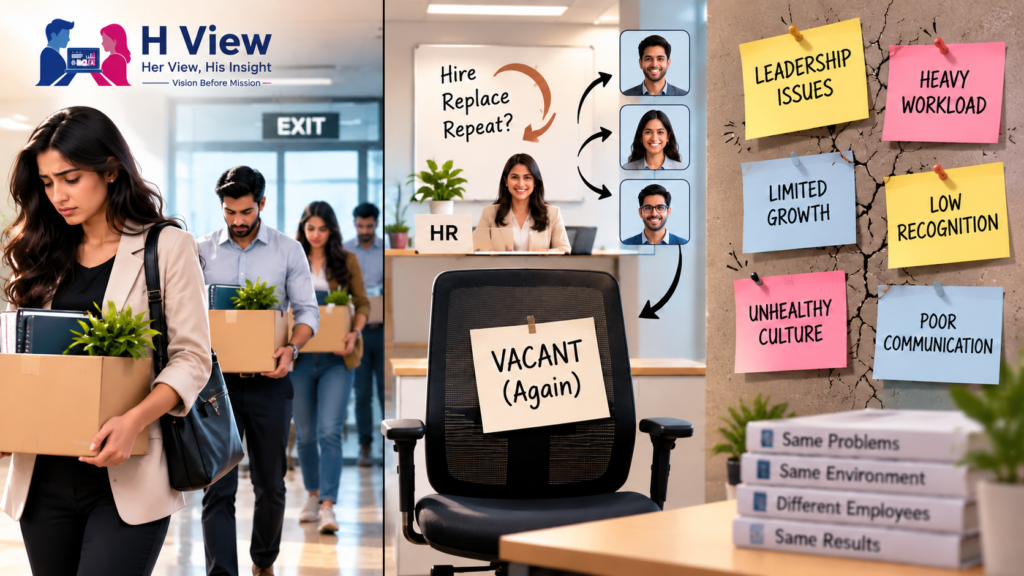
When an employee resigns, many organisations move quickly into replacement mode. The manager informs HR,…
Harika October 6, 2026 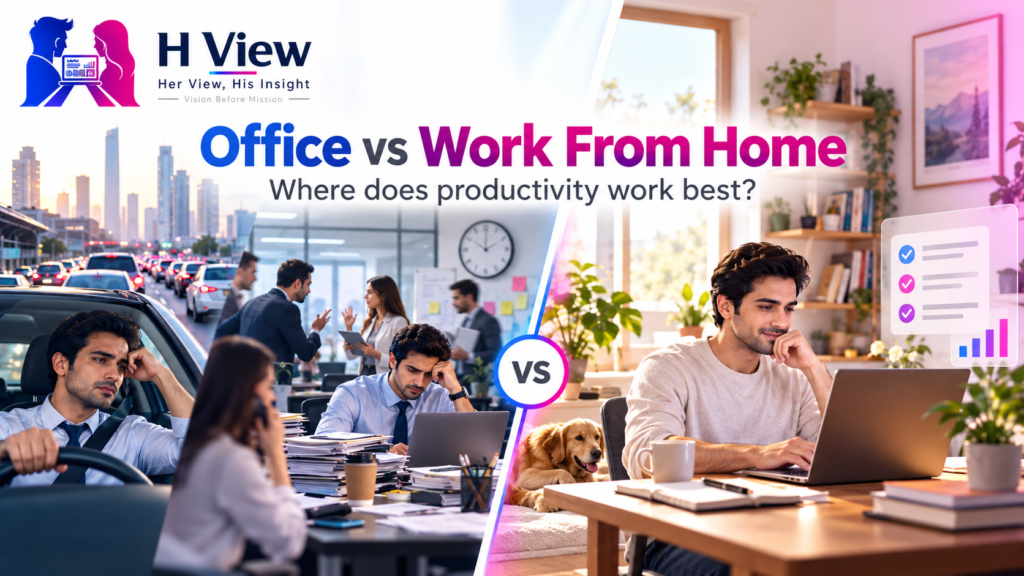
For many corporate employees, the workday begins long before they actually start working. They wake…
Harika October 5, 2026 
Many projects begin with an assumption that sounds reasonable on paper: the client will explain…
Harika October 1, 2026