


Best AI for Coding in 2026: ChatGPT, Claude, Gemini or Something Else?
A few years ago, asking for the best AI for coding usually meant asking which…

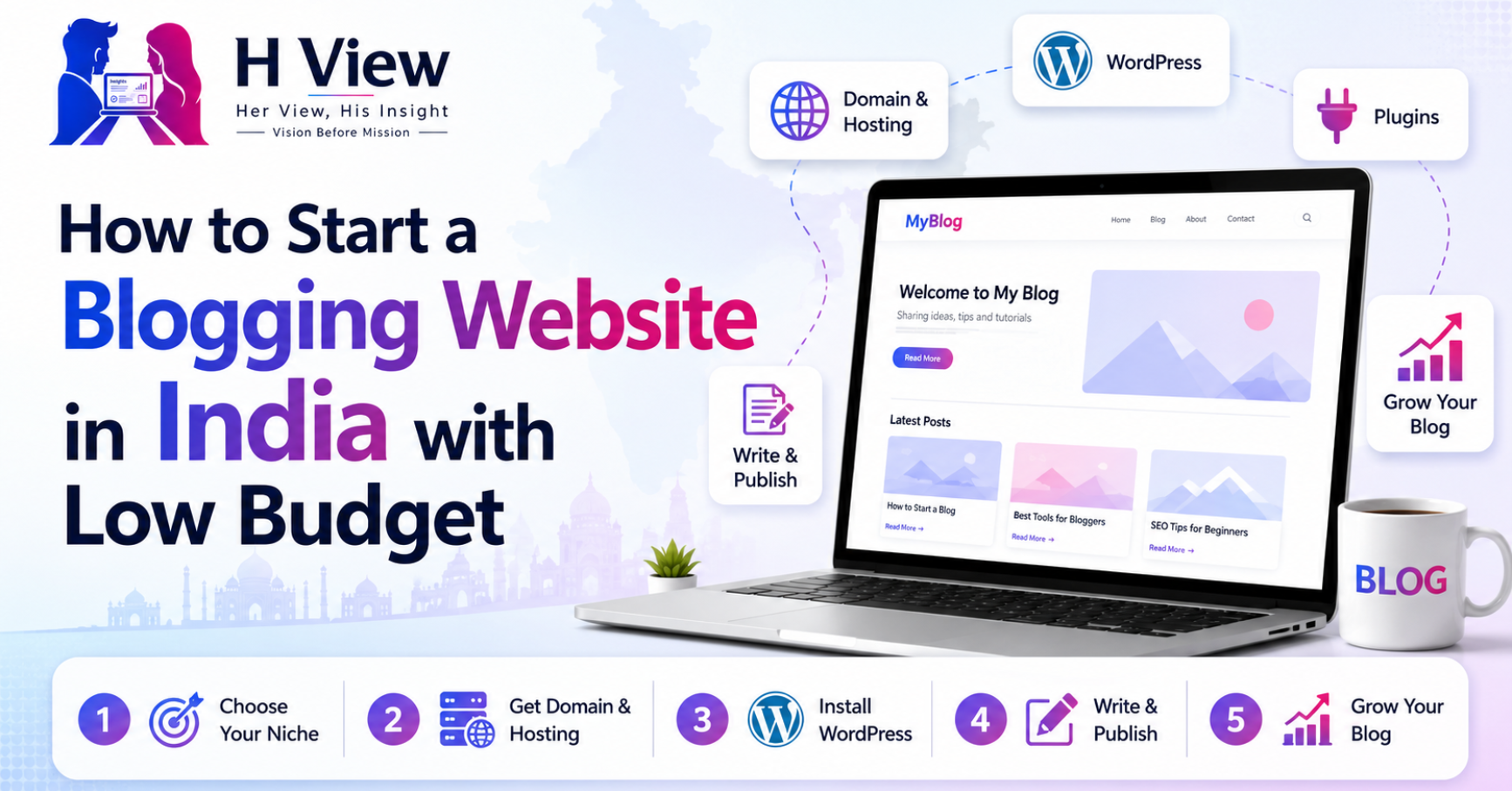
Starting a blog often looks more expensive and complicated from the outside than it really is. A beginner may assume they need premium hosting, a professional designer, paid SEO software, a custom logo, several plugins and a large collection of articles before the website can even go live. When all of those things are added together, blogging can start to feel like a project that requires a serious investment before the first article is published.
That is not how it has to begin.
A simple blogging website can be started with a relatively small budget if you are willing to build it gradually. The first version of your blog does not need every feature you may want a year from now. It needs a reliable foundation, a clear topic, a website people can comfortably read, and enough useful content to give visitors a reason to return.
The bigger investment in the early days is often not money. It is time. You need time to understand your subject, learn how WordPress works, write useful articles, improve your website, and discover what your readers actually care about.
If you are starting a blog in India with limited resources, that slower approach can actually be an advantage. It forces you to separate what you genuinely need from everything that simply looks attractive when you are setting up a new website.
Before choosing a domain or comparing hosting plans, spend some time thinking about why you want a blog in the first place.
People start blogs for very different reasons. Some want to share what they know. Some want to build a personal brand around their profession. Others want to create a review website, support an existing business, attract clients, build an audience, or eventually create an additional source of income.
Your reason influences almost every decision that follows.
A personal technology blog may need a very different content strategy from a website built to support a local business. A blog about careers may depend heavily on guides and practical explanations, while a product-review site will eventually need comparisons, testing, pricing context and buying advice.
This is why we use the idea Vision Before Mission at H View. Starting quickly is useful, but knowing what you are trying to build makes the next decisions much easier.
If you are still unclear about the broader purpose of blogging, our article on What Is H View? shows how a content platform can begin with a clear point of view rather than simply publishing articles on random subjects.
One of the first decisions new bloggers struggle with is choosing a niche. The usual advice is to find a profitable niche, but profitability alone is not a particularly good reason to spend the next several years writing about something.
A better niche sits somewhere between what people are interested in and what you can realistically keep learning and writing about.
For example, technology may be interesting to you, but “technology” is extremely broad. You could narrow it towards affordable gadgets, AI tools, WordPress, smartphones, software for small businesses, or technology for students. The subject remains large enough to grow, but the audience understands what kind of value they can expect.
The same principle works for careers, finance, food, travel, business or lifestyle. You do not have to make the niche so narrow that you run out of ideas after twenty articles, but you should avoid making the website so broad that it has no identity.
A useful question to ask is this: Could I still think of worthwhile articles on this subject a year from now?
If the answer is yes, and there are people genuinely looking for help around that topic, you probably have something worth developing.
Once the direction is reasonably clear, you can think about the name of the blog.
Beginners sometimes spend weeks trying to find the perfect domain name. It matters, but it does not need to be clever. A good name is usually easy to remember, easy to type and broad enough that you are not trapped if the website develops in a slightly different direction later.
Avoid names that depend on difficult spellings, unnecessary numbers or combinations that people may struggle to remember after hearing them once.
The domain extension also depends on your plans. A .in domain can make sense for a platform strongly connected with India, while .com is widely recognised if you want a more international identity. Neither extension will rescue poor content, and neither will prevent good content from growing. The name is part of the brand; the quality of the site matters far more over time.
For many beginners, hosting is the first meaningful expense.
It is also an area where marketing can make comparison unnecessarily confusing. Hosting companies often advertise very low introductory prices, but the amount you pay at renewal may be different. Some plans include backups, email, SSL or other features, while others charge separately or limit them.
For a new blog with very little traffic, you usually do not need an advanced server. A beginner-oriented shared or WordPress hosting plan is often enough to get started. What matters more is whether the service is stable, reasonably fast, easy to manage and supported when you need help.
Before paying, look beyond the promotional banner. Check what happens after the introductory period, how many websites the plan supports, whether backups are included, how easy WordPress installation is, and whether the company provides useful support.
If you want to explore this decision in more depth, our guide to the best WordPress hosting for beginners in India explains the factors that matter when choosing a beginner plan. We have also discussed one commonly used option separately in our Hostinger review for WordPress bloggers in India.
The cheapest hosting is not automatically the best low-budget choice. A service that saves a small amount of money but gives you constant technical problems can become expensive in a different way.
WordPress remains attractive to bloggers because it gives you control over the website without requiring you to build everything from code.
Once WordPress is installed, you can manage articles, pages, menus, images, categories and most common website functions from the dashboard. Themes control much of the design, while plugins add features when you actually need them.
That flexibility can also become a trap.
A new WordPress user can easily spend days installing themes, testing page builders, adding animations and experimenting with plugins without publishing a single useful article. The site starts becoming technically complicated before it has an audience.
Try to resist that temptation.
Choose a lightweight theme, make sure the site works properly on mobile, set readable typography, create a clear navigation menu and move on to the content. Design can improve gradually. Visitors are much more likely to forgive a simple website than a slow, confusing one.
A blog should feel like a real website rather than a collection of disconnected posts.
Before publishing dozens of articles, create the pages that explain who you are and give readers a way to understand or contact the website. A typical blog will need pages such as About, Contact, Privacy Policy and relevant disclosures. If you plan to use affiliate links or sponsored partnerships later, those relationships should also be disclosed clearly.
You will also need a sensible category structure, but do not create twenty categories on the first day. Empty categories make the website feel unfinished.
Start with a handful of categories that reflect the main subjects you genuinely expect to publish. New categories can always be introduced later when enough content exists to justify them.
WordPress plugins can solve almost any problem, which is exactly why beginners often install too many.
You may eventually need tools for SEO, caching, security, backups, contact forms, image optimisation and analytics. That does not mean you need five plugins doing overlapping versions of the same job.
Every additional plugin introduces something else to maintain, update and troubleshoot. Poorly maintained or unnecessary plugins can also affect performance and security.
A simple rule helps: install a plugin when you can clearly explain what problem it solves.
For beginners who want a more detailed starting point, our guide to the best WordPress plugins for bloggers can help you understand which plugin categories are actually useful instead of treating installation like a checklist.
A common mistake in the early stages of blogging is publishing whatever idea comes to mind that day.
That can work for a personal journal, but a blog that hopes to attract search traffic or build expertise benefits from more planning.
Suppose your website is about blogging and WordPress. Instead of writing ten unrelated posts, you could create a connected group of articles around starting a blog. One article explains the initial setup, another compares hosting, another covers plugins, and another helps readers understand AI or design tools that may support their workflow.
Those articles reinforce one another and create natural opportunities for internal linking.
Your first content plan does not have to be enormous. Ten genuinely useful article ideas are enough to begin. What matters is that they belong together and answer real questions.
SEO matters, but beginners sometimes misunderstand what optimisation means.
They may repeat a keyword awkwardly, make every paragraph extremely short, add headings that do not need to exist, or stretch an article simply because they believe Google expects a particular word count.
A useful article should first answer the reader’s question properly.
If the topic needs 1,500 words to explain well, write them. If a point can be explained clearly in two paragraphs, do not turn it into six just to make the article longer. The quality comes from useful detail, examples, experience and clarity rather than the number itself.
Search-friendly structure still helps. A clear title, meaningful H2 sections, occasional H3 subheadings, useful internal links and a sensible FAQ section can make an article easier for both readers and search engines to understand. But those elements should support the writing rather than control it.
This is also where original experience becomes valuable. If you struggled with a particular WordPress setting, tested two approaches, discovered a hidden renewal charge, or found a simpler way to solve a problem, that information gives your article something another generic guide may not have.
There is no magic number of articles you need to publish every week.
For someone working or studying full-time, one carefully written article every week may be realistic. Someone who can dedicate more time may manage two or three. The important part is building a schedule you can continue without letting quality collapse.
A blog rarely succeeds because the owner published intensely for three weeks. It grows when useful content keeps appearing, older articles are improved, and the website gradually develops authority around its subjects.
Consistency also gives you time to learn. Your twentieth article will probably be better than your second because you will understand your audience, your writing style and your website more clearly.
New blogs do not receive large amounts of traffic automatically.
You can introduce your work through places where your intended readers already spend time. LinkedIn may make sense for careers and business. Instagram could be useful for lifestyle or visual topics. Pinterest can work well for certain evergreen subjects. WhatsApp may even help during the very early stage when you simply want friends and contacts to discover what you have created.
The mistake is trying to manage every platform at once.
Choose one or two channels that make sense for your subject. Turn parts of an article into a short post, graphic, carousel or discussion, and use those platforms to bring interested readers back to the full article.
Promotion should extend the value of the content, not become another full-time job before the blog itself is ready.
It is completely reasonable to want a blog to earn money. The problem begins when every article is created only because it can contain an affiliate link.
A new website first needs something worth trusting.
Over time, blogs may earn through advertising, affiliate partnerships, sponsored content, services, digital products, consulting or other business opportunities. Which method works best depends heavily on the niche and the audience.
For example, a WordPress blog may naturally recommend hosting or software. A career website may eventually offer services or educational products. A strong personal brand could lead to consulting opportunities.
But monetisation works better when it grows from reader trust rather than replacing it.
If an affiliate product is genuinely useful, recommending it can benefit both the reader and the publisher. If the recommendation exists only because the commission is attractive, readers eventually notice.
Starting cheaply does not mean avoiding every paid tool. It means knowing what deserves money now and what can wait.
The essentials are fairly limited: a domain, hosting, a working website and the ability to create useful content. Premium themes, expensive keyword tools, advanced email systems, custom development and paid design subscriptions can be added later if the blog reaches a stage where they solve a real limitation.
A beginner with ₹20,000 worth of tools but no useful articles does not have a stronger blog than someone using mostly free software and publishing genuinely helpful content.
Your first budget should help you get online, stay secure, and publish comfortably. It does not need to imitate the technology stack of a large media website.
From a beginner’s point of view, the most important thing is to make blogging feel manageable.
There will always be something else you could improve. The logo could be better. The homepage could look more polished. Another plugin could add a feature you saw on a competitor’s website. If you wait until every detail feels professional, you may never reach the part that actually matters: publishing.
A clean website with five useful articles is a better beginning than a beautifully designed website with nothing meaningful to read.
Start with what you can handle. Learn as problems appear. Your blog is allowed to look like a young website while it is still becoming one.
From a practical perspective, blogging becomes more effective when each article supports a larger content plan.
Think in topics rather than isolated posts. Connect related articles through internal links, understand why someone is searching for each topic, update older content when information changes, and pay attention to which pages actually attract readers.
You do not need advanced analytics on the first day, but eventually the numbers can tell you what your audience values. Some topics may receive search traffic while others bring almost nothing. Certain articles may lead readers to several more pages. Those patterns can help you decide what to publish next.
The technical setup gets the blog online. The long-term strategy is what turns it into something valuable.
Yes. A beginner can start with a domain, basic hosting, WordPress, a lightweight theme and mostly free plugins. It is usually better to upgrade gradually instead of paying for many premium tools before you know whether you need them.
No. A basic WordPress blog can be created and managed without coding. Learning some HTML, CSS or other technical skills can become useful later, but they are not required before you publish your first articles.
There is no reliable fixed timeline. Income depends on the niche, quality of the content, traffic, monetisation method and how consistently the website grows. Blogging should not be approached as a guaranteed quick-income method.
There is no mandatory number. Planning the first ten useful articles is a good way to create direction, while building twenty or more strong posts over time can give the website more depth. Quality and topical connection matter more than publishing a large number of weak articles.
For many beginners, yes. WordPress offers enough flexibility to start with a simple blog and expand later without rebuilding the entire website. The learning curve is manageable if you avoid overcomplicating the initial setup.
Starting a blogging website in India on a low budget is possible, but the low-budget approach works best when it is also a low-waste approach.
You do not need the most expensive hosting, the most impressive theme or a collection of premium tools before anyone knows your website exists. You need a clear subject, a reliable basic setup and useful articles that give people a reason to trust what you publish.
The early version of your blog will probably change. Your writing will improve. Your categories may evolve. You may redesign the website after you better understand what readers actually use. That is normal.
Do not wait for a perfect website before beginning.
Start with enough clarity to know what you want to build, spend carefully on the foundation, and put most of your effort into becoming genuinely useful to the people who find you.
A blog becomes valuable slowly. One useful article leads to another, those articles begin supporting each other, readers start discovering the website, and what began as a small personal project can eventually become a recognisable digital asset.
That is a much healthier way to start than trying to build the finished version on day one.
Harika is the co-founder of H View and covers AI, technology, gadgets, digital tools, online platforms, and modern internet trends. Her articles focus on simplifying complex topics with practical explanations, balanced opinions, and reader-first insights.
Share your real experience and help other readers decide better.
No community views yet. Be the first to share yours.
A few years ago, asking for the best AI for coding usually meant asking which…
Every year, Raksha Bandhan arrives with a familiar picture: a sister tying a rakhi around…
There is a particular kind of career uncertainty that many government-job aspirants understand very well.…
Samsung’s Fan Edition phones have always occupied an unusual place in the Galaxy lineup. They…