

Best Digital Marketing Tools in 2026: What Marketers Actually Need and What They Can Skip
Open LinkedIn for a few minutes and you will probably come across a colourful graphic…
 Harika October 6, 2026
  By HarikaUpdated October 6, 202612 min read4 views
When an employee resigns, many organisations move quickly into replacement mode. The manager informs HR, the vacancy is reopened, resumes start arriving, interviews are scheduled, and within a few weeks the company hopes to put another person into the same role. Operationally, this makes sense because the work cannot remain unattended forever.
The problem begins when replacement becomes the only response.
If one employee leaves because of an unhealthy workload, another because of poor leadership, another because of limited growth, and another because their contribution was repeatedly ignored, replacing each person without addressing those conditions simply restarts the same cycle. The organisation becomes increasingly efficient at hiring while remaining strangely ineffective at keeping good people.
That is not a recruitment problem anymore. It is a system problem.
The better leadership question is not only, “Who can replace this employee?” It is also, “What made this employee stop wanting to stay here?”
When somebody resigns, the vacancy is the most visible consequence. The team suddenly has less capacity, deadlines may be affected, clients may need reassurance, and managers immediately feel pressure to restore headcount. Because the vacancy is urgent, recruitment naturally receives most of the attention.
However, the resignation itself may have been developing for months.
An employee may have repeatedly raised concerns about workload and received no meaningful response. They may have asked about career progression but never received a clear answer. They may have watched others receive recognition for visible work while their own contribution remained unnoticed. They may have experienced poor communication, constant urgency, workplace politics, or management behaviour that slowly reduced their trust in the organisation.
By the time the resignation letter arrives, the employee may already have emotionally left long before the company realises there is a problem.
Replacing the person solves the empty seat. It does not necessarily solve what created the empty seat.
Every resignation has an individual story. Employees leave for better salaries, family needs, relocation, career changes, higher education, personal circumstances, or opportunities that the current organisation simply cannot match. Not every resignation is evidence of leadership failure.
The pattern becomes important when similar reasons begin repeating.
If one employee says the workload is unsustainable, that may be an individual experience. If several employees from the same team say the same thing, management should pay attention. If employees across departments repeatedly mention poor recognition, limited growth, unclear priorities, or management pressure, the organisation should no longer treat each resignation as an isolated event.
Repeated reasons reveal the system.
This is where leadership has to move beyond individual replacement and start looking for common causes.
A new employee often creates temporary optimism. The vacancy is filled, the team receives additional support, and management feels that the problem has been resolved.
In reality, the new employee is entering the same environment the previous employee left.
If that environment has not changed, the organisation may simply be resetting the clock.
The new employee may initially be enthusiastic, but after several months they can begin experiencing the same workload, unclear expectations, limited support, poor recognition, or lack of growth. Eventually, they may reach the same conclusion as the person they replaced.
The cycle then looks like this:
| What the Organisation Sees | What May Actually Be Happening |
|---|---|
| Employee resigns | Employee has been disengaging for months |
| HR opens a vacancy | Root cause remains unchanged |
| New employee joins | Same environment continues |
| Team spends time training | Existing employees carry extra pressure |
| Productivity slowly recovers | Structural issue remains |
| New employee becomes experienced | The same frustrations begin appearing |
| Another resignation happens | Recruitment cycle starts again |
The organisation appears to be solving the problem repeatedly, but it may actually be repeating the same problem.
Many companies already conduct exit interviews, but the value depends entirely on what happens afterward.
If HR records that an employee left because of workload, management issues, career growth, or lack of recognition and the information simply becomes part of an exit file, the organisation has collected data without learning from it.
Exit feedback becomes valuable when it is aggregated and reviewed for patterns.
A single comment may not justify major organisational change, but ten employees reporting similar problems should trigger serious questions. Leadership should ask whether certain teams have unusually high turnover, whether specific managers repeatedly lose strong employees, whether some roles have unrealistic workloads, or whether promotion and recognition systems are creating frustration.
This is the same logic companies apply to customers. If many customers complain about the same feature, the company investigates the product. When many employees leave for similar reasons, the workplace itself deserves the same level of investigation.
One weakness in retention strategy is that organisations often begin serious conversations only after resignation.
The employee suddenly receives attention. Managers ask what went wrong, HR schedules discussions, leaders may offer salary corrections, and in some cases a counteroffer appears. The company becomes highly interested in the employee’s satisfaction only when losing them becomes immediate.
A healthier approach is to have those conversations while employees still want to stay.
Managers can regularly ask what is working, what is becoming difficult, whether workloads feel sustainable, whether employees see growth opportunities, and what might eventually make them consider leaving. These discussions do not need to feel like formal retention interviews. They can be part of normal leadership.
The goal is to identify preventable problems before they become resignation reasons.
Not every dissatisfied employee complains loudly. Some continue performing while gradually reducing their emotional investment.
They stop volunteering for additional work, stop raising improvement ideas, stop participating beyond what is required, and become more cautious about taking long-term responsibilities. They may begin documenting everything more carefully, handing knowledge to others, or simply becoming less involved in discussions that once mattered to them.
Management can interpret this as a motivation issue.
Sometimes it is actually a retention warning.
Employees who believe nothing will change often stop spending energy trying to change it. Their silence should not automatically be mistaken for satisfaction.
A resignation does not only affect the person leaving and the HR team hiring their replacement. It affects the employees who remain.
Those employees may temporarily take over unfinished work, support clients, answer questions, document missing knowledge, participate in interviews, and eventually train the new employee. The strongest team members often absorb the biggest share of this additional responsibility because they understand the work best.
If turnover happens repeatedly, the same reliable employees can spend significant portions of their working year onboarding replacements rather than progressing on their own responsibilities.
This creates a secondary retention risk.
The company loses one employee, places additional pressure on another, and may eventually lose that employee too.
This is why turnover can become contagious inside teams when it is not managed carefully.
Compensation matters, and companies should not pretend otherwise. Employees compare salaries, understand market value, and naturally consider financial growth when making career decisions.
However, salary is only one part of retention.
An employee may accept a better-paying role because their current company also lacks growth, recognition, flexibility, or good leadership. In those cases, salary becomes the final reason that makes leaving easier rather than the only reason they wanted to leave.
Counteroffers can temporarily retain people, but they rarely repair damaged trust on their own.
If someone has spent a year feeling undervalued and suddenly receives recognition only after resigning, the employee may reasonably wonder why the organisation needed a resignation letter before noticing their value.
Managers are commonly evaluated through delivery, revenue, deadlines, customer satisfaction, or project performance. Those metrics matter, but they can hide an important question: what happened to the team while those results were being achieved?
A manager who repeatedly meets targets while losing experienced employees may be creating results that are expensive to sustain.
The organisation then pays the hidden price through recruitment, onboarding, knowledge loss, reduced morale, and additional pressure on remaining employees.
Retention should therefore be considered one indicator of leadership health, although it should never be used simplistically. Managers cannot prevent every resignation, and artificially forcing low turnover can create its own problems. The more useful measure is whether strong employees consistently feel supported, developed, and fairly treated.
Organisations often search for one reason behind turnover when the reality is usually more complex. Employees rarely make major career decisions based on a single bad day.
Retention is shaped by the accumulated experience of working inside the organisation.
A useful review should examine several areas:
These are not individual HR initiatives. They require leadership participation because many retention problems originate from day-to-day management decisions.
No organisation can eliminate turnover completely. Some employees will find opportunities the company cannot reasonably match. Others will move for personal reasons or decide to pursue entirely different careers.
The goal should never be to retain everyone forever.
The goal is to understand which resignations were preventable.
If someone leaves because the organisation could not offer a specialised career path, that may be understandable. If several strong employees leave because nobody addressed the same workload or management problem for two years, the organisation has information it should use.
Replacement becomes expensive when the company repeatedly pays the same price without learning anything from the previous departure.
Most employees do not begin a job hoping to resign quickly. They usually want the role to work.
Before looking elsewhere, many people try smaller forms of change. They ask for support, request clearer responsibilities, raise workload concerns, seek recognition, or ask about growth. When those conversations repeatedly produce little change, external opportunities start looking more attractive.
This is why employee feedback deserves attention even when the person is still performing well.
A high performer who raises concerns is not necessarily being difficult. They may actually be giving the organisation an opportunity to retain them.
Ignoring the concern because the employee continues delivering can be one of the easiest ways to lose someone who was still trying to stay.
From a business perspective, replacing an employee can eventually restore headcount. What takes much longer to restore is capability.
Experience contains context that does not appear completely in documents. Employees learn which clients require special communication, which systems have historical limitations, which shortcuts should be avoided, which workflows contain exceptions, and which decisions were made because previous approaches failed.
When experienced employees leave frequently, that organisational memory becomes unstable.
New hiring remains important, but the strongest growth happens when recruitment adds capability to an experienced foundation rather than continuously replacing the foundation itself.
A company that keeps hiring while repeatedly losing experienced people may appear to be growing in numbers while quietly rebuilding the same knowledge again and again.
When an employee resigns, companies naturally need to protect delivery and begin replacement quickly. That operational response is necessary, but it should not be the end of the conversation.
Every resignation contains information.
Sometimes that information will show that the departure was unavoidable. At other times, it will reveal problems with workload, growth, leadership, recognition, flexibility, communication, or culture that can be improved for the people who remain.
The most mature organisations do both things at the same time. They replace the capacity they have lost while investigating why the capacity was lost.
Otherwise, recruitment becomes a revolving door where new employees enter a system that has never understood why previous employees wanted to leave.
Companies should certainly become better at hiring good people. They should become equally serious about building workplaces where good people still want to stay.
Salary matters, but employees also evaluate leadership quality, workload, career growth, recognition, flexibility, culture, and whether they feel respected inside the organisation. Competitive pay can attract people, but it may not retain them if the everyday work experience consistently creates frustration or exhaustion.
No. Turnover is a normal part of employment, and people leave for many reasons that organisations cannot or should not try to control. Leadership should focus on identifying repeated patterns and understanding which resignations were realistically preventable.
Exit interviews, engagement feedback, turnover patterns, manager-level retention data, workload analysis, and regular employee conversations can provide useful signals. The most important step is comparing information across multiple departures rather than treating each resignation as a completely isolated event.
Counteroffers can sometimes work, particularly when compensation is the primary issue, but they are less effective when the resignation was caused by damaged trust, poor leadership, limited growth, or unsustainable workload. Companies should understand the reason behind the resignation before assuming that additional money will solve it.
Retention is a shared responsibility. HR influences policies, compensation, engagement, and employee support, while managers influence workload, recognition, communication, development, and daily experience. Senior leadership also shapes culture, organizational priorities, flexibility, and the standards managers are expected to follow.
Companies should manage the handover and replacement process while also reviewing why the employee chose to leave. If the same reasons have appeared in previous resignations, leadership should treat those patterns as organizational data and decide what needs to change for the employees who remain.
Harika is the co-founder of H View and covers AI, technology, gadgets, digital tools, online platforms, and modern internet trends. Her articles focus on simplifying complex topics with practical explanations, balanced opinions, and reader-first insights.
Share your real experience and help other readers decide better.
No community views yet. Be the first to share yours.

Open LinkedIn for a few minutes and you will probably come across a colourful graphic…
Harika October 6, 2026 
For many corporate employees, the workday begins long before they actually start working. They wake…
Harika October 5, 2026 
Many projects begin with an assumption that sounds reasonable on paper: the client will explain…
Harika October 1, 2026 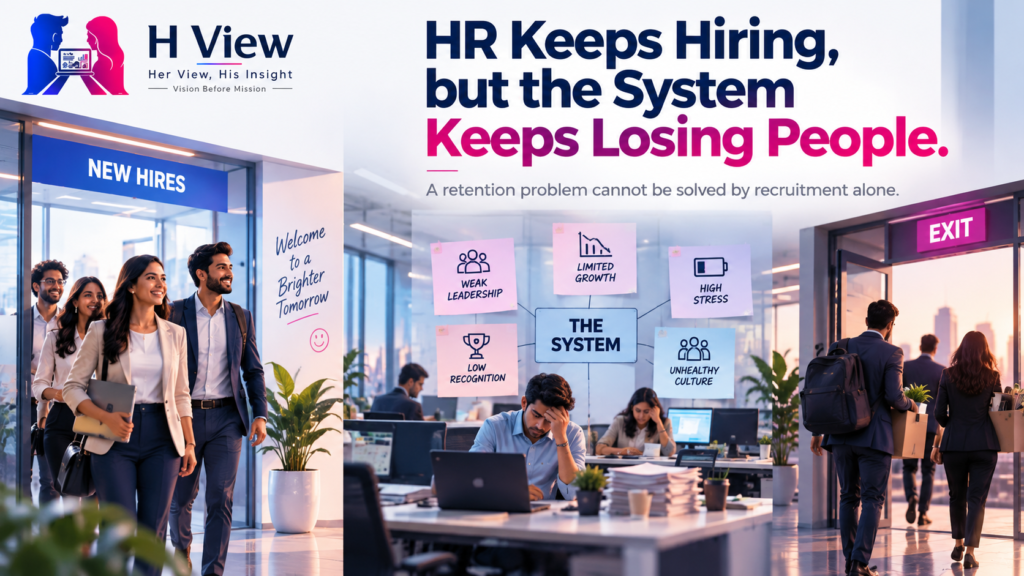
Many companies proudly talk about new hires, growing teams, expanding departments, and increasing headcount. On…
Harika September 30, 2026