

Best Digital Marketing Tools in 2026: What Marketers Actually Need and What They Can Skip
Open LinkedIn for a few minutes and you will probably come across a colourful graphic…
 Harika October 6, 2026
  By HarikaUpdated September 29, 202615 min read16 views
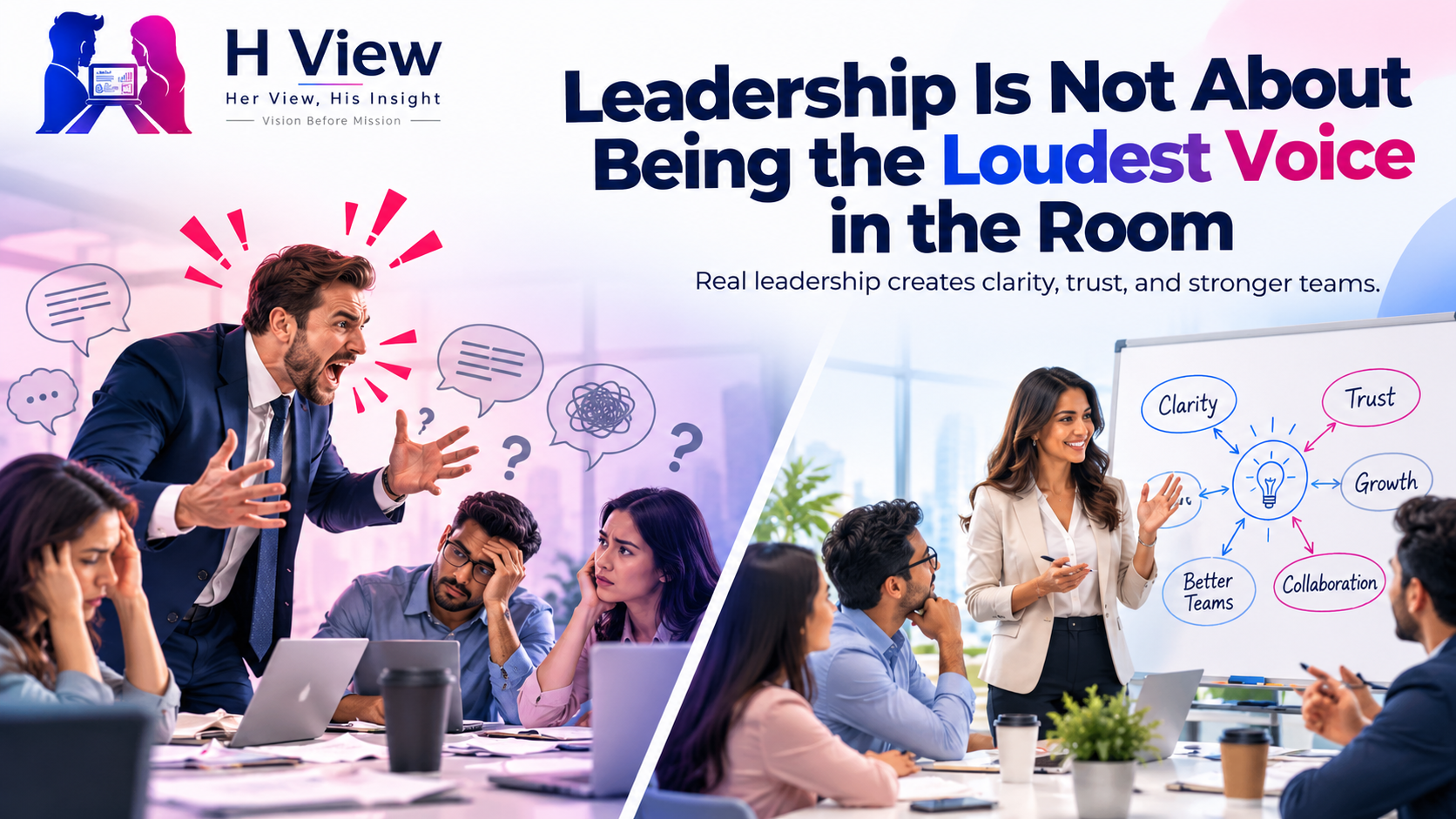
Leadership is often misunderstood because authority is much easier to notice than influence. The person speaking most confidently in a meeting, assigning tasks, reviewing work, setting deadlines, or making the final decision may naturally appear to be the leader. From the outside, leadership can look like control, experience, confidence, and the ability to direct other people.
Employees working inside the team often experience leadership very differently. They remember who listened when something was going wrong, who gave them clarity when priorities were confusing, who accepted responsibility when a decision failed, and who helped them improve instead of simply pointing out mistakes. They also remember managers who used authority mainly to control conversations, pass pressure downward, take credit, or repeatedly remind others who was in charge.
That difference matters because leadership cannot be measured only by position or visibility. A manager may have authority over a team and still fail to create trust, ownership, or confidence, while another person may influence the team positively without constantly asserting authority. Strong leadership becomes visible through what happens to the people around the leader over time.
Workplaces naturally give managers more visibility than the employees executing the work. Their names appear on project plans, review meetings, approval chains, escalation calls, and management presentations, and they often represent the team in front of senior leadership or clients. Because of this visibility, organisations can easily confuse being at the front of the conversation with being the person creating the strongest leadership.
Consider a software project where a production issue appears just before an important client demonstration. The project manager may lead the escalation call and provide updates to senior management, while a technical lead quietly divides the problem into manageable parts, protects developers from unnecessary interruptions, assigns clear ownership, and makes sure the team knows what can realistically be fixed before the demonstration. The manager may be the most visible person in the situation, but the person creating clarity and stability may be providing the most meaningful leadership.
This distinction also appears in less dramatic situations. A leader may spend ten minutes helping an employee understand a problem, remove an unnecessary meeting so the team can finish critical work, or make sure the person who actually solved an issue receives recognition. These actions may not attract much attention, yet they determine whether employees feel supported and whether the team performs sustainably.
Teams need instructions, deadlines, ownership, and accountability, so giving direction is an important management responsibility. The problem begins when managers believe that assigning a task is enough and ignore whether the employee has the time, information, authority, and support necessary to complete it successfully. A task can look perfectly clear in a project tracker while remaining completely unrealistic in practice.
Imagine a developer being told that a feature must be completed by Friday while also being expected to attend several meetings, review a junior employee’s work, fix an existing production issue, and support a client discussion. If the manager simply repeats that Friday is the deadline, the employee has been given pressure rather than leadership. A better leader would decide which activity can move, who can share the workload, and what trade-off is required to protect the most important outcome.
The difference between these two approaches becomes clearer when compared directly.
| Instruction-Driven Management | Leadership With Clarity |
|---|---|
| Assigns a deadline and expects the employee to fit everything around it | Reviews existing workload before confirming the deadline |
| Adds new priorities without removing old ones | Makes the trade-off visible when priorities change |
| Measures whether the task was completed | Also examines whether expectations were realistic |
| Leaves the employee to resolve conflicting requests | Resolves priority conflicts at the management level |
| Communicates what needs to be done | Explains what matters, why it matters, and what can wait |
Strong leadership therefore does not eliminate accountability. It makes accountability more meaningful because employees understand exactly what they are responsible for and what management has decided should take priority.
Listening is sometimes treated as a soft interpersonal skill, but in practice it is a serious decision-making capability. Senior leaders rarely have complete visibility into every operational issue, customer frustration, technical limitation, or process failure. Employees closest to the work often know about risks long before those risks appear in management reports.
A customer support employee, for example, may repeatedly notice that users are struggling with the same feature. A manager focused only on response-time metrics may conclude that the support team is becoming slower, while a leader who listens may discover that the real problem is confusing product design or unclear customer guidance. The same employee who initially appeared to be underperforming may actually be revealing an important problem that affects the entire business.
Leaders therefore gain practical advantages when people feel safe enough to speak honestly. Employees raise risks earlier, admit mistakes sooner, and share incomplete ideas before problems become expensive. When managers interrupt, dismiss concerns, or behave as though they already know the answer, employees learn that silence is safer than speaking up, and the organisation loses valuable information.
Many workplace problems are not caused by employees refusing to work hard. They are caused by conflicting expectations, shifting requirements, missing decisions, and multiple people treating their own request as the highest priority. These situations reveal whether management is capable of making decisions or simply passing pressure downward.
Imagine a marketing team preparing a campaign scheduled for Friday. On Wednesday, leadership requests a significant redesign but still expects the launch date to remain unchanged because sales has already communicated it to customers. A weak response is to tell the design team that both requirements are critical and expect them to “make it happen,” while a stronger response is to decide whether the redesign should be reduced, the launch should move, or additional support should be provided.
Leadership becomes practical when someone takes responsibility for the trade-off. Employees can adapt to changing priorities when the new direction is clear, but frustration grows when every new request is added while every old commitment remains untouched. A strong leader therefore reduces confusion instead of amplifying it.
Some managers unintentionally build organisations around themselves. Every clarification must go through them, every decision requires approval, every meeting needs their presence, and every employee becomes dependent on their availability. This can initially make the manager feel essential, but over time it creates a team that cannot operate confidently without constant supervision.
Consider a customer operations team where every refund, customer escalation, pricing clarification, and support exception requires approval from one manager. The manager may appear highly important because everyone needs them, but customers wait longer, employees stop developing judgement, and routine decisions consume leadership time that could have been used for more strategic work. The manager has created dependency rather than capability.
A stronger leader would decide which decisions genuinely require managerial approval and which can be delegated safely. Clear refund limits, escalation rules, decision boundaries, and ownership guidelines allow experienced employees to act independently while still knowing when a situation requires escalation. The manager remains accountable, but the team becomes faster and more capable.
Organisations often tell employees to “take ownership,” but ownership becomes meaningless when the employee lacks the authority, information, or resources necessary to influence the outcome. Responsibility without decision-making power can easily become a way of transferring blame downward.
A junior employee may be told to own a client implementation while being unable to approve timelines, access the necessary tools, or communicate directly with the customer. If the project fails, calling it an ownership problem ignores the fact that the employee was never truly empowered to manage the project. Leadership requires matching responsibility with enough authority to act.
A healthier empowerment model usually includes several elements.
| Weak Empowerment | Real Empowerment |
|---|---|
| “You own this now.” | “You own this, and these are the decisions you can make independently.” |
| Responsibility is transferred without support | Responsibility comes with information, access, and guidance |
| Manager disappears until something goes wrong | Manager remains available for appropriate escalation |
| Employee is blamed for outcomes outside their control | Accountability matches actual decision-making authority |
| Ownership is used as pressure | Ownership is used to build capability |
Employees cannot grow if every decision is controlled for them, but they also cannot succeed when management gives them responsibility without giving them meaningful control.
Managers often focus on completing the immediate task because deadlines naturally demand attention. Leaders also consider whether the employee will be better prepared the next time a similar situation occurs. That difference is where coaching becomes important.
Suppose a junior analyst submits a report containing incorrect assumptions. One manager may correct the numbers, return the report, and warn the analyst not to repeat the mistake, which solves the immediate problem but may not improve the analyst’s judgement. A leader may instead explain how the assumptions should have been validated, what questions should have been asked, and what warning signs could help identify similar problems in future reports.
The second approach takes more time today but saves management effort tomorrow. Employees who are consistently coached gradually require less supervision because they understand not only what was wrong but how to reason through similar situations independently. This is why strong leaders think beyond task completion and invest in capability.
Some managers worry that asking employees for input will make them appear uncertain. They may believe leadership requires having the answer before everyone else, even when the team possesses specialised knowledge the manager does not have. This approach may preserve the appearance of authority while weakening the quality of decisions.
A product launch provides a useful example. Senior management may strongly prefer a particular launch date because it supports a business target, while engineering warns that unresolved reliability issues could create customer problems. A manager focused mainly on authority may dismiss the concern because the date has already been announced, while a leader listens to product, engineering, sales, and customer support before deciding whether to launch, reduce scope, or delay.
Listening does not mean surrendering the final decision. The leader can still choose the direction, but the decision is informed by people closest to the risk. Employees are also more likely to support a difficult decision when they understand that their concerns were considered rather than ignored.
One of the clearest ways to evaluate leadership is to observe what happens to employees after working under someone for a meaningful period of time. Strong leadership should gradually create more confidence, judgement, independence, and capability among the people in the team.
Consider two project managers with similar experience. The first keeps client communication, presentations, important meetings, and major decisions personally controlled because remaining indispensable feels secure. The second gradually allows employees to join client conversations, present project updates, make selected decisions, and receive coaching before taking on larger responsibilities.
After a year, the first manager may still be the only person the client trusts, while the second may have developed several employees capable of representing the project confidently. The second leader has created organisational value because the team has become stronger rather than simply becoming more dependent on one person.
Employees rarely judge leadership through formal frameworks or motivational speeches. They build their opinion through small workplace interactions that repeat over time. The way a manager responds to mistakes, disagreements, questions, missed meetings, credit, deadlines, and unexpected problems becomes the real leadership culture employees experience.
Imagine an employee who misses a project meeting and later asks a colleague for clarification because that colleague understands what was discussed. A secure manager will primarily care about whether the employee received accurate information and whether the final clarification is documented for everyone. An insecure manager may become more concerned about why the employee did not approach them personally first.
The work problem is the same in both situations, but the leadership response reveals two very different priorities. One manager protects communication and delivery, while the other protects hierarchy and personal importance. Small interactions like these accumulate and eventually influence whether employees feel respected, safe, and willing to contribute.
Leadership sometimes becomes associated with behaviours that look powerful from a distance but create weak teams over time. A direct comparison helps reveal the difference between authority-centred management and people-centred leadership.
| What Can Look Like Leadership | What Strong Leadership Looks Like |
|---|---|
| Speaking the most in meetings | Making sure the right information is heard |
| Giving frequent instructions | Creating clarity so fewer instructions are necessary |
| Controlling every decision | Developing people who can make sound decisions |
| Being involved in every conversation | Building communication systems that work without constant intervention |
| Correcting mistakes publicly | Correcting professionally and helping people improve |
| Taking responsibility for all presentations | Giving employees opportunities to represent their work |
| Becoming indispensable | Building a team that can function independently |
| Protecting personal authority | Protecting team effectiveness |
| Expecting respect because of title | Earning respect through consistent behaviour |
| Having followers | Creating future leaders |
The difference is not theoretical. It affects productivity, retention, trust, decision quality, and the organisation’s ability to grow without adding unnecessary management layers.
Employees usually do not need complicated leadership theories to know whether they are being led well. They understand it through whether they can ask a question without being embarrassed, explain a problem without immediately being blamed, disagree professionally without being treated as disloyal, and receive recognition when their contribution matters.
A manager may describe themselves as supportive, but employees judge that claim through what happens when pressure increases. If the manager becomes disrespectful whenever a deadline slips or immediately searches for someone to blame whenever something goes wrong, the team learns that support exists only when circumstances are comfortable.
Leadership therefore becomes most credible during difficult moments. A leader who remains fair, clear, and professional under pressure creates psychological safety without abandoning accountability, and employees are more likely to communicate honestly because they trust the process even when the conversation is uncomfortable.
A useful leadership test is what happens when the manager is unavailable. If projects immediately stall because nobody understands the priorities, decisions cannot be made, and every client question has to wait for one person to return, the organisation may have created dependence rather than leadership.
A stronger team behaves differently. Responsibilities are clear, decision boundaries are understood, experienced employees know what they can approve, and the team can continue operating while escalating only genuinely exceptional situations. The manager remains important, but their value comes from the system and capability they created rather than from preventing everyone else from operating independently.
The strongest leaders therefore do not measure success by how frequently people need them. They measure success by whether the people they developed can think, communicate, collaborate, and execute confidently even when the leader is not physically present.
Leadership is not defined by who speaks the loudest, controls the most decisions, attends the most meetings, or has the longest designation beneath their name. These things may demonstrate authority, but authority alone does not tell us whether the team is becoming stronger.
Strong leadership creates an environment where employees understand priorities, communicate risks early, learn from mistakes, receive meaningful responsibility, and develop enough confidence to make increasingly complex decisions. The leader still sets standards and holds people accountable, but accountability exists alongside clarity, coaching, trust, and professional respect.
The most important leadership question may therefore be surprisingly simple: what happens to people after working with you? If they become more capable, confident, independent, and willing to contribute, leadership is creating value. If they become quieter, more dependent, defensive, and afraid of making decisions, the organisation may have management authority without meaningful leadership.
The strongest leaders do not build teams that revolve around them. They build teams that become stronger because of them.
A manager generally has formal authority to assign work, approve decisions, manage deadlines, and evaluate performance, while leadership goes further by creating trust, clarity, capability, and commitment within the team. A strong manager can absolutely be a strong leader, but receiving a management title does not automatically create the behaviours required for leadership.
Giving instructions is necessary when responsibilities, deadlines, risks, or priorities need to be made clear, so instruction itself is not a leadership problem. The problem appears when management relies only on instructions while ignoring context, workload, conflicting priorities, employee development, and the support required to complete the work successfully.
Listening gives leaders access to information that may never appear in formal reports because employees closest to the work often recognise operational problems, technical risks, and customer frustration first. Leaders who make it safe to raise concerns can identify issues earlier and make stronger decisions, while leaders who routinely dismiss employees may unintentionally train the team to hide problems.
Effective empowerment requires clear goals, decision boundaries, access to information, and defined escalation points rather than simply telling employees to “take ownership.” Managers still maintain accountability, but employees receive enough authority to make appropriate decisions independently and develop stronger judgement over time.
Employees tend to respect leaders who are competent, fair, consistent, accountable, and willing to listen even when they ultimately make a different decision. Respect becomes stronger when managers communicate clearly, share credit, handle mistakes professionally, and maintain the same standards of dignity during difficult situations that they demonstrate when everything is going well.
One useful measure is to examine how employees change after working under that leader for a meaningful period of time. If team members become more confident, capable, collaborative, and able to handle larger responsibilities with less supervision, leadership is probably creating genuine development; if employees become increasingly dependent, silent, or afraid to make decisions, the leadership environment deserves closer attention.
Harika is the co-founder of H View and covers AI, technology, gadgets, digital tools, online platforms, and modern internet trends. Her articles focus on simplifying complex topics with practical explanations, balanced opinions, and reader-first insights.
Share your real experience and help other readers decide better.
No community views yet. Be the first to share yours.

Open LinkedIn for a few minutes and you will probably come across a colourful graphic…
Harika October 6, 2026 
When an employee resigns, many organisations move quickly into replacement mode. The manager informs HR,…
Harika October 6, 2026 
For many corporate employees, the workday begins long before they actually start working. They wake…
Harika October 5, 2026 
Many projects begin with an assumption that sounds reasonable on paper: the client will explain…
Harika October 1, 2026