

Best Digital Marketing Tools in 2026: What Marketers Actually Need and What They Can Skip
Open LinkedIn for a few minutes and you will probably come across a colourful graphic…
 Harika October 6, 2026
  By HarikaUpdated September 26, 202611 min read13 views
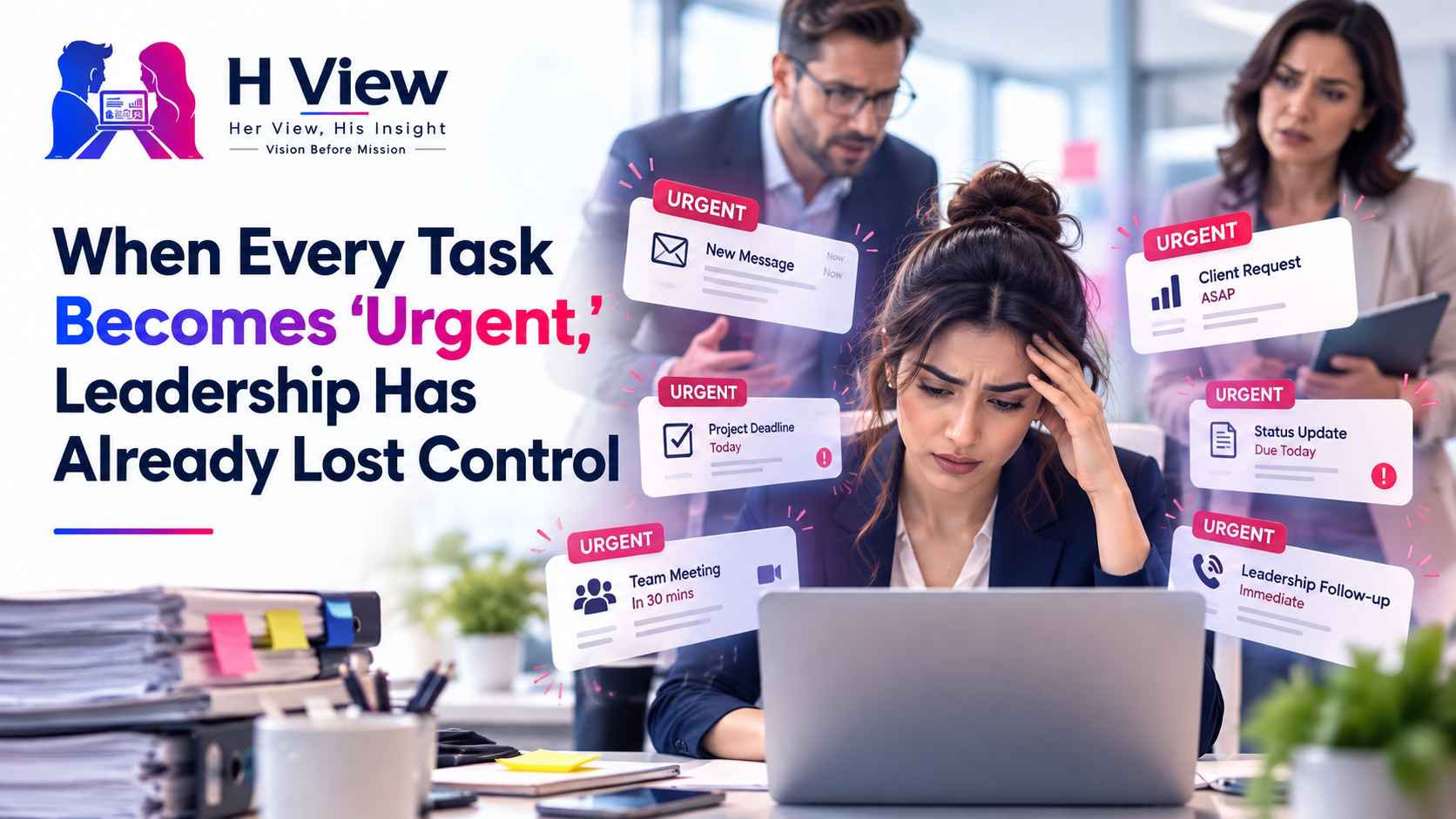
A normal workday often begins with a reasonable plan. An employee may have three important tasks, a known deadline, and a clear understanding of what needs to be finished before the day ends. Then an unexpected client request arrives and is immediately labelled urgent. A meeting gets added to the calendar, another manager asks for a report before lunch, a production issue appears in the afternoon, and somebody suddenly remembers a task that should have been completed days earlier. By evening, the employee has worked continuously, yet the original priorities remain unfinished.
This situation is common enough that many employees have stopped questioning it. They simply move from one urgent request to another, trying to satisfy whoever is asking most loudly at that moment. The problem becomes visible only when the same employee is later questioned about why a previously assigned task has been delayed. From the employee’s perspective, the answer appears obvious: the day’s priorities were repeatedly changed. From management’s perspective, however, every new request may have seemed individually reasonable.
That gap is where leadership matters. Urgent work will always exist, especially in technology, operations, customer service, healthcare, consulting and fast-moving businesses. The leadership failure begins when urgency stops being an exception and becomes the default method of assigning work.
A genuine emergency deserves immediate attention. A production system may fail, an important customer may face a critical issue, a compliance deadline may suddenly change, or an unexpected business problem may require the team to respond quickly. Strong teams understand this and are usually willing to adjust when the situation genuinely demands it.
The difficulty begins when managers use the word “urgent” to solve every planning problem. A task that was forgotten becomes urgent. A requirement that was never clarified becomes urgent. A delayed decision from management becomes urgent for the employee who eventually receives it. A meeting becomes urgent because somebody higher in the hierarchy has asked for an update. Over time, employees are no longer responding to business emergencies; they are responding to accumulated planning failures.
When everything receives the same priority, priority itself loses meaning. Employees then make decisions based on pressure rather than importance. The person sending the most messages, escalating to the highest manager, or asking repeatedly may receive attention first, while important but quieter work is pushed aside. This creates activity, but it does not necessarily create progress.
One of the most common management mistakes is adding work without explicitly deciding what should be delayed. A manager may tell an employee that a new request must be handled immediately while still expecting every existing deadline to remain unchanged. From the manager’s point of view, only one additional task has been added. From the employee’s point of view, several hours of the workday have just been reassigned.
Real prioritisation requires a trade-off. If a task that normally requires three hours suddenly becomes the most important item of the day, something else has to move. A leader who understands this does not merely say that the new work is urgent. The leader also identifies which existing task can wait, who needs to be informed about the delay, and whether the original deadline should change.
That small difference changes the entire working environment. Employees no longer have to secretly decide which manager they can afford to disappoint. Expectations become clearer, delays become explainable, and accountability becomes more realistic. Leadership becomes the process of making choices rather than simply forwarding pressure downward.
It would be unfair to assume that managers deliberately create chaotic work environments. Many managers are dealing with pressure from customers, senior leadership, delivery commitments, sales teams and other departments. A project manager may receive an escalation and immediately pass that urgency to the team because there appears to be no alternative.
The problem is that pressure can travel through an organisation without anyone stopping to evaluate it. A senior leader asks for something quickly, a department head tells the project manager that it is urgent, and the project manager forwards the same urgency to the employee. At every stage, the message becomes stronger while the question of priority remains unanswered. By the time the work reaches the person who must actually execute it, several people may expect immediate delivery.
Leadership should interrupt this chain rather than simply participate in it. A good manager absorbs some organisational pressure and translates it into realistic priorities for the team. That does not mean hiding important problems from employees. It means deciding what the team should focus on instead of making employees personally manage every competing expectation.
The most frustrating version of this problem appears at the end of the day or week. An employee may have spent hours responding to urgent calls, preparing unexpected reports, joining meetings and addressing newly escalated work. Later, the same employee is asked why the original deliverable was not completed.
At that moment, the conversation often becomes a performance discussion even though the underlying problem was prioritisation. The employee is expected to explain every interruption and defend how the day was spent. If priorities were never formally changed, management may still treat the original deadline as valid. The employee therefore carries responsibility for both executing the work and deciding which management request should have been ignored.
That is an unreasonable burden. Employees should certainly communicate when work is slipping, but leaders must also recognise the consequences of their own decisions. When a manager interrupts planned work for a new priority, the resulting delay should not later be treated as though it appeared mysteriously.
Urgency does more than affect deadlines. It changes the way people think. Complex work often requires concentration, whether someone is writing software, analysing data, preparing financial reports, designing a product, creating content or solving an operational problem. Repeated interruptions force the brain to leave one problem, understand another, and eventually reconstruct the context of the original task.
Employees may appear busy throughout the day while making less meaningful progress. Small mistakes become more common because work is completed under pressure. Documentation is postponed, testing is shortened, conversations become rushed, and decisions are made with incomplete information. Teams may still meet some immediate demands, but they gradually accumulate technical, operational and communication debt.
The organisation then encounters another problem created by the previous rush, and that new problem becomes urgent as well. What initially looked like fast execution can therefore create a cycle in which the company is permanently reacting to the consequences of its own shortcuts.
Managers can easily mistake visible activity for productivity. A calendar filled with meetings, constant chat messages, multiple status calls and rapid responses can create the impression that a team is highly engaged. Employees themselves may also feel that they have worked extremely hard because they have had almost no idle time.
However, productivity should be measured by useful outcomes rather than the number of interruptions someone successfully survived. An employee who spends an uninterrupted morning completing an important piece of work may create more value than someone who attends six meetings and responds to fifty messages. Leadership becomes stronger when managers protect focused work instead of treating constant availability as evidence of commitment.
This does not mean teams should become unreachable. Collaboration remains essential, especially when work depends on multiple people. The healthier approach is to distinguish between communication that genuinely needs an immediate response and communication that can wait until the employee reaches a natural stopping point.
One of the simplest improvements a manager can make is to clearly state what changes when a new urgent task arrives. Instead of saying that everything must still be completed, the manager can explain that the new request now takes priority and that another deliverable will move accordingly. That conversation may take less than a minute, but it eliminates hours of confusion.
It also changes accountability. The employee knows what success looks like, the manager understands the consequence of the priority change, and stakeholders can be informed before a deadline is missed. If another manager later asks why a task has been delayed, there is a clear decision behind the change rather than a complicated explanation from the employee.
Good prioritisation therefore requires more courage than simply assigning work. Leaders sometimes need to tell a stakeholder that a request cannot be completed immediately. They may have to negotiate a deadline, reject unnecessary meetings, or explain that the team does not have unlimited capacity. Protecting the team’s focus is part of management, not an obstacle to it.
Leadership carries the larger responsibility for setting priorities, but employees also play an important role. When several tasks begin competing for the same time, silently attempting to complete everything can make the situation worse. Managers may assume the workload is manageable because nobody has raised a concern.
A professional response is to make the trade-off visible early. An employee can explain that completing the new urgent request will affect another committed task and ask which one should take priority. This keeps the conversation focused on workload rather than emotion. It also creates a clearer record of how priorities changed.
Over time, this practice can improve the team’s planning culture. Instead of repeatedly discussing delays after they occur, managers and employees begin discussing capacity before committing to unrealistic expectations. That is a healthier form of accountability for both sides.
From an employee’s perspective, an “everything is urgent” culture creates an uncomfortable situation. Several managers may believe their task deserves immediate attention, yet the person doing the work has only one workday available. The employee eventually has to choose what to postpone, even though they may not have the organisational authority to make that decision.
When the wrong task is delayed, the employee can appear irresponsible even though nobody provided a clear priority order. This is why employees often feel exhausted in organisations where priorities constantly change. The exhaustion does not come only from the volume of work; it comes from carrying responsibility without having enough control over the decisions that shape that work.
A healthier organisation does not make employees privately manage conflicts between leaders. Management should resolve those conflicts before they reach the execution level. Employees can then focus their energy on delivering the work rather than predicting which escalation will arrive next.
Many people associate leadership with setting ambitious goals, accelerating execution and pushing teams toward important outcomes. Those abilities matter, but there is another leadership skill that receives far less attention: deciding what should wait.
Every team operates with limited time, attention and expertise. Even a highly capable employee cannot work on five critical tasks simultaneously with the same level of quality. Leaders therefore create value not only by choosing what matters, but also by protecting the team from work that matters less at that particular moment.
A manager who can confidently say that one task will move to tomorrow because another has become genuinely critical is not lowering standards. That manager is creating a realistic environment in which priorities have meaning.
The phrase “urgent” should represent an exceptional business priority, not a substitute for planning. When every task becomes urgent, employees lose the ability to distinguish between what is important, what is loud and what is simply late. The organisation may remain constantly busy while still struggling with delayed projects, repeated mistakes and exhausted teams.
Strong leadership introduces clarity into that environment. When a new priority appears, leaders should decide what changes, communicate the trade-off and accept responsibility for the consequences of that decision. Employees should raise capacity conflicts early, but they should not be expected to personally reconcile every competing management demand.
A healthy workplace can move quickly without remaining permanently chaotic. The goal is not to eliminate urgent work; no organisation can do that. The goal is to ensure that when something genuinely becomes urgent, everyone knows what should happen next and, just as importantly, what can temporarily wait.
Treating everything as urgent removes the meaning of priority and forces employees to react to whichever request creates the most pressure. Over time, this increases context switching, reduces focused work and makes deadlines less predictable. It can also create unnecessary conflict because several managers may simultaneously expect their task to be completed first.
Employees generally do not need to refuse the work outright. A better approach is to explain the impact of the new request and ask which existing priority should move. This keeps the conversation professional while ensuring that management makes the prioritisation decision rather than leaving the employee to guess.
A manager should identify what makes the task urgent, assign clear ownership and decide which existing work can be delayed. The affected stakeholders should then be informed so that expectations remain realistic. This makes urgency manageable rather than simply adding another demand to an already full workload.
Yes, because meetings consume the same limited working hours that employees need for execution. When meetings are repeatedly added without adjusting delivery expectations, employees are expected to complete the same amount of focused work in less available time. Meetings should therefore be treated as part of workload planning rather than as activities that somehow exist outside it.
The most effective change is to make priority decisions explicit. Leaders should regularly review current commitments, remove outdated work, clarify ownership and make trade-offs visible when new demands appear. Over time, this creates a culture in which teams understand the difference between a genuine emergency and poor planning that has simply reached its deadline.
Harika is the co-founder of H View and covers AI, technology, gadgets, digital tools, online platforms, and modern internet trends. Her articles focus on simplifying complex topics with practical explanations, balanced opinions, and reader-first insights.
Share your real experience and help other readers decide better.
No community views yet. Be the first to share yours.

Open LinkedIn for a few minutes and you will probably come across a colourful graphic…
Harika October 6, 2026 
When an employee resigns, many organisations move quickly into replacement mode. The manager informs HR,…
Harika October 6, 2026 
For many corporate employees, the workday begins long before they actually start working. They wake…
Harika October 5, 2026 
Many projects begin with an assumption that sounds reasonable on paper: the client will explain…
Harika October 1, 2026