

Best Digital Marketing Tools in 2026: What Marketers Actually Need and What They Can Skip
Open LinkedIn for a few minutes and you will probably come across a colourful graphic…
 Harika October 6, 2026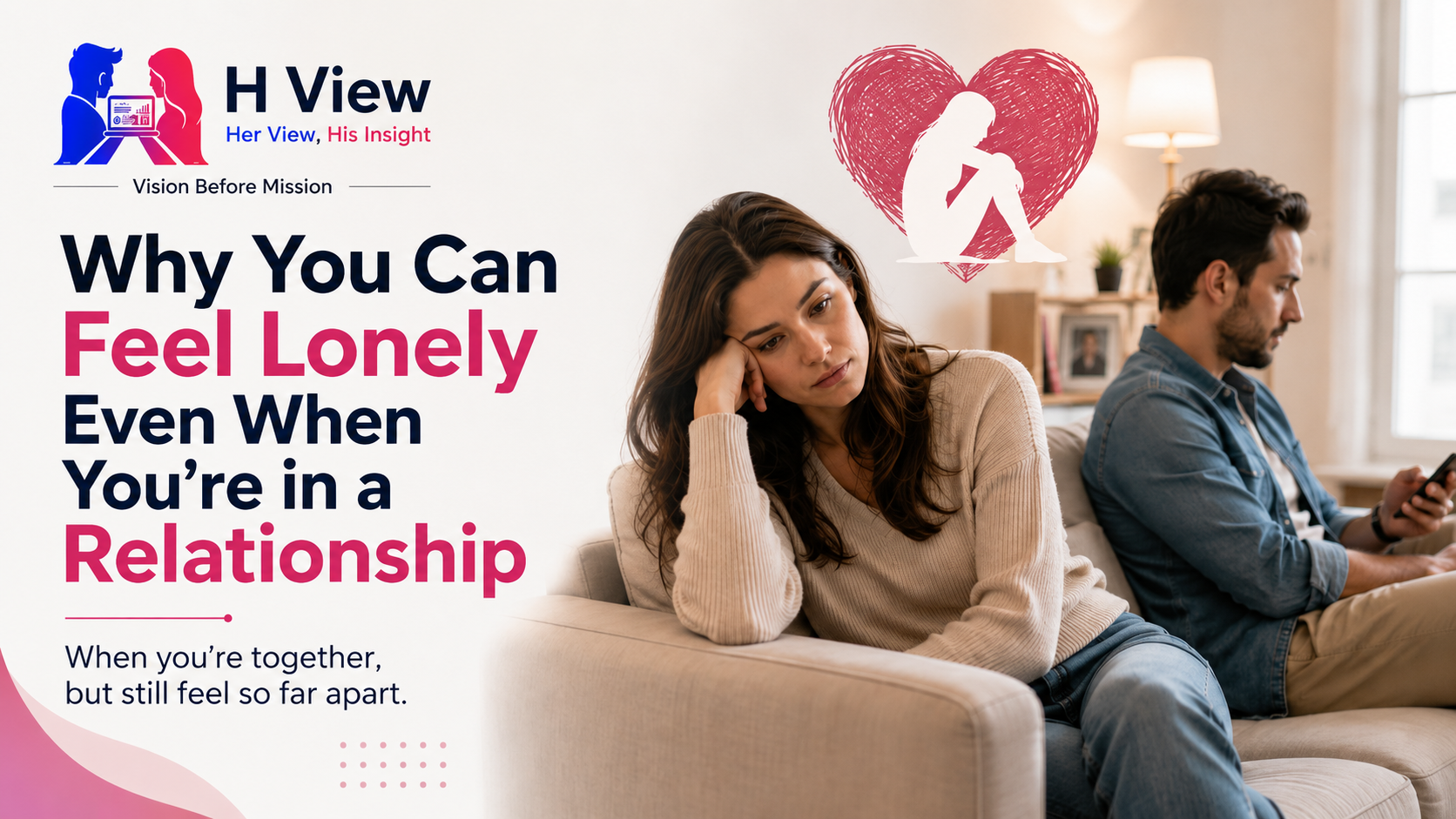
 By H ViewUpdated August 19, 202611 min read38 views
Loneliness is usually imagined as something that happens when you are alone. That is why feeling lonely inside a relationship can be so confusing. You may share a home, talk every day, eat meals together, attend family functions, and still feel as though an important part of you is standing somewhere outside the relationship.
This kind of loneliness is different from simply missing your partner when they are busy or away. It is the feeling of being emotionally unseen even though someone is physically present. You may have a person beside you, yet still feel that your thoughts, worries, excitement, and needs rarely reach them in a meaningful way.
The difficult part is that relationships can continue functioning normally while this loneliness grows quietly in the background. There may be no dramatic betrayal, no constant fighting, and no obvious crisis. From the outside, everything can look fine. Inside, however, one or both people may slowly begin to feel disconnected.
Physical presence can create the appearance of closeness, but emotional connection requires more than simply occupying the same space. Two people can spend an entire evening in the same room while barely interacting beyond practical conversation.
One partner may be scrolling on a phone while the other watches television. Dinner becomes a discussion about bills, groceries, children, work schedules, or tomorrow’s plans. Nothing is necessarily wrong with those conversations, but when practical communication becomes the only kind of communication, the relationship can start feeling more like a working arrangement than an emotional partnership.
Connection usually grows through smaller moments of genuine attention. Asking how someone is doing and actually waiting for the answer matters. Sharing something funny from the day, talking about a worry, sitting together without distraction, or discussing a thought that has nothing to do with responsibilities can make a relationship feel alive.
Without those moments, couples can become efficient teammates while gradually losing emotional closeness.
One of the strongest forms of loneliness is feeling that the person closest to you does not really understand what is happening inside you.
Perhaps you try to explain that work has been exhausting and your partner immediately offers solutions instead of listening. You talk about something that upset you and they tell you that you are overreacting. You share something exciting and receive a distracted response because they are doing three other things at once.
None of these moments alone necessarily means the relationship is unhealthy. Repeated often enough, however, they can teach you that sharing does not feel rewarding.
Eventually, you may stop explaining yourself.
That is when loneliness can become deeper. The problem is no longer only that your partner is not listening. You begin editing what you say before you even say it because you already expect not to feel understood.
A relationship becomes emotionally distant when silence starts feeling easier than attempting connection.
Long-term relationships naturally become more routine. The early stage of dating usually contains more curiosity because both people are still discovering each other. They ask questions, plan dates, notice small details, and deliberately make time to connect.
As life becomes busier, those habits can fade without either person consciously deciding to let them disappear. Work becomes demanding. Children need attention. Money creates pressure. Household responsibilities keep growing. By the time both people finally have free time, they may simply be exhausted.
This does not mean the love has disappeared. Sometimes the relationship has simply become buried under everyday life.
The danger comes when couples assume that because they already know each other, there is nothing left to discover. People continue changing throughout adulthood. Their fears change, priorities shift, ambitions develop, and their understanding of themselves evolves.
When curiosity disappears, emotional distance can grow even inside a stable relationship.
Two people can care about each other deeply and still need different kinds of connection.
One person may feel loved through long conversations, while the other prefers quietly spending time together. One may need frequent affection and verbal reassurance, while the other assumes that being reliable and responsible already communicates love.
Neither approach is automatically wrong. The problem begins when both people keep offering what feels meaningful to them without noticing that it does not feel equally meaningful to their partner.
For example, someone may work hard to provide financial stability and genuinely believe they are expressing love. Their partner may appreciate that effort but still feel emotionally lonely because they miss affection, conversation, or quality time.
The relationship can therefore contain plenty of love while still lacking the kind of connection one person needs.
Understanding this difference requires more than asking whether your partner loves you. Sometimes the better question is whether both of you understand how the other person experiences closeness.
Technology makes it possible to communicate all day while still having very little meaningful conversation.
Couples send memes, reminders, grocery lists, short updates, and quick reactions. Technically, they are constantly in contact. Yet when they are finally together, both may be looking at separate screens.
The issue is not that healthy couples should stop using phones. It is that divided attention changes how interactions feel.
Imagine telling your partner about something important while they continue scrolling. They may hear every word, but the experience feels different from having someone put the phone down, look at you, and listen.
Repeated small moments of divided attention can create the impression that everything else is more interesting than the person sitting beside you.
Emotional intimacy often depends on attention, and attention has become one of the most competed-for resources in modern relationships.
Sometimes loneliness develops after a problem that technically ended but emotionally never did.
Perhaps there was a betrayal, a serious argument, a period of neglect, or something hurtful that was quickly apologised for but never properly discussed. The couple continues with daily life, yet one person still carries resentment while the other assumes the matter is finished.
When hurt remains unresolved, people often protect themselves by becoming slightly less open. They share less, expect less, and stop reaching out as often because closeness feels risky.
Over time, that self-protection can look like emotional independence.
The couple may no longer fight, which can make the relationship appear healthier. In reality, they may simply have stopped trying to reach each other.
Peace and emotional distance can sometimes look surprisingly similar from the outside.
Not every feeling of loneliness means the relationship is failing.
Sometimes people unintentionally expect their partner to provide nearly all emotional connection in their lives. Friendships have faded, hobbies disappeared, family connections became weaker, and the relationship gradually became the centre of everything.
That places enormous pressure on one person.
A partner can be deeply loving and still not share every interest, understand every experience, or fulfil every social need. Healthy relationships usually exist alongside friendships, personal interests, family bonds, and individual goals.
Rebuilding those parts of life can sometimes reduce loneliness without requiring the romantic relationship to completely change.
Love becomes healthier when two people choose each other rather than depend on each other for their entire emotional world.
A deeper kind of relationship loneliness appears when you no longer feel comfortable showing your real personality.
Perhaps your partner criticises certain interests, mocks your opinions, dismisses your emotions, or regularly makes you feel that you are “too much.” You may gradually become quieter and more careful.
You are technically still in the relationship, but the version of yourself inside it becomes smaller.
This kind of loneliness deserves attention because emotional connection cannot grow when one person is constantly performing a safer version of themselves.
Feeling close to someone requires being known. If you believe honesty will lead to ridicule, anger, or rejection, emotional distance becomes almost unavoidable.
A healthy relationship should not require you to hide significant parts of yourself simply to keep things peaceful.
People change, and sometimes partners change differently.
The interests that connected you five years ago may not feel as important anymore. One person may become highly ambitious while the other wants a quieter life. One may become more emotionally expressive while the other becomes increasingly withdrawn.
Differences do not automatically end relationships. Couples often grow differently and still remain close when they remain curious about each other.
Loneliness develops when the distance is ignored.
If neither person talks about how they have changed, they can continue relating to an old version of each other. Eventually, someone may feel that their partner knows who they used to be but not who they are now.
Reconnecting sometimes begins with surprisingly simple conversations about what each person currently wants, fears, enjoys, and hopes for.
The first step is understanding what kind of loneliness you are experiencing. Are you missing conversation, affection, sexual intimacy, quality time, emotional support, or simply more attention? Saying “I feel lonely” is important, but understanding what would help you feel more connected makes the conversation much more useful.
Talk about the experience without immediately turning it into an accusation. There is a major difference between saying, “You never care about me,” and explaining that you miss having conversations where both of you are fully present.
Small changes can also matter more than dramatic gestures. A regular walk without phones, eating one meal together without screens, checking in at the end of the day, or planning time together can begin rebuilding connection.
However, connection cannot be rebuilt by one person indefinitely. If you repeatedly communicate your needs and your partner consistently dismisses them, the loneliness may be pointing toward a larger problem.
Feeling lonely beside someone can sometimes hurt more than being physically alone because the relationship is supposed to be the place where you feel known. It is important not to shame yourself for wanting more conversation, affection, attention, or emotional presence. At the same time, loneliness should be explored rather than immediately used as proof that love is gone. Sometimes connection has simply become neglected under routine, stress, and responsibilities. What matters is whether both people still care enough to notice the distance and make room for each other again.
People do not always recognise emotional loneliness in the same way. Someone may believe that working hard, staying loyal, handling responsibilities, and being physically present should be enough to show commitment. Those things absolutely matter, but a partner may still need conversation, affection, and emotional participation. The solution is not deciding whose definition of love is correct. It is understanding whether both people actually feel loved by the relationship they are creating together.
Relationship loneliness is a signal, not always a conclusion.
Sometimes it points to a period where work, parenting, stress, or routine pushed emotional connection into the background. Sometimes it reveals communication habits that can improve once both people recognise them. In other situations, it exposes deeper incompatibility, unresolved hurt, or a relationship where one person has emotionally stopped participating.
The important part is not pretending the loneliness is meaningless simply because you are technically not alone.
Being in a relationship should not require constant excitement, endless conversation, or perfect understanding. There will be quiet periods and disconnected days. But underneath those ordinary fluctuations, there should still be a feeling that you can reach each other.
Because the opposite of loneliness is not simply having someone beside you. It is knowing that, when you reach toward them emotionally, there is still someone reaching back.
You can feel lonely in a relationship when emotional connection is missing even though your partner is physically present. This may happen when conversations become mostly practical, affection decreases, unresolved hurt creates distance, or you no longer feel understood by your partner.
Yes. Short periods of loneliness can happen in otherwise healthy relationships, especially during stressful times, busy work periods, parenting pressure, or major life changes. The concern is when loneliness becomes frequent, persistent, and difficult to discuss with your partner.
Yes. Love does not always guarantee emotional closeness. Two people may care deeply about each other but communicate differently, have different emotional needs, or gradually lose the habits that once helped them feel connected.
Common signs include feeling unheard, avoiding meaningful conversations, missing affection or quality time, spending a lot of time together without feeling connected, and feeling more comfortable sharing important thoughts with other people than with your partner.
Try to describe your experience without turning it into an accusation. Instead of saying, “You never care about me,” explain what you miss, such as having deeper conversations, spending uninterrupted time together, or feeling more emotionally supported. Specific examples make it easier for both of you to understand what needs to change.
They can contribute to it when screen time repeatedly replaces focused attention. Couples may communicate throughout the day but still feel disconnected if most conversations happen while one or both people are distracted. Even small periods of phone-free time can help create more meaningful interaction.
Not necessarily. Loneliness may be caused by stress, routine, poor communication, or neglected intimacy, all of which can sometimes improve when both partners recognise the problem and make an effort to reconnect. However, persistent loneliness combined with repeated dismissal or emotional neglect may point to a deeper issue.
Start with small, consistent changes rather than waiting for one dramatic romantic gesture. Spending intentional time together, listening without distraction, sharing more than practical updates, showing affection, and discussing unresolved problems can gradually rebuild emotional closeness.
H View writer sharing practical, balanced, and reader-first insights.
Share your real experience and help other readers decide better.
No community views yet. Be the first to share yours.

Open LinkedIn for a few minutes and you will probably come across a colourful graphic…
Harika October 6, 2026 
When an employee resigns, many organisations move quickly into replacement mode. The manager informs HR,…
Harika October 6, 2026 
For many corporate employees, the workday begins long before they actually start working. They wake…
Harika October 5, 2026 
Many projects begin with an assumption that sounds reasonable on paper: the client will explain…
Harika October 1, 2026