

Best Digital Marketing Tools in 2026: What Marketers Actually Need and What They Can Skip
Open LinkedIn for a few minutes and you will probably come across a colourful graphic…
 Harika October 6, 2026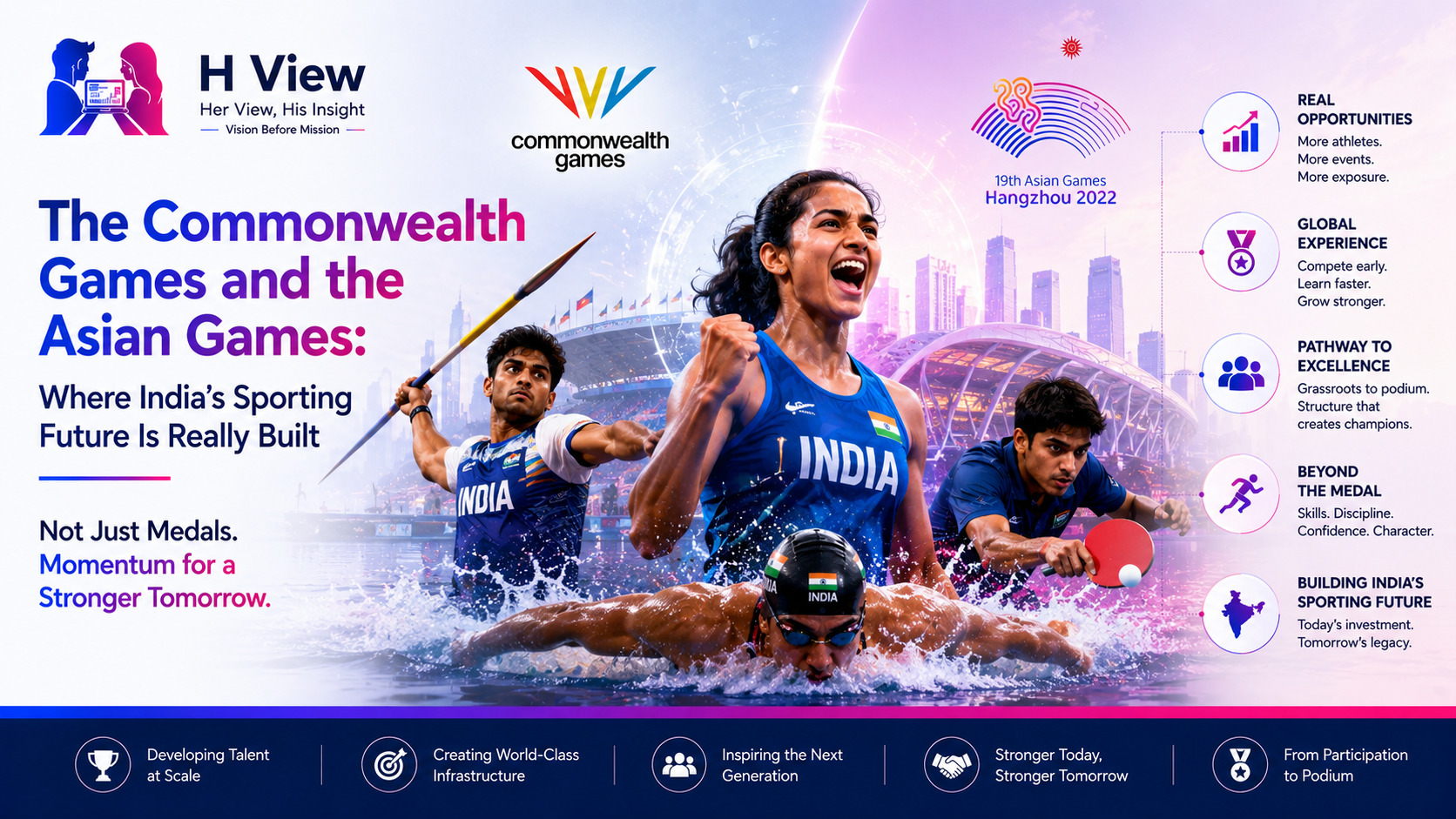
 By Satya HemanthUpdated September 20, 20269 min read45 views
“Olympic medals capture the world’s attention. But long before an athlete stands on the Olympic podium, their journey is often shaped by two competitions that receive far less attention—the Commonwealth Games and the Asian Games.”
Every time a major multi-sport event begins, India develops a familiar routine.
We wake up eager to check the medal tally.
Who won gold?
How many medals has India secured?
Which athlete made the nation proud today?
For a few weeks, sports beyond cricket dominate headlines. Weightlifting, boxing, wrestling, shooting, badminton, athletics, hockey, and table tennis suddenly become prime-time conversations.
Then, as quickly as they appeared, they fade from public attention.
But what if we’ve been looking at these events the wrong way?
The Commonwealth Games and the Asian Games are not simply tournaments where medals are won.
They are where sporting nations are built.
They are the proving grounds where future Olympians learn to compete under pressure, where coaches refine strategies against world-class opponents, and where countries discover whether years of investment are finally beginning to bear fruit.
If the Olympics are the final examination, then the Commonwealth Games and the Asian Games are the classrooms where champions are prepared.
For many sports fans, the Olympic Games represent the pinnacle of sporting excellence.
And rightly so.
Every athlete dreams of standing on the Olympic podium while their national anthem echoes across the stadium.
However, Olympic success rarely appears overnight.
Behind every Olympic medal lies a decade or more of structured competition.
Athletes do not suddenly become world-class when the Olympics arrive.
They gradually develop through national championships, continental tournaments, world championships, and multi-sport events that expose them to increasingly tougher competition.
This is where the Commonwealth Games and the Asian Games become incredibly important.
They provide something that no training camp ever can.
Experience.
Although both events bring together elite athletes, they serve different purposes for India.
The Commonwealth Games feature athletes from nations that share historical ties with the Commonwealth. Countries such as Australia, England, Canada, New Zealand, South Africa, and India consistently produce world-class competitors across multiple disciplines.
For many Indian athletes, the Commonwealth Games offer the first opportunity to compete on a global stage against experienced international opponents while carrying the expectations of representing the nation.
The Asian Games, however, present an entirely different challenge. Asia is home to some of the world’s strongest sporting nations.
China dominates Olympic medal tables. Japan has built one of the world’s most sophisticated sporting systems. South Korea consistently excels in archery, fencing, shooting, and taekwondo. Kazakhstan, Uzbekistan, Iran, and several other countries have rich traditions in combat sports and weightlifting.
Competing at the Asian Games often means competing against athletes who are already Olympic and World Champions.
For India, success here is often a stronger indicator of Olympic readiness than success anywhere else.
When we celebrate an Olympic medal, we usually see only the final chapter.
The real story begins much earlier.
A young athlete often starts in a local school competition.
A district coach notices potential.
State championships open new opportunities.
National competitions raise the level of challenge.
Selection trials test consistency.
International exposure begins through continental competitions.
Then come the Commonwealth Games or the Asian Games.
Only after years of competing against the world’s best do many athletes reach the Olympic stage.
Every competition teaches something different.
How to handle pressure.
How to recover after defeat.
How to adapt against unfamiliar opponents.
How to perform when millions are watching.
Champions are not born in one tournament.
They are shaped across hundreds of competitions that most of us never notice.
When an athlete wins a medal, television cameras naturally focus on the individual.
What remains invisible is the ecosystem behind that success.
A coach who spent years refining technique.
Parents who made financial sacrifices.
Nutritionists who planned every meal.
Strength and conditioning experts who prevented injuries.
Sports psychologists who prepared the athlete mentally.
Physiotherapists who managed recovery.
Training partners who challenged them every day.
Sports scientists who analyzed performance.
Administrators who arranged international exposure.
Corporate sponsors who provided financial stability.
Government programs that funded overseas training.
A medal is never won alone.
It is the visible outcome of an invisible system.
Understanding sport means understanding that system.
For India, the Asian Games are much more than a continental competition.
They are a benchmark.
Every time India competes against China, Japan, or South Korea, we gain valuable insight into where our sporting ecosystem stands.
Which sports are improving?
Where are we falling behind?
Which investments are producing results?
Where do we need better coaching, infrastructure, or sports science?
The medal table is not merely a scoreboard.
It is a progress report.
It tells us whether our long-term investments are translating into international competitiveness.
That is why every Asian Games should spark more than celebration.
It should spark reflection.
The ongoing Commonwealth Games offer another opportunity to celebrate Indian excellence across multiple sports.
Some athletes will defend titles.
Others will announce themselves on the international stage for the very first time.
Some victories will make headlines.
Many determined performances may go unnoticed despite being equally important.
Yet, regardless of the medal count, the true value of these Games lies in preparation.
Every international competition helps athletes understand what still separates them from the world’s best.
Every lesson learned today strengthens India’s chances tomorrow.
As attention gradually shifts towards the upcoming Asian Games, these experiences become even more valuable.
The athletes competing there will not simply be chasing medals.
Many will be measuring themselves against the very competitors they hope to face—and defeat—at future Olympic Games.
It is easy to become interested only when medals arrive.
A stronger sporting culture asks for something more.
It asks us to follow journeys rather than just victories.
To appreciate improvement as much as success.
To recognize effort even when it doesn’t produce a podium finish.
Some of tomorrow’s Olympic champions may not win gold today.
Some may not even win a medal.
But they are learning.
Improving.
Growing.
The athletes we celebrate years from now are quietly writing the early chapters of their stories today.
Every time an Indian athlete competes on an international stage, they expand the dreams of another child watching from home.
A young girl watching a boxer from Manipur.
A teenager inspired by a weightlifter from Tamil Nadu.
A family in a small town discovering that international sport is no longer an impossible dream.
Representation creates possibility.
The more visible our athletes become, the more children begin to believe that sporting excellence is within their reach.
The Commonwealth Games and the Asian Games are not simply sporting events.
They are annual health checks for India’s sporting ecosystem.
Every medal tells us that a system worked.
Every near miss tells us where the system still needs improvement.
Nations do not become sporting powers because they occasionally produce extraordinary athletes.
They become sporting powers because they consistently produce ordinary athletes who are given extraordinary opportunities to succeed.
That is the difference between celebrating champions and creating them.
This week, go beyond the medal tally.
Watch one event you’ve never followed before.
Learn the story of one Indian athlete competing outside cricket.
Share their journey with your family or friends.
Sport grows when awareness grows.
And every informed supporter strengthens the ecosystem that future champions will depend on.
The Commonwealth Games and the Asian Games are often seen as milestones on the road to the Olympics.
In reality, they are much more than that.
They are where confidence is built, weaknesses are exposed, systems are tested, and future champions begin to believe they belong among the world’s best.
As India aspires to become a global sporting nation, our focus should extend beyond counting medals.
We must understand the structures that produce them.
Because the true measure of sporting success is not how many medals we celebrate today.
It is how many young athletes are inspired—and supported—to compete tomorrow.
Great sporting nations are not built during a single tournament.
They are built through decades of patient investment, thoughtful leadership, and millions of people choosing to believe that every sport matters.
And perhaps that journey begins with something as simple as paying attention.
The Commonwealth Games are held every four years and feature athletes from Commonwealth nations such as India, Australia, England, Canada, South Africa, and New Zealand. The Asian Games, also held every four years, bring together athletes from across Asia, including sporting powerhouses like China, Japan, and South Korea. Because many Olympic medal contenders come from Asia, the Asian Games are often considered the more competitive event for Indian athletes.
The Asian Games provide Indian athletes with the opportunity to compete against some of the world’s strongest sporting nations. Success at the Asian Games often indicates that an athlete is capable of performing well at the Olympics. The Games also help India evaluate the effectiveness of its coaching, infrastructure, and sports development programs.
Generally, yes. The Olympics include the world’s best athletes from every continent, making them the highest level of international competition. The Commonwealth Games feature a smaller group of participating nations, but they still provide valuable international experience and help athletes prepare for bigger competitions.
Qualification varies by sport. Most athletes earn their place through national championships, selection trials, world rankings, or performances at international competitions. Each National Sports Federation sets selection criteria, usually in coordination with the Indian Olympic Association and the Sports Authority of India.
These competitions expose athletes to international pressure, unfamiliar opponents, and high-performance environments. They help athletes gain confidence, identify areas for improvement, and adapt to competing on the global stage—valuable experience before the Olympics.
Population alone does not create champions. Sporting success depends on factors such as grassroots participation, quality coaching, sports science, nutrition, infrastructure, funding, and long-term athlete development. Countries that consistently invest in these areas tend to perform better at international events.
Supporting sports goes beyond watching the Olympics. You can follow Indian athletes throughout the year, attend local competitions, encourage children to participate in sports, volunteer with community sporting initiatives, and celebrate achievements across different disciplines—not just cricket.
Following multiple sports helps build a stronger sporting culture. Greater public interest attracts media coverage, sponsorship, better infrastructure, and more opportunities for athletes. A diverse sporting culture also inspires children to pursue the sport best suited to their interests and abilities, ultimately strengthening India’s performance on the international stage.
Satya Hemanth is the founder of H View and writes on careers, sports, leadership, digital trends, and practical decision-making. His articles focus on clear explanations, real-world examples, and useful insights for students, young professionals, and everyday readers.
Share your real experience and help other readers decide better.
No community views yet. Be the first to share yours.

Open LinkedIn for a few minutes and you will probably come across a colourful graphic…
Harika October 6, 2026 
When an employee resigns, many organisations move quickly into replacement mode. The manager informs HR,…
Harika October 6, 2026 
For many corporate employees, the workday begins long before they actually start working. They wake…
Harika October 5, 2026 
Many projects begin with an assumption that sounds reasonable on paper: the client will explain…
Harika October 1, 2026