

Best Digital Marketing Tools in 2026: What Marketers Actually Need and What They Can Skip
Open LinkedIn for a few minutes and you will probably come across a colourful graphic…
 Harika October 6, 2026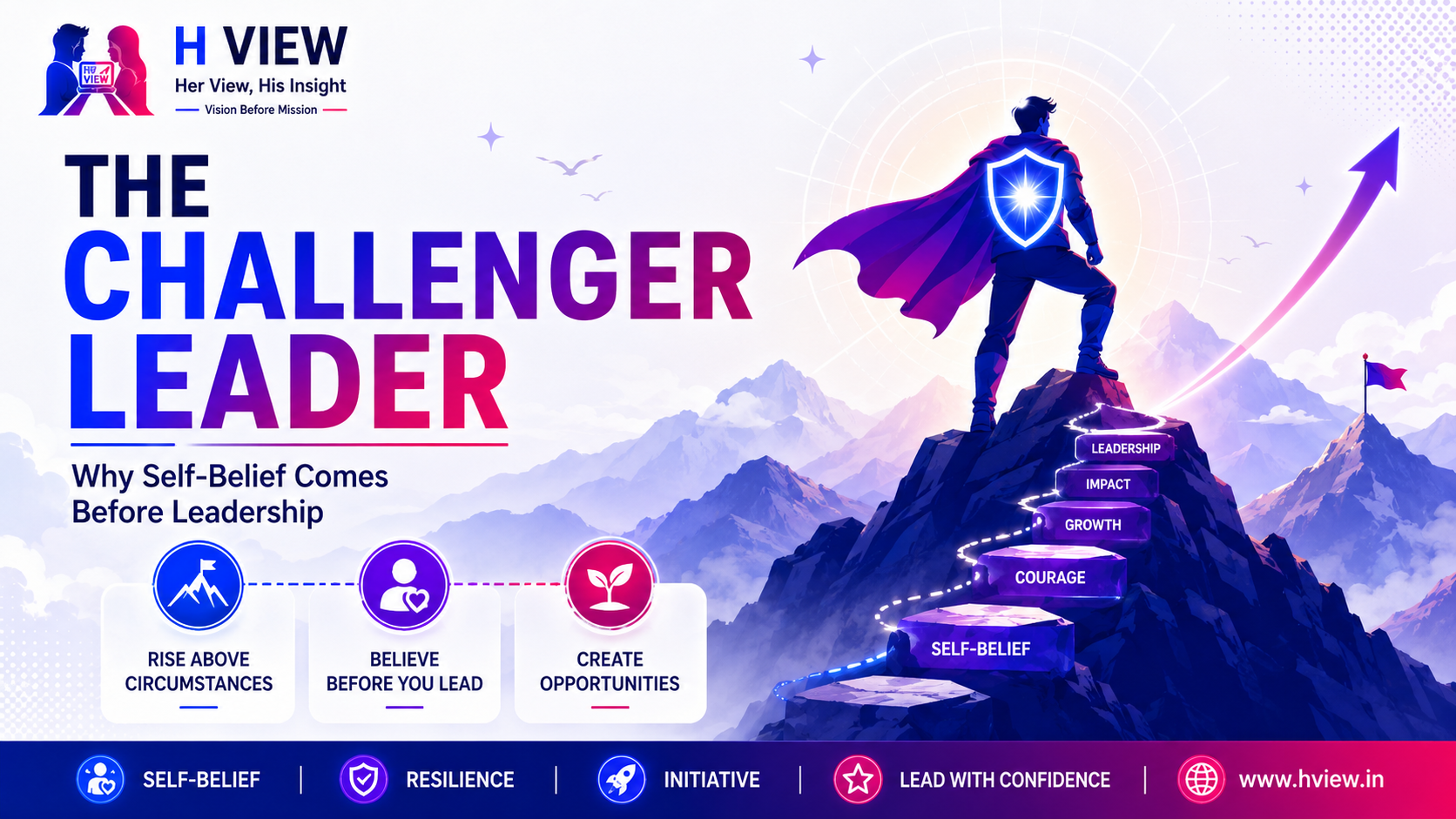
 By PraveenUpdated July 9, 202612 min read56 views
“Your circumstances may decide where you start. They should never decide where you finish.”
📖 Part of the H View Leadership Journey
Series Introduction: Leadership Lessons from Our Heroes: The Six Leadership Archetypes That Shape Great Leaders
Look at the leaders you admire the most. Some built global companies. Some led nations through difficult times. Some inspired millions on the sports field. Some became unforgettable movie characters. Although their stories are different, one thing connects almost all of them.
None of them had an easy beginning.
Some were born into poverty. Some faced repeated failures. Some lacked education, influence, or opportunities. Some were rejected.
Yet they refused to let those circumstances decide their future. That is where leadership truly begins. Not when people start following you. Not when you receive authority. Not when you become successful.
Leadership begins the day you decide that your future will not be limited by your present.
That is why the Challenger Leader is the first archetype in the H View Leadership Journey.
Before you can lead a team…
Before you can influence an organization…
Before you can inspire a nation…
You must first overcome the doubts within yourself.
Every leadership journey begins with one challenge.
Believing in yourself before the world believes in you.
A Challenger Leader is someone who refuses to accept limitations imposed by circumstances.
They challenge poverty.
They challenge rejection.
They challenge stereotypes.
Sometimes, they even challenge themselves.
Their greatest strength is not intelligence. It is not money. It is not privilege. It is mindset.
They believe that circumstances explain where they are today.
But they should never decide where they can be tomorrow.
Instead of asking,
“Why me?”
they ask,
“Why not me?”
Instead of waiting for opportunities… they create them.
Instead of complaining about problems… they solve them.
The Challenger Leader teaches us one of leadership’s most important lessons:
The first battle every leader fights is never against the world. It is against self-doubt.
Imagine trying to lead a team when you don’t believe in yourself. Imagine inspiring others when you constantly doubt your own abilities. Imagine driving change when you are afraid of failure.
It rarely works.
Every other leadership quality depends upon self-belief.
Servant Leaders cannot inspire others if they first don’t believe they can make a difference.
Change Agents cannot challenge the status quo if they fear rejection.
Purpose-Driven Leaders cannot dedicate themselves to a larger cause unless they first believe they can contribute.
That is why the Challenger Leader comes first. It is the foundation upon which every other leadership quality is built. Self-belief is not the destination. It is the starting point.
Every Challenger Leader expresses leadership differently.
Some become entrepreneurs.
Some become athletes.
Some become teachers.
Some quietly become extraordinary parents.
But beneath those different journeys lie five common traits.
Every great achievement begins with belief. Before anyone else trusts your abilities, you must trust them yourself.
Self-belief is often mistaken for confidence. But they are not the same.
Confidence usually comes after success. Self-belief comes before it.
It is believing that you can learn, improve, and grow—even when success is still invisible.
Without self-belief, leadership never begins.
Failure is unavoidable. Giving up is optional.
Every leader experiences setbacks. Businesses fail. Projects collapse. Matches are lost. Ideas get rejected.
Challenger Leaders understand that failure is not the opposite of success. It is often part of success.
Instead of asking,
“Why did this happen?”
they ask,
“What can I learn from this?”
Every setback becomes preparation for the next opportunity.
Many people believe success belongs to those with the best resources.
Challenger Leaders know better. Success often belongs to those who make the best use of whatever resources they already have.
They don’t complain about what they lack.
They maximize what they possess.
Limited money creates innovation.
Limited time creates focus.
Limited opportunities create creativity.
Resourcefulness is the ability to see possibilities where others only see limitations.
Society labels people very quickly. Too young. Too old. Too inexperienced. Too poor. Too ordinary. Many people spend their lives trying to prove those labels wrong.
Challenger Leaders simply refuse to accept them. They understand that labels describe today’s circumstances. They do not predict tomorrow’s future.
Every time someone rises above expectations, another limiting label loses its power.
Perhaps the defining quality of every Challenger Leader is initiative.
Most people wait. They wait for better timing. Better resources. Better connections. Better luck.
Challenger Leaders rarely wait.
They volunteer. They learn. They experiment. They build relationships. They create opportunities through action. Because they understand a simple truth.
Action creates momentum.
One of the unique ideas behind this series is that leadership principles remain remarkably similar, whether we observe them in movies, sports, or real life.
Let’s view the Challenger Leader through five different perspectives.
Few recent Telugu movie characters represent the Challenger Leader as powerfully as Pushpa Raj in Pushpa – The Rise.
Pushpa begins life with almost every disadvantage. He lacks wealth. He lacks influence. He lacks social acceptance.
Yet he possesses one quality that changes everything. An unwavering belief in himself.
Throughout the movie, society repeatedly reminds Pushpa of where he belongs. But Pushpa refuses to accept the identity others assign to him. Instead of waiting for respect, he earns it. Instead of waiting for opportunities, he creates them. Instead of allowing rejection to weaken him, he uses it as motivation.
Whether one agrees with his methods or not, his mindset perfectly reflects the Challenger Leader archetype.
Leadership Lesson
People may decide where you begin.
Only you decide where you finish.
Murad’s (Ranveer’s character in Gully Boy) greatest obstacle is not poverty.
It is self-doubt.
Growing up in difficult circumstances, he quietly accepts that certain dreams may simply not belong to people like him. Everything changes when someone encourages him to believe in his own voice. The moment his mindset changes, his actions begin changing too.
He writes.
He performs.
He improves.
He creates opportunities that never existed before.
Murad reminds us that many barriers exist only until we challenge them.
Leadership Lesson
Before the world believes in your dream, you must believe in it yourself.
Chris Gardner’s story (Will Smith in The Pursuit of Happyness) may be one of the greatest real-life examples of resilience ever brought to cinema.
He loses his home. He struggles financially. He raises his young son while trying to build a better future. Everything around him suggests giving up.
Yet he refuses. Not because success is guaranteed. But because hope still exists.
Chris Gardner teaches us that circumstances may slow our journey, but they never have to define it.
Leadership Lesson
Your circumstances may explain your present.
They should never define your future.
Few athletes have influenced their sport as profoundly as Michael Jordan.
Widely regarded as the greatest basketball player of all time, Jordan’s journey wasn’t built on instant success. As a teenager, he was famously left out of his high school’s varsity basketball team. For many, that would have been the end of the dream.
For Jordan, it became the beginning. Instead of accepting rejection, he used it as motivation. He trained relentlessly, pushing himself beyond his limits every single day. Throughout his career, Jordan embraced pressure rather than avoiding it. He demanded excellence—not only from himself but from everyone around him.
His career went on to redefine basketball. Six NBA Championships, five Most Valuable Player (MVP) awards, and countless game-winning moments made him a global sporting icon. Yet Jordan often said that his greatest lessons came from failure, not success.
One of his most famous quotes perfectly captures the Challenger mindset:
“I’ve failed over and over and over again in my life. And that is why I succeed.”
Michael Jordan reminds us that setbacks are not barriers—they are opportunities to become stronger.
True challengers don’t fear failure.
They use it as fuel.
Great leaders don’t let rejection define their future.
Leadership Lesson
Turn every setback into motivation for the next breakthrough.
Every Challenger Leader dreams of changing his own life.
The greatest Challenger Leaders eventually change the lives of millions.
Few business leaders represent this better than Dhirubhai Ambani.
Born into a modest family, he started his career as a petrol pump attendant in Yemen before returning to India with a dream much larger than his circumstances.
He entered industries dominated by established business houses. He challenged conventional thinking. He raised capital in ways that democratized investing for ordinary Indians. He continuously thought beyond what people believed was possible.
What made Dhirubhai extraordinary wasn’t merely his business success. It was his refusal to think small.
He saw possibilities where others saw barriers. He believed that ordinary Indians could become investors. He believed Indian companies could compete globally. He believed ambition should never be limited by background. His journey perfectly represents the evolution of a Challenger Leader.
Self-belief became vision.
Vision became enterprise.
Enterprise created national impact.
Leadership Lesson
Your circumstances explain where you begin.
Your vision determines how far you can go.
Notice something interesting about these five stories.
One is a fictional smuggler.
One is an aspiring rapper.
One is a struggling salesman.
One is a basketball legend.
One built one of India’s largest business empires.
They come from different worlds. They faced different challenges. They measured success differently.
Yet, at their core, they all demonstrate the same leadership principle.
| Perspective | What They Teach Us |
|---|---|
| 🎬 Pushpa Raj | Believe in yourself despite society’s labels. |
| 🎥 Murad | Find your own voice before expecting others to hear it. |
| 🎞️ Chris Gardner | Hold on to hope even when circumstances are against you. |
| 🏀 Michael Jordan | Turn rejection and failure into relentless motivation for excellence. |
| 🌍 Dhirubhai Ambani | Turn personal ambition into a vision that transforms industries and inspires millions. |
This is the essence of the H View Leadership Prism.
The same leadership principle.
Viewed through five different lenses.
Each perspective reveals a different dimension of the archetype.
Together, they remind us that self-belief is not a destination—it is a journey.
It begins by believing in yourself. It grows through resilience. It is strengthened by discipline. And ultimately, it becomes the foundation upon which extraordinary leaders build lasting impact.
Every leadership archetype naturally shines in certain situations.
Challenger Leaders thrive where uncertainty exists.
You are likely to relate strongly to this archetype if you enjoy:
Organizations need Challenger Leaders whenever they are trying to break new ground.
Families need Challenger Leaders during difficult times.
Society needs Challenger Leaders whenever people say,
“It can’t be done.”
Every leadership strength has a shadow. Understanding both sides helps us become more balanced leaders.
| Strengths | Watch Outs |
| Strong self-belief | Can become overconfident |
| Resilient under pressure | May ignore valuable advice |
| Takes initiative | May become impatient |
| Highly resourceful | Can underestimate risks |
| Comfortable with uncertainty | May struggle with routine work |
| Creates opportunities | May take on too many challenges at once |
Great leadership is not about removing weaknesses. It is about ensuring that your strengths never become your blind spots.
“Leadership begins with self-awareness.”
Before moving to the next leadership archetype, spend a few minutes reflecting on yourself.
Answer Yes or No to the following questions.
☐ I believe my current circumstances do not define my future.
☐ I actively look for opportunities instead of waiting for them.
☐ Failure motivates me more than it discourages me.
☐ I enjoy solving difficult problems.
☐ I continuously challenge myself to grow.
Your Reflection
4–5 Yes: The Challenger Leader is already one of your strongest leadership muscles.
2–3 Yes: You have the foundations of a Challenger Leader. With deliberate practice, this trait can become one of your greatest strengths.
0–1 Yes: Don’t worry. Every leadership journey starts somewhere. Perhaps this is the perfect leadership muscle for you to begin developing.
Remember…
The goal is not to score perfectly.
The goal is to become a little better than yesterday.
Like every leadership quality, self-belief is not something we are born with.
It is something we build.
Here are five simple practices that can help.
Growth rarely happens inside your comfort zone.
Volunteer for projects that stretch your abilities.
Instead of asking,
“Why is this happening to me?”
Ask,
“What is this trying to teach me?”
That small shift changes everything.
Biographies remind us that almost every successful person once faced uncertainty.
Success leaves clues.
Learn from them.
Confidence grows from evidence.
Maintain a journal of your progress.
Every small victory reinforces self-belief.
Spend time with people who encourage you to think bigger.
The people around us often influence the size of our dreams.
Every successful person has a chapter where nobody believed in them.
Sometimes, not even they believed in themselves.
The Challenger Leader reminds us that confidence isn’t inherited.
It is earned.
One challenge.
One failure.
One victory at a time.
The greatest obstacle to leadership is rarely the lack of opportunity.
It is the lack of belief.
People who consistently challenge themselves begin seeing opportunities that others never notice.
Leadership starts long before anyone gives you a title.
It starts the day you stop making excuses.
Every great journey begins with one courageous decision.
The decision to believe that tomorrow can be better than today.
The Challenger Leader is not defined by success.
The Challenger Leader is defined by refusing to surrender.
Without this mindset, the remaining five leadership archetypes become difficult to develop.
Self-belief is the foundation upon which leadership is built.
The road ahead will teach us to serve others.
Take responsibility.
Challenge the status quo.
Stand for our values.
And ultimately create an impact larger than ourselves.
But every one of those journeys begins here.
With the courage to challenge ourselves first.
Reading changes perspective.
Action changes people.
This week, try these five simple challenges.
☐ Volunteer for one task outside your comfort zone.
☐ Replace one excuse with one action.
☐ Learn one new skill that improves your personal or professional growth.
☐ Read or watch the story of a self-made leader.
☐ Write down one challenge you overcame and what it taught you.
Don’t try to complete everything. Start with just one. Leadership is built through small, consistent actions—not dramatic moments.
Think about the biggest challenge you have faced in your life.
Did it become a limitation?
Or did it become a turning point?
I’d love to hear your story.
Share it in the comments.
Your experience might become the encouragement someone else needs today.
Previous Article
← Leadership Lessons from Our Heroes: The Six Leadership Archetypes That Shape Great Leaders
Next Article
→ The Servant Leader: Why Great Leaders Put People Before Position
Praveen is an H View contributor covering general reviews, leadership, sports, and practical opinion-based topics. His writing focuses on balanced analysis, clear explanations, and reader-friendly insights that help people understand products, ideas, trends, and real-world decisions with more clarity.
Share your real experience and help other readers decide better.
No community views yet. Be the first to share yours.

Open LinkedIn for a few minutes and you will probably come across a colourful graphic…
Harika October 6, 2026 
When an employee resigns, many organisations move quickly into replacement mode. The manager informs HR,…
Harika October 6, 2026 
For many corporate employees, the workday begins long before they actually start working. They wake…
Harika October 5, 2026 
Many projects begin with an assumption that sounds reasonable on paper: the client will explain…
Harika October 1, 2026