
Best Digital Marketing Tools in 2026: What Marketers Actually Need and What They Can Skip
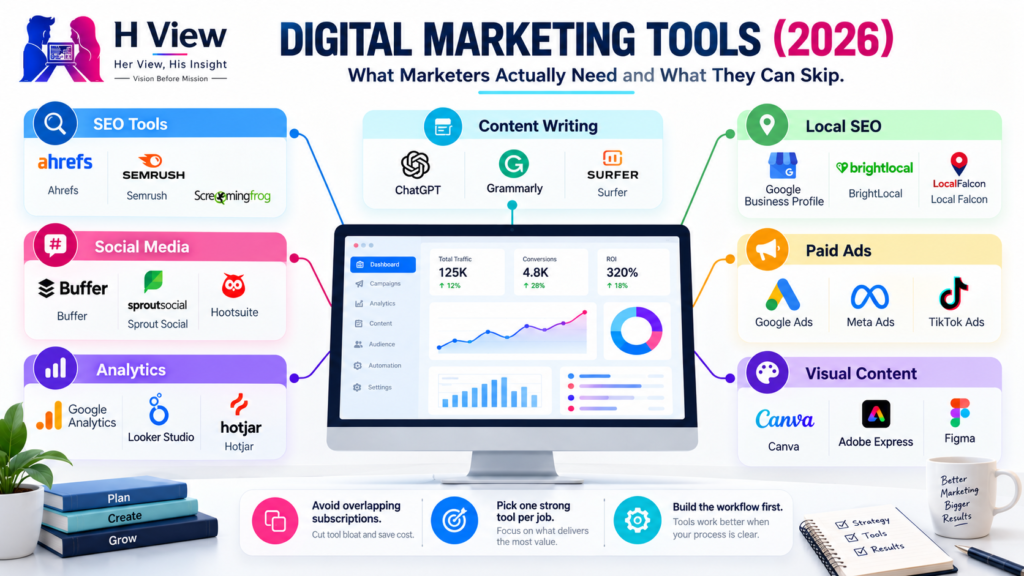
Open LinkedIn for a few minutes and you will probably come across a colourful graphic…
 Harika October 6, 2026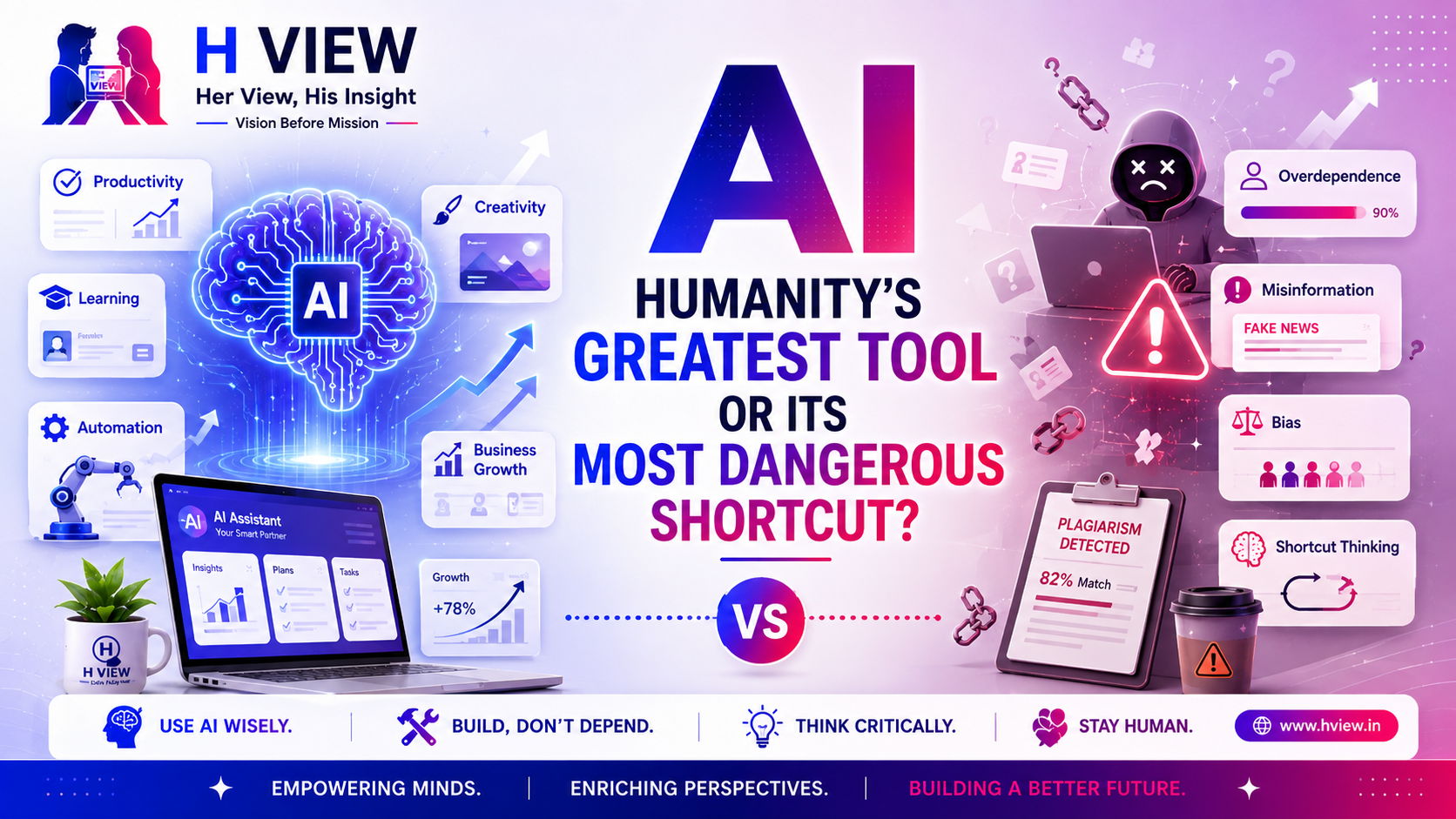
 By PraveenUpdated June 5, 20263 min read65 views
Every major technology changes human behavior.
The Internet changed communication.
Smartphones changed attention spans.
Social media changed human interaction.
Artificial Intelligence may become the first technology that changes human thinking itself.
AI tools like ChatGPT, Gemini, Claude, Perplexity, Meta are among the most powerful productivity tools humans have ever created. They simplify learning, accelerate work, democratize knowledge, and make complex information accessible to ordinary people within seconds.
A student can understand difficult concepts instantly.
A programmer can debug code faster.
A marketer can create campaigns within minutes.
A professional can summarize lengthy reports without spending hours reading.
In many ways, AI feels revolutionary. And it truly is. But beneath the productivity benefits lies a deeper question:
What happens when humans slowly outsource thinking itself?
For decades, learning required effort. People searched, explored, compared sources, struggled with concepts, and gradually built understanding.
AI removes much of that friction. And while friction is frustrating, it is also where deep thinking often happens.
That is the hidden tradeoff nobody talks about enough.
AI does not simply provide information. It provides conclusions — often confidently.
The problem is not merely that AI can sometimes be wrong.
The bigger concern is that users may stop questioning.
Hallucinations, misinformation, and bias are not just technical issues. They are trust issues. When an AI system presents an answer fluently and confidently, many users naturally assume it is accurate.
Over time, this can create a generation that consumes summarized conclusions without fully understanding the reasoning behind them. And that raises uncomfortable questions.
Will future generations become more intelligent because of AI?
Or will they become mentally dependent on it?
The answer is probably both.
On one side, AI can dramatically improve education and accessibility. A child from a remote village can now learn concepts that once required expensive coaching or specialized teachers. Knowledge is becoming more available than ever before.
That is extraordinary progress.
But on the other side, overdependence on AI may weaken:
When answers arrive instantly, humans may slowly lose the habit of exploration.
And perhaps that is the larger danger. The future risk is not that AI will become more human. The risk is that humans may slowly stop thinking for themselves.
At the same time, rejecting AI entirely would also be foolish. Every major technological advancement in history initially created fear. Calculators did not destroy mathematics. The Internet did not destroy knowledge.
AI itself is not inherently dangerous. Passive dependence is. The future therefore depends not only on how powerful AI becomes, but also on how responsibly humans use it.
AI should assist thinking — not replace it.
Her View
AI feels empowering because it makes people feel capable. It removes barriers that once made learning difficult and intimidating.
But convenience can quietly become addiction if humans stop challenging themselves to think deeply.
His Insight
The real transformation of AI is not technical. It is cognitive.
For the first time in history, humans are beginning to outsource reasoning itself to machines. That shift may redefine education, intelligence, creativity, and even human attention spans in the coming decades.
H View Perspective
AI can become humanity’s greatest educational tool. Or it can become humanity’s greatest intellectual shortcut. The difference will not depend on AI alone. It will depend on whether humans continue questioning, exploring, and thinking beyond the answers they receive.
Because wisdom is not the ability to get answers instantly.
Wisdom is the ability to understand which answers deserve trust.
Praveen is an H View contributor covering general reviews, leadership, sports, and practical opinion-based topics. His writing focuses on balanced analysis, clear explanations, and reader-friendly insights that help people understand products, ideas, trends, and real-world decisions with more clarity.
Share your real experience and help other readers decide better.
No community views yet. Be the first to share yours.
Open LinkedIn for a few minutes and you will probably come across a colourful graphic…
Harika October 6, 2026 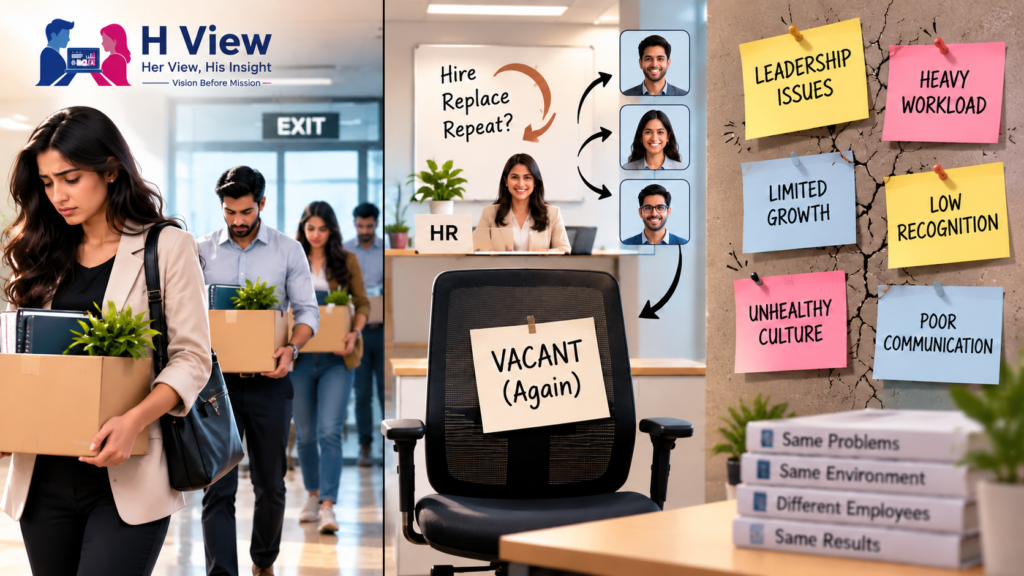
When an employee resigns, many organisations move quickly into replacement mode. The manager informs HR,…
Harika October 6, 2026 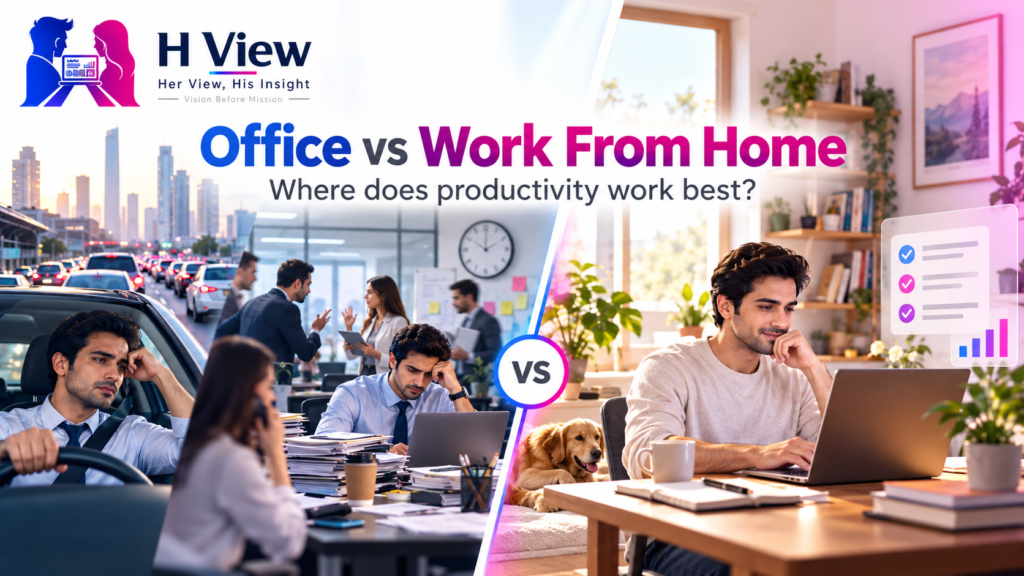
For many corporate employees, the workday begins long before they actually start working. They wake…
Harika October 5, 2026 
Many projects begin with an assumption that sounds reasonable on paper: the client will explain…
Harika October 1, 2026