

How H View Reviews Products, Tools, and Services
Online reviews are everywhere. Before buying a product, choosing a tool, selecting hosting, trying software,…
 H View May 23, 2026
  By H ViewUpdated May 24, 20267 min read45 views
Buying online is easy. Choosing the right product is not always easy.
Today, every product page looks attractive. Every brand says its product is the best. Every listing has offers, discounts, ratings, reviews, and “limited-time deals.” But after buying, many people realize the product was not what they expected.
Sometimes the quality is average.
Sometimes the size or features are not suitable.
Sometimes the reviews look doubtful.
Sometimes the seller is not reliable.
Sometimes a cheaper product becomes costly later.
That is why you should not buy only because something looks popular or discounted.
At H View, our practical advice is simple:
Before you buy online, pause for a few minutes and check whether the product truly fits your need.
This guide will help you choose the right product before buying online.
Online shopping saves time, but it can also create confusion.
A smart buying decision helps you:
A good product is not always the most expensive one. It is the one that solves your problem well and gives value for money.
Before checking products, first understand your need.
Ask yourself:
For example, if you are buying a laptop for basic blogging, browsing, and documents, you may not need a high-end gaming laptop. If you are buying headphones only for calls, you may not need expensive studio headphones.
Clarity prevents overspending.
A lower price is attractive, but features matter too.
When comparing products, check:
Two products may look similar, but one may offer better warranty, stronger build quality, or better customer support.
Do not compare only the price. Compare the complete value.
Reviews are useful, but not every review is trustworthy.
Do not depend only on the star rating. A product with 4.5 stars may still have problems that matter to you.
Look for:
Avoid trusting reviews that are too short, too emotional, or look copied.
A real review usually explains what worked, what did not, and who the product is suitable for.
This is one of the best buying habits.
Before reading the best reviews, check the negative reviews.
Negative reviews can reveal:
Not every negative review should stop you from buying. Sometimes customers complain for personal reasons. But if many people mention the same issue, take it seriously.
For example, if multiple users say “battery drains quickly,” “seller sent old stock,” or “support is poor,” you should be careful.
A good product from a poor seller can still create problems.
Before buying, check:
This is especially important for electronics, gadgets, appliances, branded products, software licenses, and costly items.
If the product price is much lower than usual, check carefully. Very low pricing can sometimes indicate old stock, fake products, missing warranty, or seller issues.
Many buyers ignore return and warranty details until something goes wrong.
Before buying, check:
For expensive products, warranty and return policy are as important as price.
A slightly higher price from a trusted seller with proper warranty may be better than a cheap listing with unclear support.
Discounts are designed to create urgency.
Words like “limited offer,” “only few left,” and “deal ends soon” can push you to buy quickly.
Before buying during a sale, ask:
A product is not a good deal if you do not need it.
Smart buyers do not buy because of pressure. They buy because the product fits their need.
For some products, written reviews are not enough.
For gadgets, appliances, furniture, cameras, tools, bags, shoes, or software, video reviews can help you understand real usage.
Look for videos that show:
Do not depend only on promotional videos from the brand. Try to watch independent user reviews where possible.
Never stop at the first product you like.
Compare at least 2–3 alternatives.
Check:
Sometimes the second-best-looking product may be the better choice. Sometimes a less popular brand may offer better value. Sometimes a slightly higher-priced product may last longer.
Comparison gives clarity.
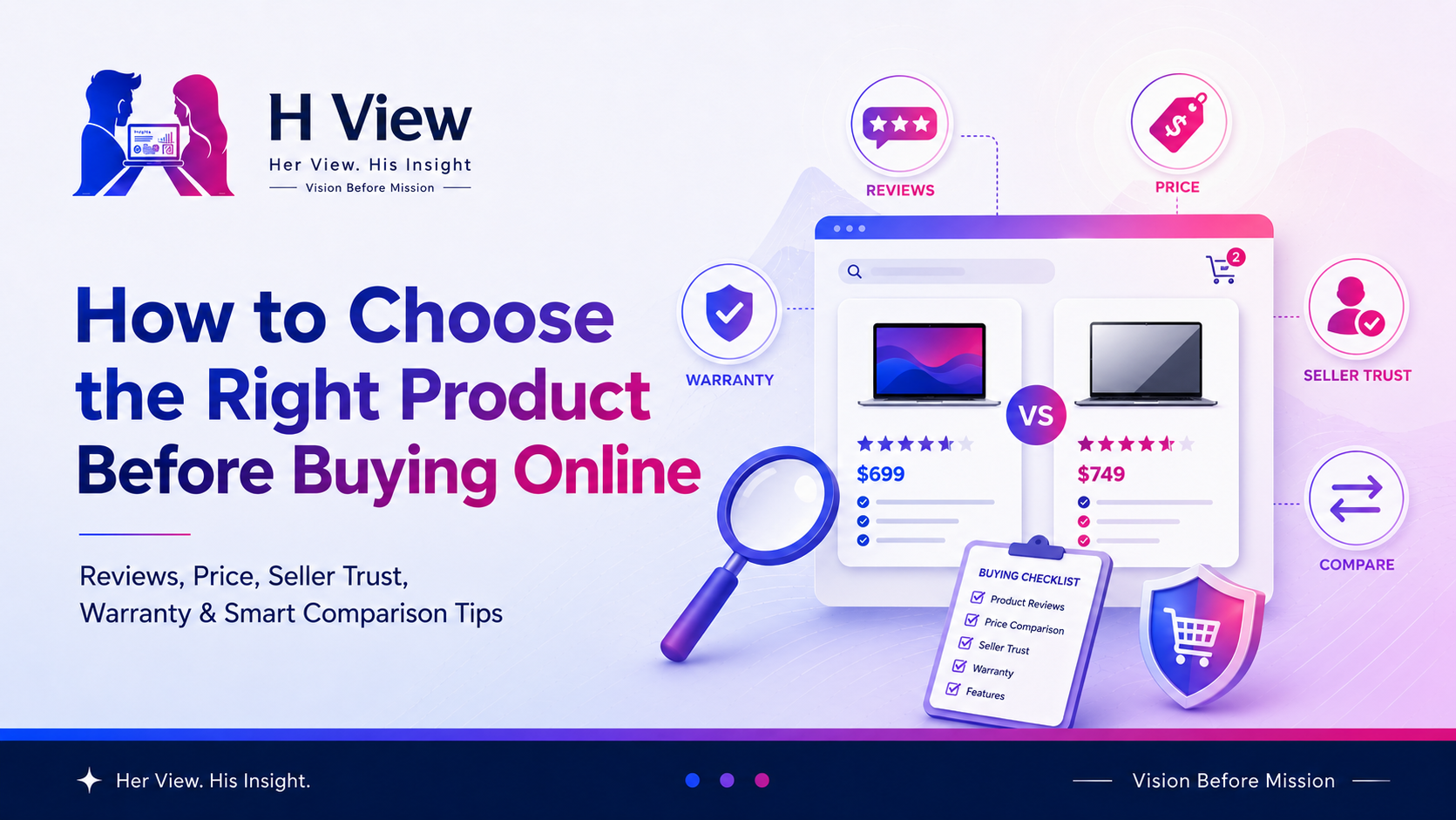
Before buying online, use this quick checklist:
If the answer is clear, buy confidently. If not, wait and research more.
From the experience side, the right product should feel useful, comfortable, and worth using in daily life.
A product may have many features, but if it is difficult to use, poorly designed, or not suitable for your lifestyle, it may not be the right choice.
Her View focuses on questions like:
From the practical side, every purchase should be judged by value.
A good product should offer the right balance of:
His Insight is simple: do not buy only for looks, trend, or discount. Buy because the product makes sense.
Before buying any product online, do not rush.
Use this simple formula:
Need + Reviews + Seller Trust + Warranty + Value = Better Buying DecisionThis formula works for gadgets, tools, software, home products, lifestyle products, and even business services.
A smart buyer does not only ask, “Is this product good?”
A smart buyer asks:
Is this product right for me?
Check detailed reviews, recent feedback, seller rating, product specifications, return policy, warranty, and repeated complaints before buying.
Online reviews are useful, but check them carefully. Prefer verified, detailed, recent reviews with photos or real usage experience.
Negative reviews reveal common problems like poor quality, delivery issues, warranty trouble, seller problems, or product mismatch.
No. The cheapest product may have poor quality, weak warranty, or limited features. Value is more important than only low price.
For electronics, check specifications, warranty, seller trust, return policy, service center availability, reviews, and authenticity.
Choosing the right product before buying online is not difficult, but it needs patience.
Do not buy only because of discounts, ratings, or attractive images. Understand your need, compare features, read real reviews, check seller trust, and confirm warranty and return policy.
At H View, our final view is simple:
A good buying decision is not about buying fast. It is about buying wisely.
H View writer sharing practical, balanced, and reader-first insights.
Share your real experience and help other readers decide better.
No community views yet. Be the first to share yours.
Online reviews are everywhere. Before buying a product, choosing a tool, selecting hosting, trying software,…
H View May 23, 2026