
H View
  • Home
  • About
  • Blogs
  • Categories
    • AI
    • Tech
    • Lifestyle
    • Business
      • Money
    • Sports
  • Reviews
  • Contact
Connect With Us
H View
  • Home
  • About
  • Blogs
  • Categories
    • AI
    • Tech
    • Lifestyle
    • Business
      • Money
    • Sports
  • Reviews
  • Contact
Connect
The Boiling Point: Climate Change and the Accelerated Collapse of Our Ecosystems
Reviews

The Boiling Point: Climate Change and the Accelerated Collapse of Our Ecosystems

☆☆☆☆☆No reader ratings yet
By RajeshUpdated May 28, 20264 min read26 views

The planet is running a fever, and our natural bank accounts are overdrawing.

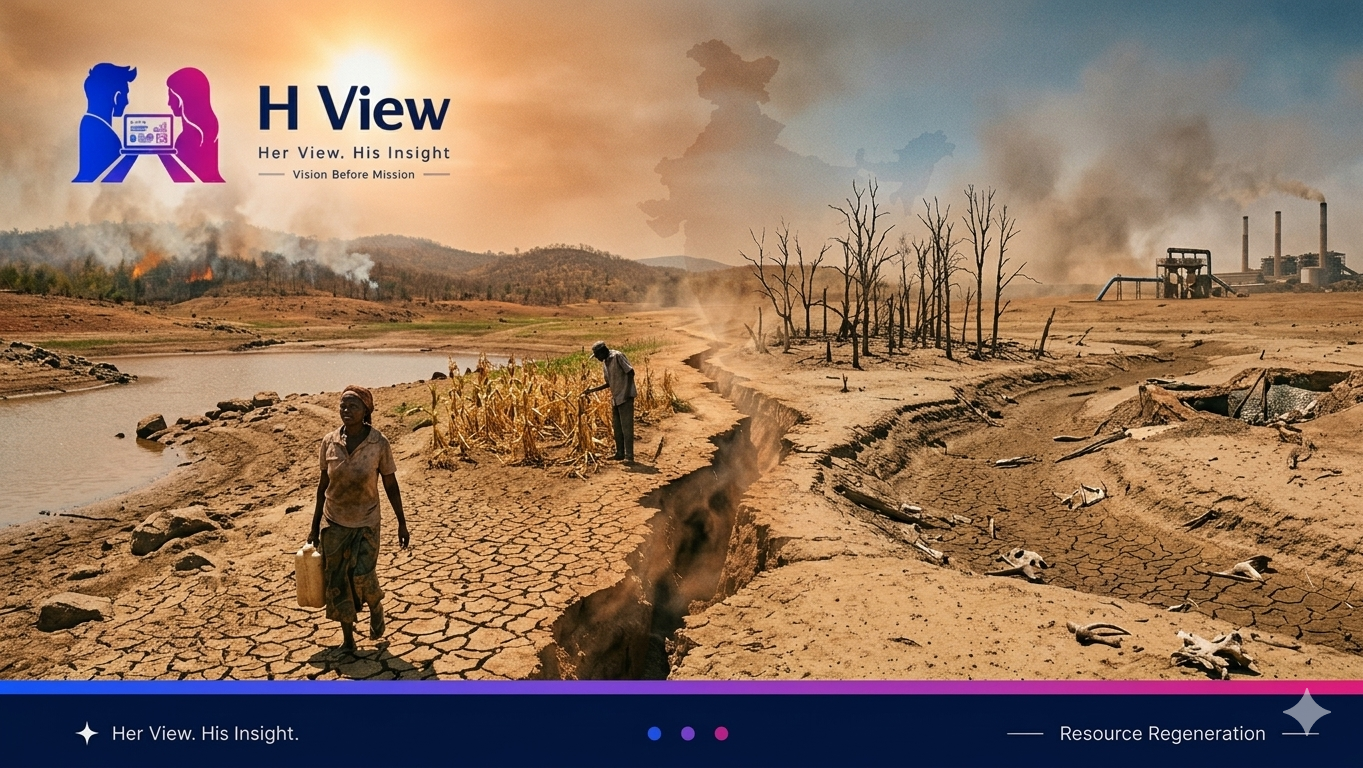
When we talk about climate change, we often focus on the immediate visuals: melting glaciers, intense heatwaves, and rising sea levels. But beneath the surface, a more insidious crisis is unfolding. Rising global temperatures are acting as a massive accelerator, destabilizing the complex ecosystems that produce and regenerate our most vital natural resources—from fresh water and fertile soil to diverse forests and marine life.

Here is a look at how a warming world is actively exhausting the resources we rely on to survive.

1. The Evaporation of Fresh Water

Water is technically a renewable resource, but rising temperatures are disrupting the water cycle so severely that renewal can no longer keep up with demand.

  • Accelerated Evaporation: Higher temperatures dry out reservoirs, lakes, and rivers much faster than normal.
  • Glacial Depletion: Billions of people rely on seasonal glacial melt for their freshwater supply. As global temperatures rise, these glaciers are melting at an unsustainable rate, threatening long-term water security for major regions across Asia, Europe, and South America.
  • Drought and Over-extraction: Extended heat waves create prolonged droughts. To compensate, industries and agriculture heavily pump underground aquifers. These deep groundwater resources take thousands of years to replenish, and we are draining them dry.

2. Soil Degradation and Food Insecurity

Healthy soil is a living ecosystem packed with moisture, nutrients, and microorganisms. Rising temperatures are effectively baking the life right out of the earth.

  • Desertification: As temperatures climb and rainfall patterns shift, fertile land is degrading into arid desert. This process strips the soil of its organic matter, making it impossible to grow crops.
  • Nutrient Loss: Intense heat accelerates the decomposition of organic material in the soil, meaning the ground loses its natural fertilizers faster than crops can use them.
  • Erosion: High temperatures lead to dry, cracked, and loose topsoil. When unpredictable, heavy storms do hit, the water cannot absorb into the hardened ground. Instead, it washes the nutrient-rich topsoil away into rivers, permanently exhausting the land’s agricultural potential.

3. The Collapse of Marine Ecosystems

The ocean absorbs over 90% of the excess heat trapped by greenhouse gases. This massive thermal shift is fundamentally altering marine resources.

  • Coral Bleaching: Coral reefs are the “rainforests of the sea,” supporting a quarter of all marine life. Just a minor, prolonged temperature spike causes corals to expel their symbiotic algae, turning them white and often killing them. When reefs die, the fish populations that millions of people rely on for food and income collapse.
  • Ocean Deoxygenation: Warmer water holds less oxygen than colder water. Large swaths of the ocean are becoming “dead zones” where marine life simply cannot breathe, drastically reducing global fish stocks.

4. Forest Dieback and Timber Loss

Forests are a critical resource for timber, medicine, clean air, and biodiversity. Rising temperatures are turning these resilient ecosystems into tinderboxes.

  • Megafires: Hotter, drier summers create perfect conditions for massive, uncontrollable wildfires. These fires don’t just harvest timber; they incinerate entire forest ecosystems, sterilization the soil and preventing natural regeneration for decades.
  • Pest Infestations: Warmer winters mean that destructive pests, like the bark beetle, no longer die off during the cold months. They multiply unchecked, decimating millions of acres of healthy forests and ruining timber resources before they can ever be sustainably harvested.

The Feedback Loop: A Dangerous Multiplier

The exhaustion of these resources creates a vicious cycle. For example, when temperatures rise, forests burn. When forests burn, they release stored carbon dioxide into the atmosphere, which drives temperatures even higher, destroying even more resources.

Moving Forward: Shifting from Exploitation to Regeneration

We cannot treat our natural resources as an infinite buffet, especially when the kitchen is overheating. To prevent the complete exhaustion of these systems, the global focus must shift from mere “sustainability” to active regeneration.

This means transitioning rapidly away from fossil fuels to curb rising temperatures, adopting climate-smart agriculture that restores soil moisture, and treating fresh water as the strictly finite, precious resource it has become. Protecting our resources is no longer just an environmental ideal—it is a matter of basic survival.

— Save Nature, Nature will protect you forever.

Written by

Rajesh

Rajesh is an H View contributor covering science, energy, architecture, sustainability, and practical knowledge topics. His articles focus on explaining complex ideas in a simple way, connecting real-world examples with useful insights for readers who want to understand how systems, design, and innovation shape everyday life.

Topics coveredH ViewHealthReviewsTechAudioGadgetsWordpress
View all posts by author

Submit Your View

Share your real experience and help other readers decide better.

🔒 Your review may be published after moderation.

Reader Reviews

No community views yet. Be the first to share yours.

8.0Excellent

H View Score

A quick view of our final rating for this review.

✉

Stay Updated with H View

Get the latest reviews and insights straight to your inbox.

🔒 No spam. Unsubscribe anytime.

Trending Reviews

The Art of Saying “NO”: Reclaiming Your Time, Energy, and PeaceAugust 20, 2026Keyword Research for Beginners: How to Find What People Actually Search on GoogleAugust 20, 2026What Does “Savings” Actually Mean? Cash, Bank Balance, FD, RD, Gold, Insurance and Investments ExplainedAugust 20, 2026Companies Replaced Workers With AI. Why Are Some Hiring People Back?August 20, 2026Nothing X App Explained: 12 Settings Every Nothing and CMF Earbud Owner Should KnowAugust 20, 2026Am I in a Toxic Relationship? 10 Signs You Shouldn’t IgnoreAugust 20, 2026How to Get Your Website Mentioned in ChatGPT, Gemini and Google AI SearchAugust 19, 2026Why the Middle Class Is Spending More and Saving LessAugust 19, 2026

Related Blogs

H View

The Art of Saying “NO”: Reclaiming Your Time, Energy, and Peace

We are raised in a world that praises the word “yes.” From an early age,…

Rajesh August 20, 2026
Digital Marketing

Keyword Research for Beginners: How to Find What People Actually Search on Google

Publishing an article does not automatically mean people will find it. You may spend hours…

Harika August 20, 2026
Money

What Does “Savings” Actually Mean? Cash, Bank Balance, FD, RD, Gold, Insurance and Investments Explained

Ask ten people how much they have saved and you may get ten completely different…

Harika August 20, 2026
AI

Companies Replaced Workers With AI. Why Are Some Hiring People Back?

For the past few years, the AI story in the workplace has been told in…

Satya Hemanth August 20, 2026
H View

Honest reviews. Smart ratings. Real insights.

Explore

HomeReviewsBlog

Company

AboutAdvertiseContact

Support

Privacy PolicyTerms & ConditionsDisclaimerEditorial Policy

Subscribe to H View

Get the latest updates and exclusive content straight to your inbox.

🔒 No spam. Unsubscribe anytime.
© 2026 H View. All rights reserved.
HomeReviewsBlogContact