


H View
  • Home
  • About
  • Categories
    • AI
    • Tech
    • Lifestyle
    • Business
      • Money
    • Sports
  • Reviews
  • Advertise
  • Contact
Advertise
H View
  • Home
  • About
  • Categories
    • AI
    • Tech
    • Lifestyle
    • Business
      • Money
    • Sports
  • Reviews
  • Advertise
  • Contact
Advertise
Business

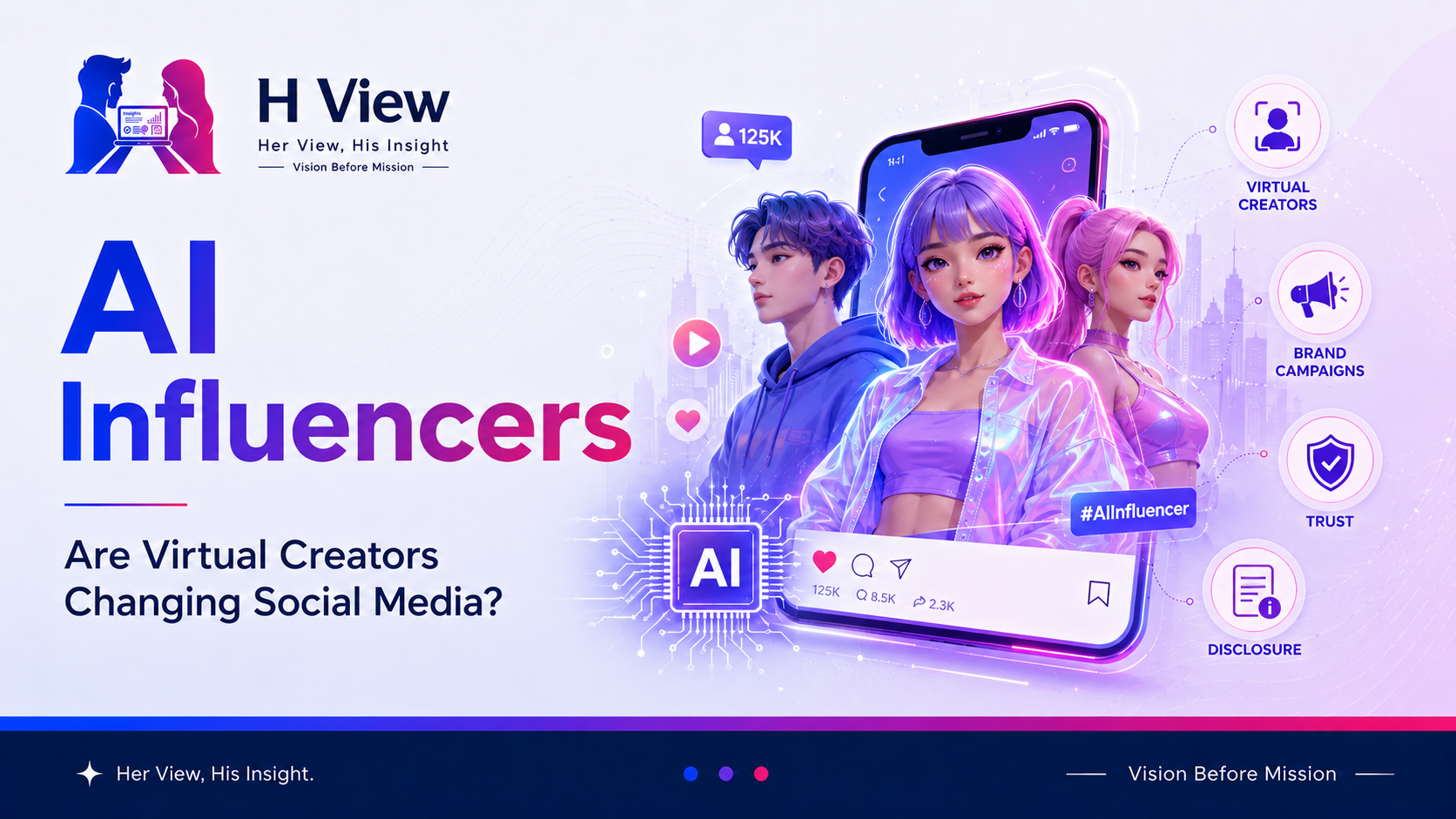
AI Influencers: Are Virtual Creators Changing Social Media?

☆☆☆☆☆No reader ratings yet
By H ViewUpdated July 9, 20268 min read7 views

Not long ago, influencers were simply real people sharing pieces of their lives online. They posted travel photos, product reviews, daily routines, personal stories, opinions, and recommendations based on their own experiences.

Today, social media is witnessing the rise of a very different kind of creator: AI influencers.

These digital personalities can look surprisingly real, but they are not human. They don’t have real-life experiences, emotions, or daily routines. Instead, they are created using artificial intelligence, design tools, animation, storytelling, and marketing strategies.

Some AI influencers resemble real people, while others appear as animated characters or futuristic avatars. Brands are increasingly using them in industries such as fashion, beauty, technology, gaming, and entertainment.

While the concept is fascinating, it raises an important question:

Can people trust an influencer who isn’t actually real?

At H View, we believe the answer depends on one thing above all else: transparency. AI influencers may become a significant part of the future of social media, but honesty should always come before trends.

What Is an AI Influencer?

An AI influencer is a virtual personality designed to operate like a social media creator. These digital characters can publish photos, videos, captions, endorsements, and sponsored content just like human influencers.

Behind every AI influencer, however, there is usually a team managing the account. This team may include creators, marketers, agencies, brands, designers, or developers who shape the character’s personality and content.

Like human influencers, AI influencers often have:

  • A name
  • A distinct appearance
  • A defined personality
  • A specific niche
  • A content strategy
  • Brand collaborations
  • A growing audience
  • A carefully crafted backstory

Simply put, they are fictional digital creators designed to engage audiences online.

Why Are AI Influencers Becoming So Popular?

Social media is crowded, and standing out has become more difficult than ever. Brands are constantly looking for fresh ways to attract attention, and AI influencers offer something new and visually unique.

Unlike human creators, virtual influencers can be customized to fit a brand’s exact vision. They are flexible, highly controlled, and capable of producing content tailored to specific campaigns.

Brands are drawn to AI influencers because they can:

  • Create visually striking campaigns
  • Maintain consistent brand messaging
  • Reduce scheduling and availability challenges
  • Represent fictional brand narratives
  • Adapt quickly to different styles and trends
  • Support futuristic or innovative branding
  • Appeal to digital-native audiences

From a marketing perspective, the appeal is obvious.

However, consumers often ask a different question:

Is this genuine content, or simply a carefully designed advertisement disguised as authenticity?

How Do AI Influencers Actually Work?

Creating an AI influencer involves both creativity and technology.

A team typically develops:

  • The character’s appearance
  • Personality traits
  • Tone of voice
  • Content themes
  • Captions and scripts
  • AI-generated images and videos
  • Marketing campaigns
  • Audience engagement strategies

Some virtual influencers are clearly fictional, while others are designed to look almost indistinguishable from real people.

This is where transparency becomes essential.

If audiences know they are interacting with a virtual character, they can evaluate the content accordingly. Problems arise when people believe they are following a real person when, in fact, they are not.

Why Brands Like AI Influencers

1. Greater Creative Control

Brands have complete control over the character’s image, personality, messaging, and behavior. This reduces the risks that sometimes come with human partnerships.

2. Flexible Content Creation

Virtual influencers can appear anywhere, wear any outfit, and participate in any campaign concept without travel, photoshoots, or physical production.

3. Long-Term Consistency

Unlike human creators, AI influencers don’t change careers, take breaks, or experience scheduling conflicts. Brands can use them repeatedly across campaigns.

4. Unique Brand Identity

A well-designed AI influencer can become a recognizable brand asset that helps a company stand out.

5. Global Reach

Virtual creators can be adapted for multiple markets, languages, and audiences with relative ease.

Why Audiences May Be Skeptical

The biggest challenge facing AI influencers is trust.

People often follow human influencers because they value personal experiences and authentic opinions. An influencer who has genuinely used a product can explain what worked, what didn’t, and how it felt.

AI influencers cannot do that.

They cannot:

  • Taste food
  • Test products firsthand
  • Experience travel
  • Use skincare naturally
  • Feel comfort, quality, or performance
  • Provide genuine personal feedback

As a result, consumers may question whether an endorsement reflects actual experience or simply marketing.

That doesn’t mean AI influencers have no value. It simply means their role should be presented honestly.

The Importance of Disclosure

Clear disclosure is critical when AI-generated content is involved.

Audiences deserve to know whether they are viewing a real person or a digital character. Transparency helps people make informed decisions and builds long-term trust.

Examples of clear disclosure include:

  • AI-generated creator
  • Virtual influencer
  • Digital avatar
  • AI-generated campaign
  • Sponsored virtual content
  • Fictional character

When disclosure is unclear or hidden, audiences may feel misled once they learn the truth.

Are AI Influencers Better Than Human Influencers?

Not necessarily—they serve different purposes.

Human influencers excel at:

  • Personal experiences
  • Authentic product reviews
  • Emotional storytelling
  • Community building
  • Live engagement
  • Trust-based recommendations

AI influencers excel at:

  • Creative branding
  • Visual experimentation
  • Fictional storytelling
  • Controlled campaigns
  • Scalable content production
  • Brand-owned digital characters

A real creator can honestly say, “I’ve used this product, and here’s my experience.”

An AI influencer cannot make that claim in the same meaningful way.

Where AI Influencers Can Add Value

When used responsibly, AI influencers can be highly effective in areas such as:

Fashion and Beauty

Showcasing styles, concepts, and visual creativity.

Gaming and Entertainment

Supporting fictional worlds and digital communities.

Technology

Explaining products, features, and futuristic concepts.

Brand Mascots

Giving companies a consistent digital personality.

Education and Awareness

Presenting information in engaging and easy-to-understand formats.

Product Launches

Generating excitement around new releases.

The key is ensuring audiences understand they are engaging with a virtual creator.

Potential Risks of AI Influencers

As exciting as they are, AI influencers also come with risks.

Fake Experiences

Virtual characters should never imply they have personally used or experienced products.

Unrealistic Standards

Perfect AI-generated appearances may contribute to unrealistic expectations around beauty and lifestyle.

Misleading Advertising

Without proper labeling, consumers may assume AI-generated recommendations are genuine testimonials.

Lack of Accountability

If a campaign causes controversy, determining responsibility can become complicated.

Erosion of Trust

The short-term attention generated by AI content is not worth damaging long-term credibility.

How to Spot an AI Influencer

As virtual creators become more realistic, identifying them may become harder. Still, there are some common signs to watch for:

  • Extremely perfect facial features
  • Unrealistic skin texture
  • Odd-looking hands or accessories
  • Repetitive poses
  • Overly polished environments
  • Limited behind-the-scenes content
  • Vague personal history
  • Little or no live interaction
  • Highly scripted captions
  • Missing disclosure statements

These signs don’t guarantee an account is AI-generated, but they can encourage a closer look.

What Brands Should Consider Before Using AI Influencers

Before adopting an AI influencer, brands should ask themselves:

  • Is this appropriate for our audience?
  • Are we being transparent about AI usage?
  • Are we avoiding misleading claims?
  • Does this align with our values?
  • Could it affect consumer trust?
  • Are we using AI creatively rather than deceptively?

AI should enhance storytelling—not replace honesty.

Will AI Replace Human Influencers?

Probably not.

AI influencers may become increasingly common, but they cannot fully replicate what makes human creators valuable.

People connect with real individuals because of their:

  • Experiences
  • Emotions
  • Challenges
  • Growth
  • Opinions
  • Mistakes
  • Authentic stories

These are qualities that technology can imitate but not truly live.

In fact, as AI-generated content becomes more widespread, genuine human experiences may become even more valuable.

Final Thoughts

AI influencers are an exciting development in digital marketing, and they undoubtedly have a place in the future of content creation. However, their success should never come at the expense of transparency.

For audiences, the takeaway is simple: don’t automatically trust every digital face you see online. Take a moment to understand whether the creator is real, virtual, sponsored, or AI-generated.

For brands, the message is equally clear: use AI influencers creatively, but always be honest about what they are.

And for human creators, remember this: your real experiences, authentic voice, and genuine connection with your audience remain your greatest strengths—and no algorithm can fully replace them.

FAQs

What are AI influencers?

AI influencers are digital or virtual personalities created using AI, design, animation and storytelling. They post content and may promote brands like human influencers.

Are AI influencers real people?

No. AI influencers are not real people. They are digital characters usually managed by creators, agencies, brands or marketing teams.

Why do brands use AI influencers?

Brands use AI influencers for creative control, unique visuals, flexible campaigns, futuristic branding and scalable content production.

Can AI influencers be trusted?

They can be useful for creative campaigns, but trust depends on transparency. If an AI influencer is promoting something, the audience should know that it is virtual or AI-generated.

Will AI influencers replace human influencers?

AI influencers may become more common, but they are unlikely to fully replace human influencers because real experience, emotion and personal trust still matter.

How can I know if an influencer is AI-generated?

Look for disclosure, overly perfect visuals, unrealistic details, lack of real-life content, repeated poses, scripted captions and unclear personal history.


Final View

AI influencers are one of the most interesting social media trends today.

They can help brands create futuristic campaigns, unique visuals and memorable digital personalities. But they also raise serious questions about trust, disclosure and authenticity.

At H View, our final view is simple:

AI influencers can be creative, but they should never be confusing. If a creator is virtual, the audience deserves to know.

Pros

  • Fresh and trending social media topic
  • Covers technology, lifestyle, business and marketing
  • Useful for audiences, creators and brands
  • Helps readers understand virtual influencers clearly
  • Builds H View authority beyond tool reviews
  • Supports future articles on creator economy and AI advertising

Cons

  • Not a product-specific review
  • AI influencer rules and disclosures are still evolving
  • Examples and trends may change quickly
  • Requires regular updates as platforms and laws change
  • Trust and authenticity remain difficult to measure

Creativity Is Good, But Disclosure Builds Trust

Submit Your View

Share your real experience and help other readers decide better.

🔒 Your review may be published after moderation.

Reader Reviews

No community views yet. Be the first to share yours.

Advertisement

Your Ad Here

728 × 90
Learn More
AdvertisementYour Ad Here300 × 250Learn More
8.0Excellent

H View Score

A quick view of our final rating for this review.

✉

Stay Updated with H View

Get the latest reviews and insights straight to your inbox.

🔒 No spam. Unsubscribe anytime.

Trending Reviews

The Courageous Leader: Why Doing the Right Thing Is the Ultimate Test of LeadershipJuly 10, 2026Quick Commerce in India: Convenience or Overspending Trap?July 10, 2026How Technology Is Transforming FIFA World Cup 2026July 10, 2026Rising Stars to Watch at FIFA World Cup 2026July 10, 2026FIFA World Cup 2026 48-Team Format: Opportunities and ChallengesJuly 10, 2026FIFA World Cup 2026 Host Nations: USA, Canada and Mexico UniteJuly 10, 2026FIFA World Cup 2026: A New Era of Global FootballJuly 10, 2026The Change Agent Leader: Why Great Leaders Challenge the Status QuoJuly 9, 2026
📢Advertisement

Your Ad Here

1300 × 250

Promote your brand to H View readers.

Learn More
H View

Honest reviews. Smart ratings. Real insights.

Explore

HomeReviewsBlog

Company

AboutAdvertiseContact

Support

Privacy PolicyTerms & ConditionsDisclaimerEditorial Policy

Subscribe to H View

Get the latest updates and exclusive content straight to your inbox.

🔒 No spam. Unsubscribe anytime.
© 2026 H View. All rights reserved.
HomeReviewsBlogContact