

Best Digital Marketing Tools in 2026: What Marketers Actually Need and What They Can Skip
Open LinkedIn for a few minutes and you will probably come across a colourful graphic…
 Harika October 6, 2026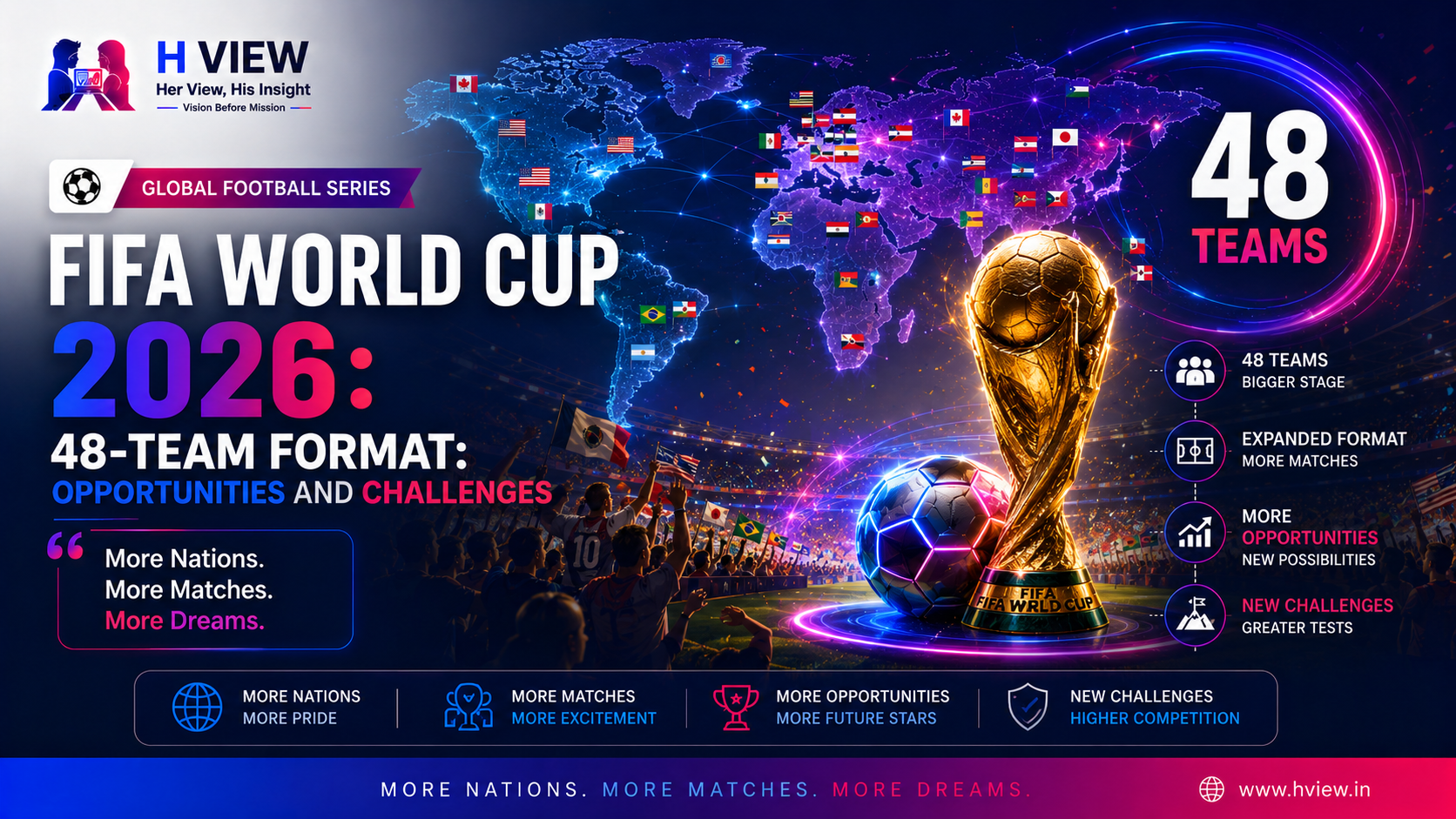
 By Satya HemanthUpdated July 11, 20263 min read29 views
FIFA World Cup 2026 will introduce one of the biggest format changes in tournament history.
For the first time, 48 teams will participate in the World Cup.
This expansion changes the tournament in many ways. It creates new opportunities, new challenges, and a much wider global football stage.
The World Cup has always been the dream destination for football nations.
But with only 32 teams in past editions, many countries found qualification extremely difficult. The expanded 48-team format gives more nations a chance to compete.
This is especially important for developing football regions.
More qualification spots can inspire investment in academies, coaching, infrastructure, youth development, and domestic leagues.
For smaller football nations, reaching the World Cup can transform the sport at home.
A single qualification can inspire children, attract sponsors, improve football programs, and create national pride.
The 2026 format gives more countries the chance to experience that impact.
It also gives fans more stories to follow. Underdogs, debut teams, and emerging stars can make the tournament more unpredictable.
With 104 matches, fans will have more football than ever before.
This means more drama, more goals, more tactical battles, and more chances for historic moments.
For broadcasters, sponsors, and football communities, the larger tournament creates more engagement.
One common concern is whether expansion may reduce match quality.
Some fans worry that adding more teams could create one-sided matches. However, football has become more competitive globally. Many smaller nations are improving quickly.
The expanded format may actually reveal how much global football has grown.
A bigger tournament also means more planning.
Teams must manage player fitness, travel, recovery, and tactical preparation. Coaches will need strong squad rotation and careful decision-making.
For players coming after long club seasons, physical management will be crucial.
The 48-team format is not just about increasing numbers.
It is about expanding opportunity.
Football becomes stronger when more nations believe they have a real chance to participate. FIFA World Cup 2026 could show that the future of football belongs not only to traditional giants but also to emerging nations.
There will be 48 teams.
The expansion gives more nations the opportunity to qualify and compete.
Yes, FIFA World Cup 2026 will have 104 matches.
It creates more inclusion and opportunity, but it also brings scheduling and quality-management challenges.
The 48-team format makes FIFA World Cup 2026 bigger and more inclusive.
It may create challenges, but it also gives football a wider, more exciting, and more global future.
Satya Hemanth is the founder of H View and writes on careers, sports, leadership, digital trends, and practical decision-making. His articles focus on clear explanations, real-world examples, and useful insights for students, young professionals, and everyday readers.
Share your real experience and help other readers decide better.
No community views yet. Be the first to share yours.

Open LinkedIn for a few minutes and you will probably come across a colourful graphic…
Harika October 6, 2026 
When an employee resigns, many organisations move quickly into replacement mode. The manager informs HR,…
Harika October 6, 2026 
For many corporate employees, the workday begins long before they actually start working. They wake…
Harika October 5, 2026 
Many projects begin with an assumption that sounds reasonable on paper: the client will explain…
Harika October 1, 2026