

Mobile Radiation and Pregnancy: Gentle Wisdom for Expectant Mothers
Pregnancy is a journey filled with incredible joy, heightened awareness, and a fair share of…
 Rajesh September 6, 2026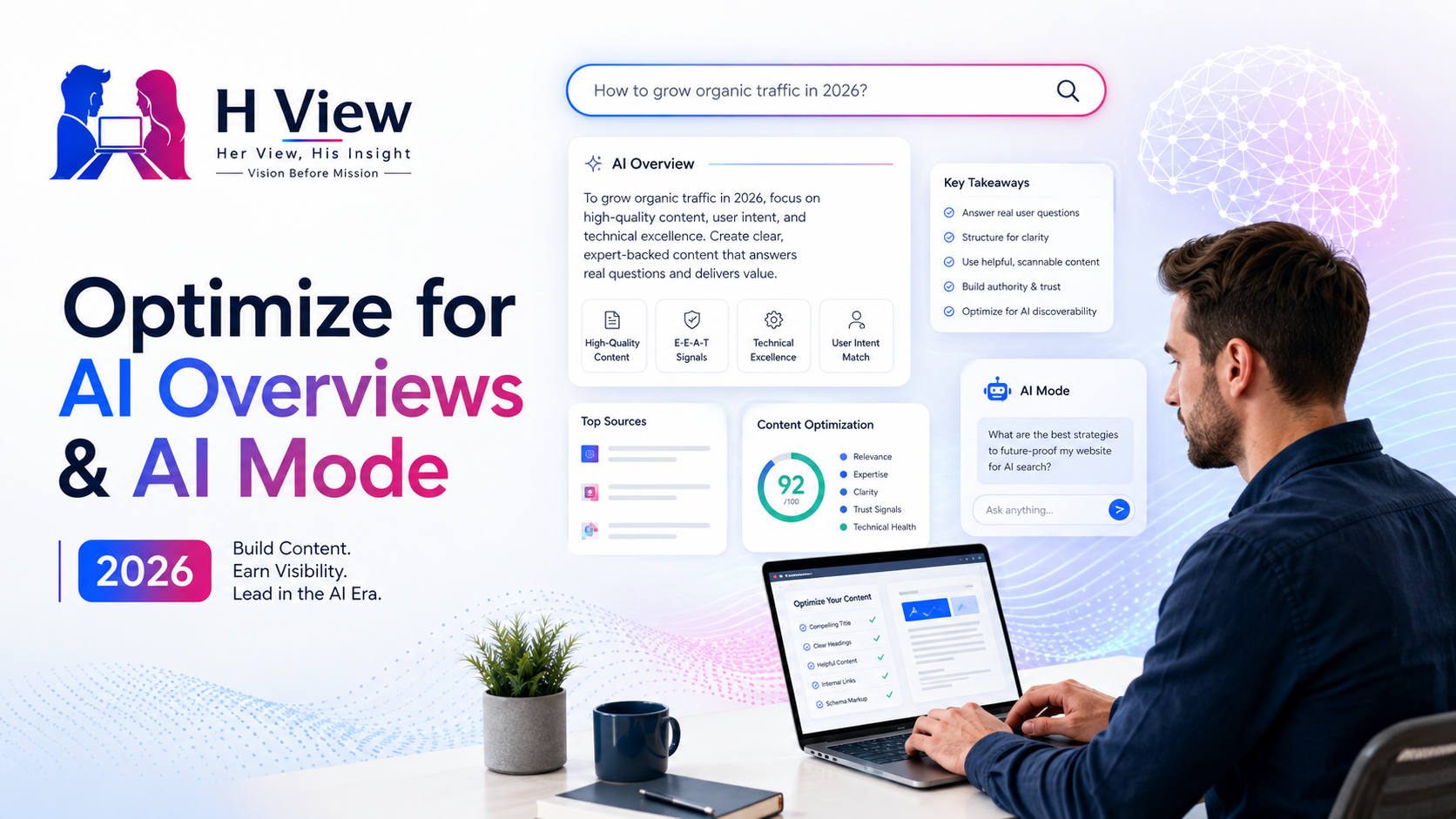
 By HarikaUpdated September 3, 202614 min read9 views
Google Search is no longer only about ten blue links and a few ads at the top of the page. In 2026, users can see AI Overviews, ask follow-up questions in AI Mode, compare products inside richer search experiences and sometimes get enough information from Google without immediately opening another website.
That shift has naturally made website owners nervous. If Google is answering more questions directly, will people still visit websites? Do we need a completely different SEO strategy now? Should we start writing for AI instead of humans? And do new terms like GEO and AEO mean that traditional SEO is already outdated?
The answer is more practical than the hype makes it sound.
Google’s own guidance continues to emphasize the same foundations that have always mattered: useful content, clear structure, strong technical accessibility, reliable information and a good overall user experience. Google also says website owners do not need special AI-only files or a completely separate optimization system just to appear in its generative search experiences. (developers.google.com)
That means the objective is not to rebuild your website for AI Search. The objective is to make your existing content easier to understand, easier to trust and more valuable than the generic information that now exists everywhere.
AI Overviews are generative summaries that can appear directly inside Google Search for certain queries. Instead of only showing a list of results, Google may generate a combined answer and support that answer with links to relevant web sources.
AI Mode goes further by allowing users to ask longer, more conversational and more complex questions. Instead of typing a short keyword, someone can ask a detailed question, refine it and continue exploring the topic in the same search experience.
For website owners, the important point is that Google still needs quality web content to support many of these answers. AI does not magically create trustworthy information from nothing. It depends on sources, context and existing web content.
This is why SEO has not suddenly disappeared. The interface is changing, but the need for useful, trustworthy and accessible information remains.
Not necessarily.
There is value in understanding how AI-powered search works, but creating a completely separate content strategy for AI can make things more complicated than they need to be. In most cases, the better approach is to strengthen the same qualities that already make a page useful in normal Search.
That means focusing on clear answers, strong topic coverage, originality, technical health, internal linking, reliable sources and content that actually solves the reader’s problem.
If those elements are weak, no AI-specific tactic is going to rescue the page.
The terminology may be new, but the foundation is surprisingly familiar.
One of the biggest mistakes people can make is trying to optimize for AI before understanding what the user actually wants.
Search intent still comes first.
Someone searching for best WordPress hosting for a small business in India may now ask Google AI Mode a much longer version of the same question, such as whether they should choose cheaper hosting, managed hosting or a provider with better support.
The wording is more conversational, but the underlying need is still the same.
The person wants a practical recommendation.
So the article needs to explain the decision clearly. That means discussing the factors that actually matter, such as reliability, support, renewal pricing, performance and scalability.
AI Search does not remove the need to satisfy intent. It makes intent even more important because people can now ask much more specific questions.
A strong article should not hide the main answer behind a long generic introduction.
If the topic is whether AI-generated content can rank, the article should explain the answer reasonably early and then provide the detail behind it. If the topic is how to optimize for AI Overviews, the reader should quickly understand what actually matters.
This does not mean every section should become a one-line answer.
It means the article should be direct.
You can still use full paragraphs, examples and deeper explanation. The difference is that the reader should not have to scroll through five paragraphs of background before understanding the main point.
Clear answers help readers and also make the content easier for search systems to interpret.
Good structure matters because it helps everyone understand how the article is organized.
Descriptive H2 and H3 headings are much more useful than vague labels.
For example, a heading such as Do You Need llms.txt for Google AI Search? tells the reader exactly what the section will answer. A heading such as Things to Know does not.
This does not mean every article needs dozens of headings.
Too many short sections can make an article feel broken, which is exactly the problem we are avoiding here.
The better approach is to use fewer but stronger sections, each containing a proper passage with enough depth to explain the topic naturally.
Keyword research still matters, but people are increasingly asking search engines much more conversational questions.
A user may no longer type only technical SEO. They may ask, Which technical SEO issues actually matter for a new WordPress website?
That difference is important.
A good article should therefore anticipate the real questions behind the topic. It should explain the issue, why it happens, what to check, what to fix first and what can safely wait.
That creates depth without turning the article into a list of keyword variations.
The goal is not to insert every possible search phrase. The goal is to answer the subject in a way that naturally covers the questions people are likely to have.
Generic content is easier to produce than ever.
That means simple definitions and surface-level summaries are becoming less valuable.
If hundreds of websites publish essentially the same explanation of AI Search, Google has very little reason to prefer one of them.
Original experience can make the difference.
For example, a strong article may include:
These kinds of details make the article more difficult to replace with a generic AI summary.
That is where H View should have an advantage.
We should not just explain what everyone already knows. We should add practical context and real-world interpretation.
AI-powered search increases the importance of trustworthy information.
If you are making claims about Google Search, official Google documentation should be one of the first sources you check. If you are using statistics, cite the original research when possible. If you are discussing software changes, use current official documentation rather than relying only on old articles.
This does not mean filling every paragraph with citations.
It means supporting the claims that matter.
Reliable sourcing improves credibility for readers and reduces the risk of repeating outdated or incorrect information.
In a world where AI can generate convincing but inaccurate text very quickly, this becomes even more important.
One article rarely creates strong topical authority by itself.
A website becomes more useful when related articles support one another.
For example, an AI Search cluster could include articles about SEO vs AEO vs GEO, AI Overviews, AI Mode, AI-generated content, Search Console reporting and changes in organic traffic.
Each article can answer one specific problem while linking naturally to the others.
This creates a stronger content ecosystem.
It also helps readers move from one question to the next without returning to Google every time.
That kind of structure is useful for both traditional SEO and AI-powered discovery.
Internal linking remains useful because it helps search engines understand the relationship between pages.
If an article about AI Overviews links naturally to SEO basics, Search Console, technical SEO and content quality, those connections create context.
The important word is naturally.
Do not turn every paragraph into a web of links.
A good internal link should appear when the reader genuinely benefits from more information.
This is the same principle we already use for traditional SEO.
AI Search does not change that.
AI-powered search does not bypass technical SEO.
If Google cannot crawl the page, the content may never become useful to its systems.
Basic technical health still matters. Important pages should be crawlable, indexable and properly canonicalized. HTTPS should work. Sitemaps should be valid. Mobile pages should load correctly. Internal links should be accessible.
Google’s AI optimization guidance continues to emphasize the same technical requirements used by normal Search. (developers.google.com)
This is an important reminder because some marketers are treating AI Search as though it requires a completely new technical setup.
It does not.
A healthy technical foundation remains the starting point.
This is one of the most talked-about AI Search topics.
Some website owners have started adding llms.txt files because they believe AI systems may use them as a special instruction layer.
For Google Search, however, Google has explicitly stated that website owners do not need special AI-specific files such as llms.txt to appear in its generative search experiences. (developers.google.com)
That does not mean the file has no possible use anywhere.
It simply means it should not be treated as a mandatory Google ranking requirement.
For most websites, improving the actual content and technical setup will create far more value than chasing speculative AI files.
No special AI schema is required for Google AI Overviews or AI Mode.
Structured data can still be useful, but only when it accurately represents the page and matches supported content types.
For example, article schema, breadcrumbs, product markup or organization data can help provide additional structured context.
However, schema should never be added simply because someone claims it will guarantee AI visibility.
The page itself still needs to be useful.
Structured data supports content. It does not replace it.
Some subjects change much faster than others.
An article about basic mathematics may remain useful for years. An article about AI Search, Google Ads or Search Console can become outdated very quickly.
That means regularly reviewing fast-changing content is important.
When updating an article, check whether feature names, screenshots, product capabilities, pricing and official guidance have changed.
Do not simply change the publication date.
Update the actual information.
Freshness only matters when the content itself is fresh.
AI systems benefit from clear explanations of important concepts.
That does not mean your article should become a collection of one-line definitions.
The better approach is to define a concept clearly and then explain it in a proper paragraph.
For example, you can explain what AI Overviews are in one sentence and then use the rest of the paragraph to discuss why they matter for website owners.
This creates clarity without making the article feel fragmented.
It also makes the content easier to understand for readers who are new to the topic.
Abstract advice becomes much more useful when readers can see what it looks like in practice.
Instead of saying create useful content, show what that means.
You could explain how an article title was changed because the original one did not match search intent. You could show how internal links were added after Search Console revealed related queries. You could compare an old generic section with a stronger updated version.
These examples make the article more practical.
They also give the content something AI-generated summaries often lack: context and judgement.
There is an irony in AI Search optimization.
Trying too hard to create “AI-friendly” content can make the article sound less human.
Many low-quality AI articles use the same patterns repeatedly: short sections, repetitive summaries, predictable phrasing and generic transitions.
That makes the content feel templated.
A better article should use natural paragraph flow, varied sentence structure, proper explanations and realistic examples.
It should feel like someone thought about the topic rather than simply assembled an outline.
That is especially important for H View because the goal is not to create more content. It is to create better content.
Yes, potentially.
Google does not automatically reject content simply because AI tools were used during the creation process.
Google’s guidance focuses much more on usefulness, accuracy and whether the content exists primarily to help users rather than manipulate rankings. (developers.google.com)
That means AI can be used as part of research, outlining or editing.
The problem begins when websites publish large volumes of shallow content with no added value.
Whether the words were typed by a person or generated by AI, weak content remains weak content.
Search Console has traditionally been one of the main tools for understanding how a site performs in Google Search.
As AI-powered Search expands, measurement is also evolving.
Google has introduced reporting capabilities intended to give website owners more insight into performance across generative search experiences, including AI Overviews and AI Mode. (developers.google.com)
This matters because it allows website owners to move away from guesswork.
Instead of asking whether AI Search is hurting traffic, you can begin looking at real performance patterns.
Useful signals include changes in impressions, changes in CTR, pages gaining visibility, pages losing traffic and queries becoming more important.
Data should guide the strategy.
The AI Search space changes quickly, and new tactics appear almost every week.
Some may eventually become useful.
Many will not.
Before implementing any new idea, ask whether it improves one of the fundamentals.
Does it make the page clearer? Does it improve trust? Does it make the content easier to crawl? Does it help users understand the topic better? Does it strengthen the site structure?
If the answer is no, the tactic may not deserve much attention.
The fastest way to waste time in SEO is to chase every new trend without understanding whether it solves a real problem.
Website owners do not need a completely separate AI workflow.
A sensible process is enough:
This is a much more sustainable strategy than trying to optimize separately for every new AI feature.
AI Search can make website owners feel as though everything they learned about SEO is suddenly outdated. Every new acronym creates another checklist, another plugin recommendation and another reason to believe the website needs a complete rebuild.
Most of the time, that is not necessary.
The website still needs useful content, a clear structure, reliable information and a good technical foundation.
The search experience is changing, but the value of good information is not.
That is reassuring because it means website owners can evolve their strategy without throwing away everything that already works.
The biggest opportunity in AI Search is not learning how to manipulate AI systems.
It is becoming a source that is easier to trust and easier to understand than the average page.
AI can summarize generic information very quickly.
That makes generic information cheaper.
What becomes more valuable is everything that requires genuine context: experience, evidence, original examples, testing, local knowledge and judgement.
Websites that focus on those qualities are building something much stronger than a temporary optimization trick.
Keep doing SEO, but improve the quality of the work.
Do not abandon traditional optimization.
Do not create an entirely separate content factory for AI.
Instead, write around real questions, give clear answers, build strong topic clusters, add original experience, support important claims and maintain a technically healthy site.
Then measure what happens.
Google AI Overviews and AI Mode are changing how people discover information, but the websites most likely to remain useful are still the ones that provide information worth finding.
The interface is changing.
The requirement for quality is not.
Google AI Overviews are generative summaries that can appear in Search for certain queries. They combine information into a synthesized answer and may include links to supporting web sources.
AI Mode is a more conversational Google Search experience that allows users to ask complex questions, explore follow-ups and continue researching within the same search flow.
No completely separate system is required. Google says the same SEO foundations continue to apply to its generative search features. (developers.google.com)
No. Google explicitly says llms.txt is not required for appearing in its generative search experiences. (developers.google.com)
Structured data can help Google understand supported content types, but there is no special AI schema required for AI Overviews or AI Mode.
Yes. Google focuses on usefulness, accuracy and compliance with its policies rather than simply whether AI tools were used during creation. (developers.google.com)
Yes. Google continues to say that foundational SEO practices remain relevant across traditional and generative Search experiences. (developers.google.com)
Harika is the co-founder of H View and covers AI, technology, gadgets, digital tools, online platforms, and modern internet trends. Her articles focus on simplifying complex topics with practical explanations, balanced opinions, and reader-first insights.
Share your real experience and help other readers decide better.
No community views yet. Be the first to share yours.
Pregnancy is a journey filled with incredible joy, heightened awareness, and a fair share of…
Rajesh September 6, 2026 
In a world where our smartphones are practically attached to our hands—or resting against our…
Rajesh September 6, 2026 
We live in an age of endless noise. Every day, we are bombarded with advice…
Rajesh September 6, 2026 
A woman can spend the day managing clients, attending meetings, answering calls, meeting deadlines, handling…
 Annapurna September 6, 2026