

Mobile Radiation and Pregnancy: Gentle Wisdom for Expectant Mothers
Pregnancy is a journey filled with incredible joy, heightened awareness, and a fair share of…
 Rajesh September 6, 2026
 By Satya HemanthUpdated September 1, 202612 min read7 views
Having a job is usually treated as success, especially when the job is stable. Salary arrives every month, the company is familiar, your manager knows you, and you understand exactly what is expected from Monday to Friday. From the outside, there may be very little to complain about.
Yet career stagnation rarely begins with a dramatic event. It usually starts quietly.
You realise that the work you are doing this year looks almost identical to what you were doing two or three years ago. Your salary is increasing, but only enough to keep you from seriously thinking about leaving. Your designation changes occasionally, but your responsibilities do not become meaningfully larger. You attend training programmes, complete annual goals, and receive satisfactory performance reviews, yet if someone suddenly asked what new capability you had developed in the last two years, the answer would not come easily.
This is the uncomfortable side of career stability. A job can remain perfectly stable while the person inside it stops progressing.
The issue deserves attention because disengagement is already a serious workplace problem in India. Gallup’s 2026 workplace research found that only 23% of Indian employees were engaged at work, while 59% were classified as not engaged. That does not mean all of those employees have stagnant careers, but it does show how common it has become for people to remain employed without feeling deeply connected to their work or organisation.
The question, therefore, is not simply whether you should be grateful to have a job. It is whether the job you have today is still building the career you will need tomorrow.
When people imagine a career problem, they often picture unemployment, a bad appraisal, conflict with a manager, or a company laying off employees. Career stagnation is harder to notice because nothing has necessarily gone wrong.
You may still be performing well. Your manager may appreciate you. The organisation may consider you dependable. You may even receive regular increments. In fact, stability can sometimes hide stagnation because there is no immediate pain forcing you to examine the situation.
Imagine an employee who joined an organisation five years ago as an operations executive. During the first year, everything was new. They learned the business process, reporting systems, client requirements, internal software, and how the team operated. By the second year, they had become confident enough to handle difficult situations independently.
Then the learning slowed.
Years three, four, and five were mostly repetitions of the same work. The employee became faster and more reliable, but not significantly more capable outside that particular environment. The company benefited enormously because an experienced person could handle the work with little supervision. The employee, however, gradually stopped increasing their external market value.
That is career stagnation in one of its most common forms. You become very good at doing the current job while becoming less certain about what the next job could be.
One reason stagnation is difficult to recognise is that employees can remain extremely busy.
You may attend meetings from morning to evening, manage urgent tasks, answer hundreds of emails, solve customer issues, prepare reports, and finish each day exhausted. Because so much activity is happening, it feels impossible that the career could be standing still.
But workload and growth are different things.
Growth usually means that something fundamental is changing. Your decision-making authority becomes larger. You learn more valuable skills. The complexity of problems you can solve increases. You begin leading people, owning outcomes, influencing strategy, or developing expertise that other employers would value.
If the workload increases without those things changing, you may simply be doing more of the same.
This distinction becomes especially important when companies become leaner. An employee can inherit additional work after colleagues leave and feel as though they have been promoted informally. Yet if the designation, pay, decision-making authority, and career path remain unchanged, additional workload does not necessarily equal professional growth.
It may simply mean the organisation has discovered that you can carry more.
Even promotions need to be examined carefully.
Deloitte India’s 2026 Talent Outlook says promotion rates increased to around 14%, even while average salary increments across India are expected to remain around 9.1%. Deloitte also warns organisations about the possibility of title and designation inflation when promotions are not matched carefully with actual role progression.
That is an important distinction for employees.
Imagine being promoted from Senior Executive to Assistant Manager. The title looks better on LinkedIn, family members congratulate you, and perhaps the salary rises modestly. But six months later, you are doing nearly the same work, with the addition of approving a few reports and attending one more weekly meeting.
Was that career growth?
Possibly. Titles do have value, and small steps can lead somewhere meaningful. But the real test is what the promotion allows you to do next. Are you learning how to manage people? Do you own budgets or outcomes? Are you making decisions that were previously handled by someone above you? Is the new role preparing you for a genuine managerial position?
A title that changes while the work stays almost identical can create the appearance of movement without much movement underneath.
Comfort at work is not automatically a problem. In fact, after years of pressure, finding a workplace where you understand the culture, trust your colleagues, and have reasonable stability can be valuable.
The problem begins when comfort becomes the main reason for staying even after growth has stopped.
Perhaps you know the current systems so well that work rarely surprises you. Changing companies would mean interviews, probation, unfamiliar colleagues, and the possibility that the next workplace could be worse. Staying feels safer.
This is particularly understandable in a market where job security has become more important again. Many employees are now choosing stability over aggressive job hopping because external hiring feels more uncertain than it did a few years ago.
Yet there is a difference between choosing stability consciously and remaining because you are afraid to test your value outside the company.
A useful question is: If your current employer disappeared tomorrow, would your experience make you attractive to another employer at the same or higher level?
If that question makes you uncomfortable, the career may need attention even if the job itself is secure.
Employees often use salary as proof that their career is moving forward.
If you receive an 8% or 10% increment every year, your compensation does increase. Over several years, that can become meaningful.
But your salary inside one organisation and your value in the external market are not always the same thing.
Suppose someone earns ₹15 lakh after eight years in one company because annual increments accumulated steadily. Their work, however, remains heavily dependent on an internal system that few other employers use. They have not managed a larger team, worked with modern automation, or developed a recognised specialisation.
Another candidate with similar experience may earn the same amount but have worked with several current platforms, managed projects across departments, and built strong industry expertise.
Both salaries look similar.
Their future bargaining power may not be.
This is why employees should occasionally test their external market value even when they have no immediate intention of resigning. Reading current job descriptions, speaking with recruiters, attending industry events, and understanding salary ranges can reveal whether your current career is keeping pace.
This is one of the simplest ways to think about stagnation.
Imagine two professionals who each have five years of experience.
The first person spent five years progressively taking on larger responsibilities. They moved from handling individual tasks to owning projects, mentoring juniors, managing stakeholders, and eventually making decisions that affected business results.
The second person learned one role during the first year and repeated roughly the same responsibilities for the next four years.
Both resumes say “5 years of experience.”
But employers may not value those five years equally.
Years of experience matter because we assume additional years produce deeper capability. When that does not happen, the number becomes less powerful.
This does not mean everyone needs a promotion every year. Real expertise often requires repetition. The difference is whether repetition is deepening understanding or simply maintaining routine.
Modern career advice often glorifies constant movement. Employees are told to switch companies, chase promotions, build personal brands, network aggressively, and keep learning new tools.
That advice can make someone with a stable, ordinary career feel as though they are failing.
They are not.
Not everyone wants to become a vice president. Some employees value predictable income, family time, manageable responsibilities, and a workplace where they feel comfortable. Those are legitimate priorities.
Career growth should not be defined only by hierarchy.
Someone may deliberately choose slower professional advancement because they are raising children, caring for parents, pursuing a personal interest, or simply prioritising a peaceful life. If that choice is conscious and financially sustainable, there is nothing wrong with it.
The concern begins only when someone believes they are progressing but has actually stopped developing, or when they want greater opportunities but keep postponing the actions necessary to reach them.
Stability should be a choice, not a trap disguised as comfort.
Employers do have responsibility for fair development opportunities, useful feedback, and sensible career paths. But waiting indefinitely for the organisation to decide what happens next can be risky.
Your manager may be satisfied precisely because you are excellent where you are.
Promoting you creates another problem: somebody has to replace you.
This is one of the uncomfortable realities of being dependable. The employee who solves every issue, knows every process, and never complains can become extremely valuable in the existing position. That does not automatically mean the organisation is planning the next step for them.
Employees need to ask for clarity.
What would qualify me for the next level? Which responsibilities am I missing? What skills would make me eligible? Is there a realistic opportunity within the next twelve months?
Specific questions are more useful than vague conversations about “career growth.”
If the answers remain unclear year after year, that uncertainty itself is information.
When employees realise they are stuck, the immediate reaction is often to start another certification.
Sometimes that is exactly what is needed. If the market has moved toward a technology or capability you genuinely lack, targeted learning can help.
But career stagnation is not always a skill problem.
You may already know enough but lack responsibility. You may need exposure to clients, leadership, budgeting, strategy, or a different business function. Another online certificate will not necessarily create those experiences.
Deloitte’s 2026 talent research says companies increasingly use competency frameworks across performance, learning, and career development, while also acknowledging that organisations struggle to measure the impact of training and give employees enough time for meaningful learning.
Employees should therefore ask not only, “What should I learn?” but also, “Where can I use it?”
Learning without application can become another form of career activity that feels productive without changing the underlying trajectory.
A career usually feels healthier when at least some of these areas are improving together: capability, responsibility, compensation, and opportunity.
Your capability grows when you can solve harder problems than before. Responsibility grows when more important outcomes depend on your judgement. Compensation reflects, at least roughly, the additional value you provide. Opportunity means the work you are doing today increases the number or quality of options available tomorrow.
Not all four will improve every year. Sometimes salary pauses while skills grow quickly. At other times, employees stay primarily because compensation is strong.
The problem appears when nothing changes for several years.
If the work is the same, salary is barely moving, external opportunities are narrowing, and new skills are not developing, the career needs intervention even if the employment itself remains secure.
Not immediately.
Resigning is one possible response, not the first diagnosis.
Start by understanding whether the organisation can still offer growth. Speak with your manager about specific next responsibilities. Explore internal transfers. Volunteer for projects that expose you to different functions. Ask whether you can mentor someone, manage a small initiative, interact with clients, or take ownership of a measurable outcome.
Then set a timeline.
If you want a change, decide what evidence would convince you that progress is happening over the next six or twelve months.
Perhaps the company gives you a meaningful new responsibility. Maybe an internal transfer becomes available. Perhaps your manager provides a clear pathway toward promotion.
If nothing meaningful changes despite serious attempts, looking outside becomes more rational.
The important part is to avoid repeating the same dissatisfaction year after year without either improving the current role or preparing to leave it.
Most companies conduct annual performance reviews. Employees should conduct their own career review too.
Ask yourself what you can do now that you could not do twelve months ago. Look at your resume and identify what new line you could genuinely add. Check current job descriptions for people with your experience and compare the requirements with your current work.
Then ask a harder question: if you stay another two years, what will be different?
If you can clearly describe the projects, skills, leadership exposure, or expertise you expect to develop, staying may be an excellent decision.
If your only answer is that the salary will probably increase a little and everything else will remain roughly the same, you have discovered something important.
You do not necessarily have a bad job.
You may simply have a job that has stopped building your future.
Career stagnation is a prolonged period in which an employee’s skills, responsibilities, compensation, learning, or advancement opportunities stop progressing meaningfully even though they may remain employed.
Common signs include doing nearly identical work for several years, learning very little that would matter outside your company, repeatedly missing promotions, unclear career progression, declining motivation, and difficulty identifying what new value another year in the same role will add.
No. Long tenure can create deep expertise, leadership experience, strong networks, and significant career growth. The concern is not how long you remain with one employer but whether your responsibilities and market value continue to develop.
Not automatically. Understand why the promotion has not happened, ask what specific expectations you need to meet, explore internal opportunities, and set a realistic review period before deciding whether an external move is necessary.
Yes. Annual increments may increase compensation while responsibilities and skills remain unchanged. Salary growth is one measure of progress, but external employability and capability matter too.
Start by seeking new responsibilities, internal transfers, cross-functional projects, mentoring opportunities, client exposure, or targeted learning that can be applied directly. Give the plan a defined timeline and reassess whether meaningful progress has occurred.
Satya Hemanth is the founder of H View and writes on careers, sports, leadership, digital trends, and practical decision-making. His articles focus on clear explanations, real-world examples, and useful insights for students, young professionals, and everyday readers.
Share your real experience and help other readers decide better.
No community views yet. Be the first to share yours.

Pregnancy is a journey filled with incredible joy, heightened awareness, and a fair share of…
Rajesh September 6, 2026 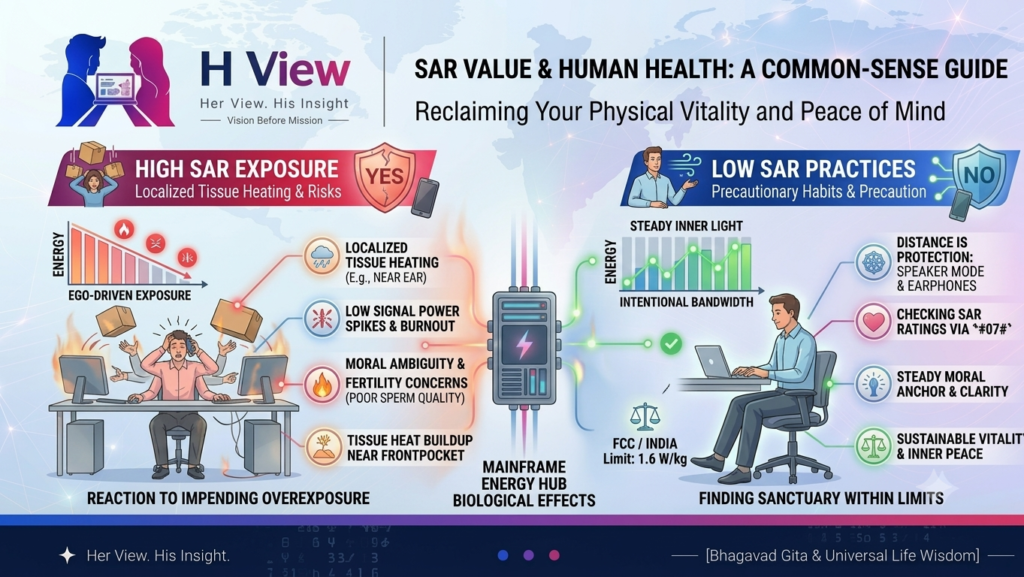
In a world where our smartphones are practically attached to our hands—or resting against our…
Rajesh September 6, 2026 
We live in an age of endless noise. Every day, we are bombarded with advice…
Rajesh September 6, 2026 
A woman can spend the day managing clients, attending meetings, answering calls, meeting deadlines, handling…
 Annapurna September 6, 2026