

Mobile Radiation and Pregnancy: Gentle Wisdom for Expectant Mothers
Pregnancy is a journey filled with incredible joy, heightened awareness, and a fair share of…
 Rajesh September 6, 2026
 By AnnapurnaUpdated September 1, 202611 min read16 views
A woman gets promoted, receives a raise, or lands a well-paying job, and instead of simply enjoying it, a second thought often appears almost immediately: Do I really deserve this?
She may work hard, meet targets, handle difficult clients, solve problems, support colleagues, and take on responsibilities beyond her role. Still, when money enters the conversation, confidence can suddenly become less certain. She may hesitate before negotiating, worry that asking for more will make her look difficult, or feel the need to justify every rupee she earns through extra effort.
This is not true for every woman, and men can experience the same insecurity. But women often face a particular mix of social expectations, workplace culture, salary secrecy, self-doubt, and pressure to appear grateful rather than demanding. Over time, that can create a strange situation where earning well does not automatically feel like permission to stop proving yourself.
For many women, the salary is not only money. It becomes something they feel they must continuously earn again and again.
Many girls grow up receiving praise for being responsible, polite, helpful, and easy to work with. Those qualities can be valuable, but they can also shape how women behave professionally.
A woman may become excellent at delivering work without becoming equally comfortable asking for recognition. She may accept additional responsibility because she does not want to disappoint the team. When appraisal season comes, however, asking directly for a higher salary can feel uncomfortable in a way that doing another month of extra work does not.
This creates an imbalance. The employee is comfortable proving value through performance but less comfortable converting that value into compensation.
Workplaces reward contribution, but salary growth often requires another skill entirely: being willing to ask.
There is a difference between receiving a salary and feeling entitled to earn it.
Some women become more anxious after a promotion because the new salary creates a new standard in their mind. They may feel they now have to work longer, respond faster, make fewer mistakes, and constantly show that the company did not make the wrong decision.
Instead of the raise representing recognition for work they were already capable of doing, it becomes a debt they feel responsible for repaying through even more performance.
That mindset can quietly lead to overwork.
The employee who feels secure in her value may think, “I was promoted because my skills have grown.” The employee who feels she must prove herself may think, “Now I have to make sure nobody regrets paying me this much.”
Those two thoughts can produce completely different working lives.
One of the hardest things about compensation is that employees often do not know what other people are earning.
A woman may believe her salary is generous because she is comparing it with her previous income rather than with the market value of her role. She may also have no idea that a colleague with similar experience negotiated a higher package.
Without information, feelings replace data.
Someone may assume asking for 20 percent more is unreasonable when the market would comfortably support it. Another person may accept a role because the salary sounds impressive without checking whether the responsibilities have expanded far beyond the compensation.
Knowing your value becomes difficult when compensation is treated like a secret.
This is why salary research matters. The question should not only be whether the amount feels large personally. It should also be whether it is reasonable for the experience, skills, location, industry, and responsibility involved.
Professional confidence does not always grow at the same speed as professional ability.
A woman may have years of experience and still walk into a meeting worried that everyone else understands more than she does. If she receives a senior title or higher salary, those doubts can become even stronger because the stakes suddenly feel larger.
She may focus heavily on what she does not know while overlooking everything she already handles well.
This becomes particularly visible when people apply for jobs. Someone may read ten requirements, meet eight of them, and decide she is not qualified enough. Another candidate may meet six and apply anyway.
Over time, this difference matters.
Salary growth is influenced not only by ability but by who applies, who negotiates, who speaks about achievements, and who is willing to be considered before feeling completely ready.
Workplaces can send women mixed messages.
They are encouraged to speak up, negotiate, lead, and show ambition. But the way those behaviours are received can depend heavily on how they are expressed.
A woman who confidently discusses compensation may worry that she will be seen as demanding. Someone who openly talks about achievements may fear being considered arrogant. A direct negotiating style that looks assertive in one employee can be interpreted differently in another.
This does not mean women should become hesitant. It explains why negotiation can carry an extra emotional calculation.
The conversation is not only, “What am I worth?”
It can also become, “How do I ask for it without being judged for asking?”
That additional layer makes salary discussions more stressful than they need to be.
One common pattern is taking on more work than the role actually requires.
A woman may volunteer for another presentation, cover for a colleague, answer messages after hours, organise something nobody else wants to handle, or become the reliable person who always saves a difficult situation.
Initially, this may help her career. Reliability and initiative matter.
The problem begins when extra contribution becomes the baseline rather than something recognised separately.
If someone repeatedly works above the level of her role but continues to believe she needs to prove herself before asking for more money, she can spend years underpaid while performing beyond expectations.
There is a point where “show them what you can do” has already been accomplished. The next conversation needs to be about compensation.
Another subtle issue is how people think about money.
A woman may hesitate to ask for more because her current salary already covers her expenses. She may think, “I am earning enough, so why should I push?”
But companies do not usually set salaries according to how much an employee personally needs. They pay based on business value, market conditions, skills, scarcity, responsibility, and negotiation.
Whether someone lives cheaply or has fewer financial commitments should not determine the value of her work.
Salary is compensation for contribution, not a reward based on personal necessity.
This distinction becomes especially important for women who were raised to think that wanting more money is somehow greedy. Wanting fair compensation is not the same as making money the only priority in life.
Women who take career breaks often return with another layer of salary anxiety.
A break for childcare, elder care, relocation, health, education, or personal reasons can make someone feel that she needs to accept less because she has been away from the workforce.
Some women return overqualified for the compensation they accept simply because getting back in feels more urgent than negotiating well.
A career gap may affect market positioning in some roles, but it does not erase everything learned before the break. Skills, experience, judgement, communication ability, and professional knowledge do not automatically disappear because someone stepped away temporarily.
Returning to work should involve updating skills where necessary, not automatically assuming that previous value has vanished.
Early salary decisions matter more than many people realise.
If someone starts lower, future raises are often calculated from that lower base. Even after several years, two equally capable professionals can end up with significantly different compensation because one negotiated more effectively earlier.
This is why young women need to learn salary conversations before they feel they urgently need them.
Negotiation should not begin only when someone is unhappy or planning to resign. It can be part of normal career management.
Understanding market rates, documenting achievements, tracking responsibilities, and discussing growth regularly makes compensation feel less like an uncomfortable confrontation and more like a professional conversation.
A woman can earn a high salary and still feel insecure about money.
She may be uncomfortable discussing compensation, hesitant to invest, afraid to negotiate, or embarrassed to say that financial growth matters to her.
That is why financial confidence deserves attention separately from income.
Earning more is important, but knowing how to evaluate an offer, save intelligently, invest, ask questions, and advocate for fair compensation gives money a different meaning.
The goal is not simply a bigger salary. It is reaching a point where the woman understands why she earns what she earns and can participate confidently in decisions that affect her financial future.
Not every compensation problem can be solved by telling women to negotiate harder.
Managers and organisations have responsibility too.
Clear salary bands, transparent promotion criteria, structured performance reviews, and equal access to high-visibility opportunities can reduce the amount of guesswork employees face. If compensation depends heavily on who is most comfortable demanding more, existing confidence differences can easily become pay differences.
Good managers should not wait until a strong employee threatens to resign before recognising her contribution.
When companies communicate clearly about what growth requires and how compensation is determined, employees have less need to constantly prove their legitimacy.
A woman should not need to become twice as tired just to feel comfortable earning what her work is worth. Working hard matters, learning matters, and continuing to improve matters, but compensation should not create a permanent sense of guilt. If your responsibilities have grown, your results are strong, and the market supports higher pay, asking for fair compensation is a professional decision rather than a character flaw. Confidence with money does not mean believing you deserve everything. It means no longer automatically assuming you deserve less.
Fair pay conversations improve when they stop being framed as women needing to become more aggressive. Men, managers, colleagues, and organisations also shape workplace expectations. If one employee is routinely rewarded for confidently presenting achievements while another is expected to quietly wait for recognition, the system itself deserves attention. The healthiest workplaces make value easier to discuss objectively, so compensation depends less on who feels most comfortable demanding it and more on the actual contribution, responsibility, and skill involved.
Every employee needs to demonstrate competence. A salary is not automatic entitlement, and professional growth requires effort. But there should eventually be a point where past performance becomes evidence.
If a woman has repeatedly delivered, taken responsibility, improved her skills, and created value, she should not have to mentally start from zero every time compensation increases.
A raise is not always a favour. A promotion is not automatically a gamble someone took on you. Sometimes they are simply recognition that your work has reached a higher level.
The important shift is from continuously asking, “Have I done enough to deserve this?” to asking better questions: “What is this role worth? What value am I creating? How has my responsibility changed? Am I being compensated fairly?”
Those questions are less emotional and more useful.
Women fought for access to education, careers, leadership, and financial independence. The next step is becoming equally comfortable with the idea that good work deserves fair money without an apology attached.
Because earning a salary should require doing the job well.
It should not require spending every working day proving that you were worthy of being paid in the first place.
Women may feel this pressure because of workplace culture, self-doubt, salary secrecy, social expectations around being grateful, and discomfort with negotiation. Even highly capable women can feel they need to overperform before asking for better pay or accepting a raise confidently.
Some women may hesitate to negotiate because they worry about appearing demanding, ungrateful, or difficult. The issue is not simply confidence; workplace culture and how assertive behaviour is received can also influence whether someone feels comfortable asking for more.
A raise or promotion can sometimes trigger the feeling that the higher salary now needs to be constantly justified. Instead of seeing the increase as recognition for proven ability, someone may respond by working longer hours, taking on extra tasks, or becoming afraid of making mistakes.
Salary imposter syndrome is an informal way of describing the feeling that you may not deserve the amount you are earning, even when your skills and results support it. It can lead to overworking, under-negotiating, or feeling guilty about compensation.
It helps to rely on evidence rather than feelings alone. Research market salaries, document achievements, track increased responsibilities, understand the value of your skills, and prepare specific reasons for the amount you are requesting before entering a negotiation.
No. Asking for fair compensation based on market value, responsibilities, experience, and contribution is a normal professional conversation. Wanting to be paid fairly does not mean money is your only priority.
Yes. Women returning after maternity leave, caregiving, relocation, or another career break may feel they have lost professional value. A break can require skill updates in some industries, but it does not erase previous experience, judgement, communication ability, or professional knowledge.
Salary transparency can reduce guesswork and help employees understand whether they are being paid fairly for similar work. Clear salary bands and promotion criteria also reduce the extent to which compensation depends only on who feels most comfortable negotiating aggressively.
Annapurna is an H View contributor covering relationships, family, lifestyle, entrepreneurship, and everyday decision-making. Her articles focus on emotional clarity, practical understanding, and human-centered perspectives that help readers think better about personal and professional situations.
Share your real experience and help other readers decide better.
No community views yet. Be the first to share yours.

Pregnancy is a journey filled with incredible joy, heightened awareness, and a fair share of…
Rajesh September 6, 2026 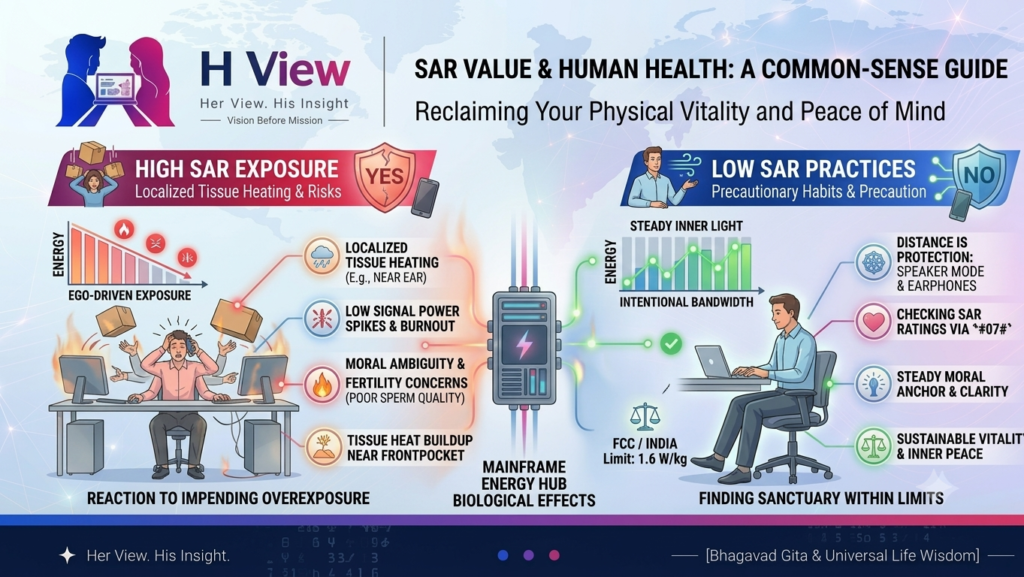
In a world where our smartphones are practically attached to our hands—or resting against our…
Rajesh September 6, 2026 
We live in an age of endless noise. Every day, we are bombarded with advice…
Rajesh September 6, 2026 
A woman can spend the day managing clients, attending meetings, answering calls, meeting deadlines, handling…
Annapurna September 6, 2026