

Mobile Radiation and Pregnancy: Gentle Wisdom for Expectant Mothers
Pregnancy is a journey filled with incredible joy, heightened awareness, and a fair share of…
 Rajesh September 6, 2026
 By Satya HemanthUpdated August 31, 202613 min read14 views
For years, a college degree was treated as the obvious bridge between education and employment. Families planned around it, students chose courses believing that graduation would naturally lead to a profession, and colleges presented degrees as the beginning of a stable career. That expectation still exists, but for many young Indians the bridge is no longer working the way it was supposed to.
A student may spend three years completing a B.Com degree and then discover that the jobs they want ask for accounting software, Excel, GST knowledge, analytics or prior internship experience. An engineering graduate may hold a technical degree but struggle to clear practical coding or project interviews. A B.A. or B.Sc. graduate may finish college without ever being shown a clear route from the subjects studied to the work available in the market.
This is not just anecdotal frustration. NITI Aayog’s August 2026 report, Reimagining Skilling for Viksit Bharat@2047, describes a “fundamental disconnect” between higher education and labour-market demand. Citing the Economic Survey 2024–25, the report says only 8.25% of graduates are employed in roles aligned with their qualifications, while also warning that generic degrees, outdated curricula and insufficient industry exposure are weakening employment outcomes.
At the same time, employers say they cannot find the people they need. ManpowerGroup’s 2026 Global Talent Shortage Survey found that 82% of employers in India reported difficulty finding candidates with the required skills, while the India Skills Report 2026 placed overall employability at 56.35%.
That creates one of the biggest contradictions in Indian education today: students are earning more qualifications, employers are still hiring, and yet both sides say they cannot find what they need.
So where exactly is the connection breaking?
The problem is not that degrees have suddenly become worthless. A degree still provides academic foundations, eligibility for many jobs, access to higher education and, in some professions, an essential qualification. The problem is that a degree title by itself often tells an employer very little about what a candidate can actually do on Monday morning.
Two B.Com graduates may have completely different levels of readiness. One may know accounting theory but have never used Tally, created a financial dashboard or worked with GST documentation. Another may have completed an internship, handled basic bookkeeping for a local business and become comfortable with Excel and reporting. Both hold the same degree, but they enter the job market with very different evidence.
The same applies to engineering. Two students may graduate with similar marks, yet one has built and deployed applications while the other has completed only mandatory college projects with heavy guidance. In marketing, a student may know definitions of consumer behaviour but never have run a campaign, interpreted analytics or worked with a real client.
This is why employers increasingly separate academic qualification from workplace readiness.
NITI Aayog’s report specifically points to weak practical learning, insufficient industry exposure and limited job-readiness support as major gaps. It also notes that many conventional programmes remain weakly linked to clear employment pathways.
One of the deeper problems starts before college.
Students are often asked at 17 or 18 to choose a degree before they have seen enough of the working world to understand what the choice means. The decision may be shaped by marks, family advice, college availability, affordability, friends, social prestige or simply the subjects the student already studied in school.
A B.Com student may know they are “interested in commerce” without knowing the difference between accounting, audit, tax, banking operations, financial analysis, procurement or business analytics. A B.A. student may enjoy economics or political science without being shown what realistic professional paths exist beyond further study, government exams or teaching. An engineering student may choose computer science because it appears employable without understanding what software work actually involves.
NITI Aayog’s latest analysis notes that more than two crore undergraduate students are enrolled across B.A., B.Sc. and B.Com programmes, and raises concerns about weak direct job linkages in many generic courses.
That does not mean students should stop choosing these degrees. It means education needs to answer a question much earlier:
What can this degree realistically lead to, and what else must the student build alongside it?
Without that clarity, many students discover the answer only after graduation, when employers have already begun asking for skills and experience they were never told to develop.
One of the most damaging habits in higher education is treating career preparation as something that belongs to the final year.
For the first two or three years, the student focuses mainly on exams and attendance. Then placement season arrives and suddenly everyone starts building resumes, creating LinkedIn profiles, joining crash courses and searching for internships.
That is too late.
Career preparation should begin while the student still has time to experiment without severe consequences. A first-year student does not need to know exactly what they will do for the next thirty years, but they should begin understanding the possible professions connected to the degree.
By the second year, they should ideally have tested one or two practical directions. A commerce student can explore accounting, analytics or banking operations. A computer-science student can test development, testing, data or cybersecurity. A humanities student can explore communications, research, public policy, content, teaching or business roles depending on their strengths.
By the final year, the objective should not be to ask, “What jobs are available for my degree?” for the first time.
It should be to decide which of the paths already explored deserves serious attention.
That simple change would make the transition from education to work much less abrupt.
Employers are not saying that students know nothing. Their frustration is usually more specific.
They may find candidates who understand concepts but struggle to apply them. A graduate can explain teamwork but find it difficult to communicate clearly during a group assignment. A student may know a programming language but struggle to debug unfamiliar code. Someone may have completed an analytics certificate but be unable to explain what business decision a chart actually supports.
This helps explain why India’s talent shortage can coexist with unemployment. More than 82% of employers surveyed in India reported difficulty finding required talent, even while large numbers of graduates are seeking employment.
The missing ingredient is not always another qualification.
It is often practical confidence.
Employers want to know whether the candidate can take knowledge from the classroom and use it in an imperfect real-world situation where instructions are incomplete, deadlines matter and someone else depends on the result.
That kind of readiness develops through doing, not merely studying.
Consider a student named Anjali who completes B.Com with decent marks.
She assumed that graduation would naturally lead to an accounts or banking role. During college, she passed financial accounting, business law and taxation. She never failed a subject and her family reasonably believes she is now qualified for work.
Then she begins applying.
One employer asks for advanced Excel. Another wants Tally and GST exposure. A third prefers someone who has worked with reconciliation and invoicing. A banking-operations vacancy asks for communication, documentation and customer handling.
Suddenly, Anjali feels as though she studied the wrong things.
She did not.
The degree gave her a foundation. The problem is that nobody connected that foundation to the actual workflows employers use.
Had she spent one semester working with a small accounting firm, helping a local business or completing a serious practical project, the transition would have been much easier. She would not necessarily be more intelligent or more educated. She would simply understand how the subject leaves the textbook and enters the workplace.
This is exactly the gap apprenticeships and work-integrated education are intended to address.
NITI Aayog’s 2026 report goes beyond diagnosing the problem. One of its central recommendations is a broader “Apprenticeship for All” approach, including apprenticeship-embedded degree and diploma programmes that combine formal study with workplace exposure.
This matters because an apprenticeship solves several problems at once.
The student learns what employers actually expect. The employer gets an opportunity to assess someone before making a full-time hiring commitment. The candidate gains real examples to discuss during interviews, and the resume no longer depends entirely on academic marks.
But the word “apprenticeship” should not become another certificate.
The quality of the experience matters enormously. If a student spends three months observing staff, making photocopies or completing unrelated administrative work, the programme has technically provided exposure but has not created much employability.
A meaningful apprenticeship should involve real responsibility appropriate to the learner’s level. The student should understand what problem they worked on, what tools they used, what they learned and how the work was evaluated.
That experience becomes valuable because it produces evidence.
There is a tendency to respond to graduate unemployment by telling students they should have learned more skills, done more internships and planned better.
Some of that advice is useful, but it can also become unfair.
A student who followed the system was often told that getting good marks, earning a degree and attending placements would lead to employment. Not every college provided industry mentors, meaningful internships, modern laboratories or clear career counselling. Many students are the first people in their families to enter higher education and do not have professionals around them who can explain what employers expect.
Students from smaller towns may have even fewer opportunities to gain exposure during college.
So the solution cannot be to transfer all responsibility from the education system onto the student.
Colleges need stronger accountability for employment relevance. Industry should participate earlier rather than complaining about skills only at the hiring stage. Employers also need more trainee and apprenticeship pathways instead of asking every beginner to somehow arrive with experience.
Students absolutely need to take ownership of their careers, but they should not have to reverse-engineer the entire labour market alone.
The other side of the argument is equally important.
Students cannot wait for colleges to solve everything.
The labour market changes faster than most university curricula can. A course designed today may already be partly outdated by the time the student graduates. Technology changes, business tools evolve and whole categories of work emerge faster than academic systems can formally redesign programmes.
That means the degree has to be treated as a foundation.
Students should learn to read job descriptions, understand what employers are asking for and build practical proof before graduation. A B.Sc. student interested in analytics should not wait for the college to introduce every modern tool. An engineering student cannot assume the degree title itself proves technical ability. A management student should understand business problems beyond classroom case studies.
This is not about chasing every new trend.
It is about connecting education to one realistic direction.
Another cultural problem makes the mismatch worse.
India has historically treated conventional degrees as more prestigious than vocational or work-integrated pathways. Families may prefer a general degree even when a high-quality technical, diploma or apprenticeship route leads more directly to employment.
That preference can push students into courses with weak career links simply because the qualification sounds more respectable.
This needs to change.
Education should not be judged only by how academic it appears. It should also be judged by what it enables the student to do next.
NITI Aayog’s recent skilling recommendations specifically call for more applied, industry-aligned specialisations, flexible programmes and earn-while-you-learn pathways.
A student who chooses a practical pathway and becomes financially independent should not be considered less successful than someone collecting degrees without a clear destination.
The first step is not learning ten skills. It is understanding the career possibilities attached to the chosen education.
A student should look at actual entry-level job descriptions and ask what employers repeatedly request. They should speak with working professionals, alumni and teachers who have real industry exposure. Then they can select one or two practical abilities worth developing alongside the degree.
The objective should be to graduate with three things: academic knowledge, current practical ability and at least one piece of evidence that connects the two.
That evidence might be an internship, an apprenticeship, a substantial project, a freelance assignment or meaningful volunteer work.
The project itself does not need to be extraordinary.
A simple piece of real work understood deeply is more useful than an impressive-looking project the student cannot explain.
Universities naturally measure enrolment, attendance, examination performance and graduation rates.
Those numbers are important, but they do not tell us whether education is creating a useful transition into adulthood.
A college should also understand where its graduates go. How many enter roles related to what they studied? How many require additional training after graduation? Which employers hire them repeatedly? Which skills do recruiters say are missing?
That feedback should influence curriculum, career services and practical learning.
The 2026 NITI Aayog report argues for stronger industry participation in higher and technical education precisely because education cannot remain isolated from labour-market demand.
If employers keep saying the same skill is missing every year, the institution should not wait indefinitely for the official syllabus to change.
India’s education-to-job mismatch is not proof that degrees have failed.
It is proof that the relationship between education and employment has become too weak.
A degree still matters. It can build knowledge, discipline and long-term intellectual capability. But students increasingly need help converting that education into something an employer can recognise and use.
The most damaging outcome is not graduating into a different field. Careers evolve, and many people successfully work outside the subject they studied.
The real problem is graduating without understanding where your education can lead at all.
Students should not wait until the final semester to discover what the job market expects. Colleges should not treat placement preparation as a last-minute activity. Employers should not demand workplace readiness without helping create workplace exposure.
The bridge has to be built from both sides.
If India can make internships, apprenticeships, industry-linked projects and career exploration part of ordinary education rather than optional extras, the degree can become much more powerful.
The goal should not be to guarantee that every B.Com graduate becomes an accountant, every engineer becomes a developer or every B.A. graduate works directly in the subject they studied.
The goal should be simpler and more important:
When students graduate, they should understand what they can do, where they can contribute and how to enter the working world without discovering the real syllabus only after college is over.
The reasons include weak direct job linkages in some degrees, changing labour-market demand, limited practical exposure, location constraints and students discovering different interests after graduation. NITI Aayog’s 2026 skilling report highlights a significant mismatch between qualifications and the roles graduates ultimately enter.
No. It refers to graduates reportedly employed in roles aligned with their qualifications, based on the figure cited by NITI Aayog from the Economic Survey 2024–25. It should not be interpreted as the overall graduate employment rate.
No. They provide valuable academic foundations and can lead to many careers. The concern is that generic degrees may not automatically provide the practical or role-specific skills employers expect, so students often benefit from internships, specialised learning or work experience alongside them.
Not every profession requires the same model, but structured workplace exposure can significantly improve the connection between education and employment. NITI Aayog has proposed expanding apprenticeship-embedded degree and diploma programmes as part of its 2026 skilling recommendations.
Ideally from the first year of college. Students do not need to choose a permanent career immediately, but early exploration gives them enough time to test different roles, build practical skills and avoid discovering employment requirements only after graduation.
Employers often report a mismatch between the skills they require and the practical readiness of applicants. In ManpowerGroup’s 2026 survey, 82% of employers in India reported difficulty finding candidates with the skills they needed.
Satya Hemanth is the founder of H View and writes on careers, sports, leadership, digital trends, and practical decision-making. His articles focus on clear explanations, real-world examples, and useful insights for students, young professionals, and everyday readers.
Share your real experience and help other readers decide better.
No community views yet. Be the first to share yours.
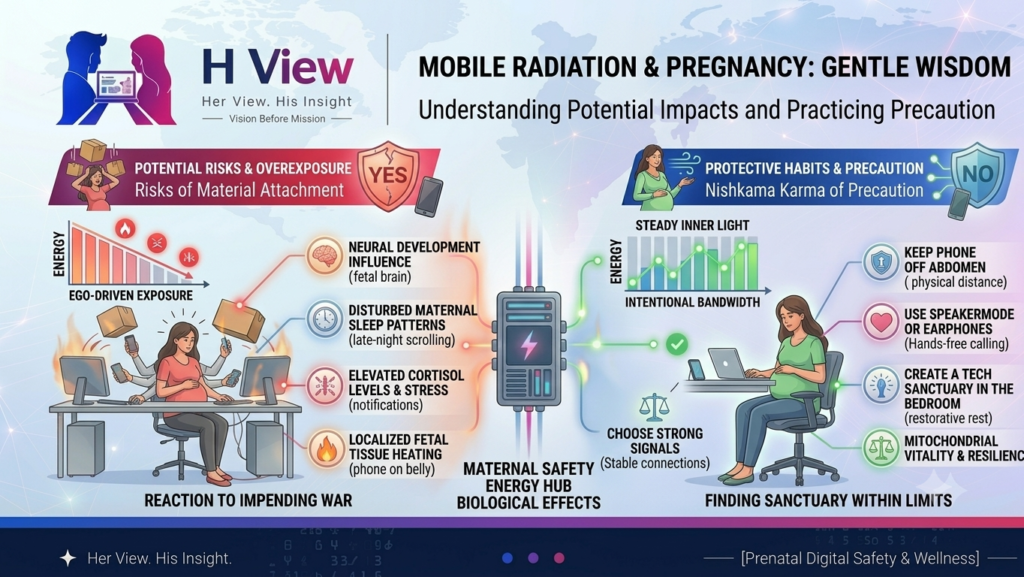
Pregnancy is a journey filled with incredible joy, heightened awareness, and a fair share of…
Rajesh September 6, 2026 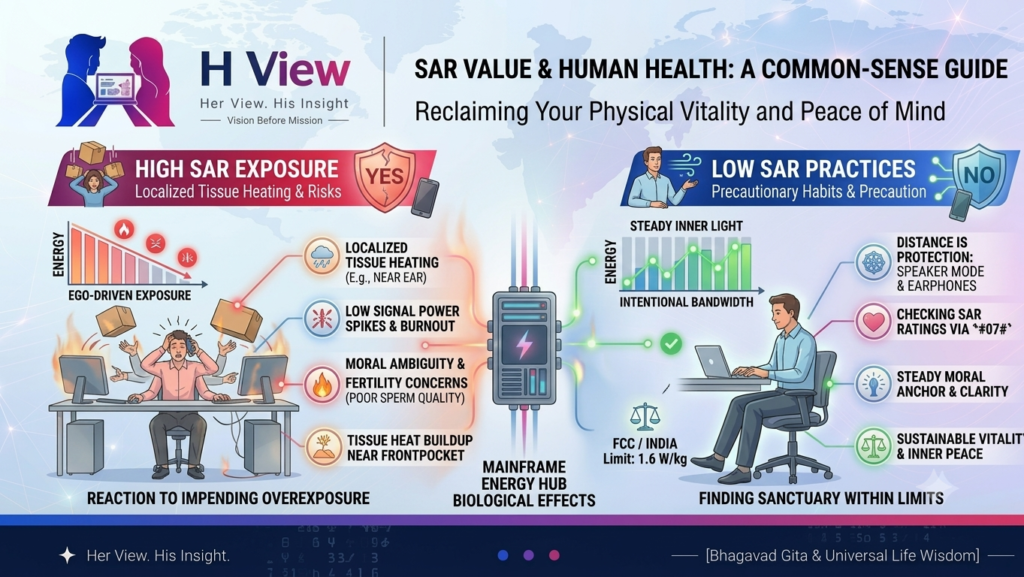
In a world where our smartphones are practically attached to our hands—or resting against our…
Rajesh September 6, 2026 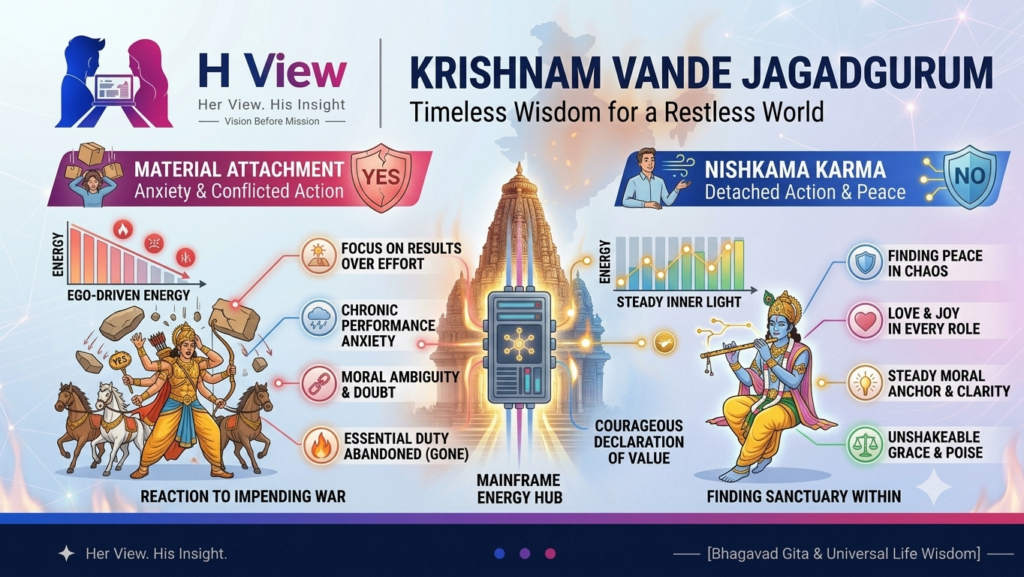
We live in an age of endless noise. Every day, we are bombarded with advice…
Rajesh September 6, 2026 
A woman can spend the day managing clients, attending meetings, answering calls, meeting deadlines, handling…
 Annapurna September 6, 2026